
AirDoctor Review: High-Performance Air Purification for Cleaner Indoor Spaces

AirDoctor is an air purification brand focused on improving indoor air quality through portable purifiers designed for rooms ranging from compact bedrooms to large open-plan living spaces. Its current lineup includes several models, such as the AirDoctor 1000, 2000, 3500, 4000, and 5500, giving shoppers the ability to choose a purifier based on room size and expected airflow requirements. The company also sells replacement filters and HVAC filters, making filtration rather than general home appliances its primary focus.
AirDoctor positions itself toward the premium end of the purifier market. Rather than competing primarily on low price or compact dimensions, it emphasizes high air circulation rates, multi-stage filtration, automatic air-quality response, and dedicated filtration for both airborne particles and gases. For households dealing with dust, pollen, pet dander, smoke, odors, or general concerns about indoor air quality, that combination creates a fairly compelling proposition.
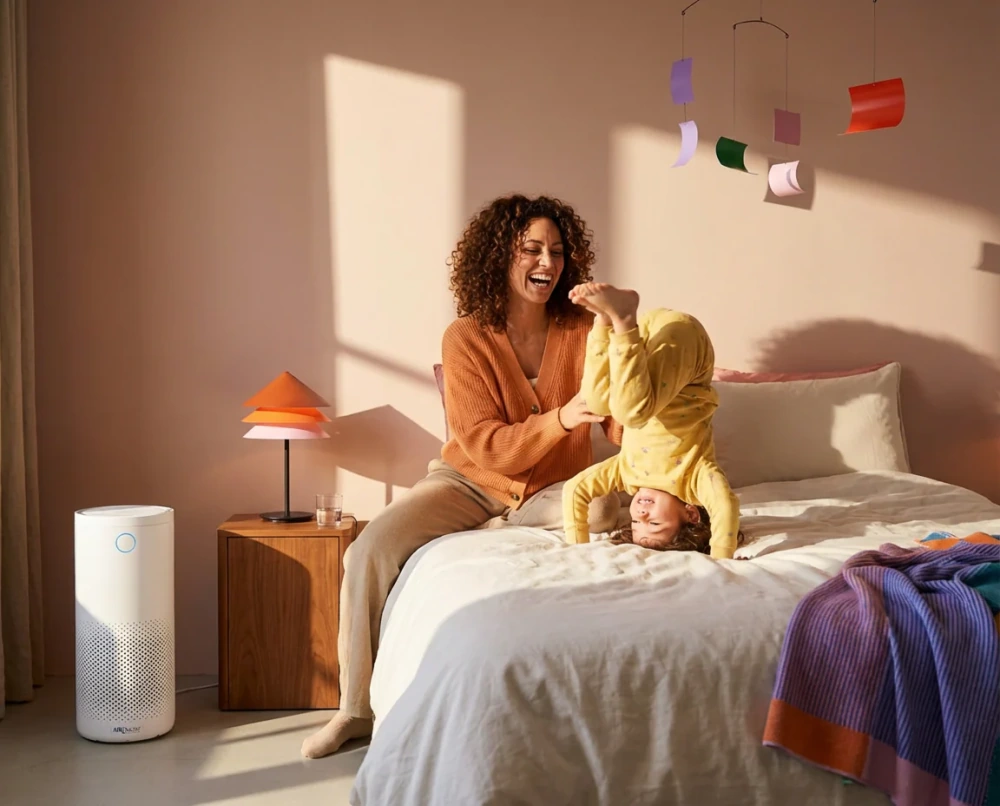
How AirDoctor's UltraHEPA Filtration System Works
The centerpiece of AirDoctor’s products is its three-stage filtration system. Air first passes through a pre-filter that helps catch larger contaminants such as visible dust, hair, and pet debris. It then moves through the company’s UltraHEPA filter, followed by a carbon and VOC filter designed to address gases and odors. AirDoctor states that its UltraHEPA filtration captures 99.99 percent of airborne particles as small as 0.003 microns. The company describes this as being considerably smaller than the particle size commonly associated with standard HEPA testing.
The important practical point is that AirDoctor is trying to address more than one category of pollution. Particle filtration is useful for things such as pollen, smoke particles, dust, and pet-related allergens, while activated carbon filtration addresses certain gases, odors, and volatile organic compounds. WIRED similarly recommends considering both HEPA-style particle filtration and activated carbon when shoppers are concerned about fine particles and VOCs. This combination makes AirDoctor better rounded than purifiers that rely primarily on particulate filtration.
A Model for Almost Every Room Size
AirDoctor’s broad range is one of its strongest selling points because air purifiers perform best when their airflow capacity is properly matched to the room. The compact AirDoctor 1000 is designed for smaller spaces and is rated to circulate air in approximately 285 square feet four times per hour. The AirDoctor 2000 raises that figure to about 305 square feet at four air changes per hour and is positioned for bedrooms, home offices, and similar spaces.
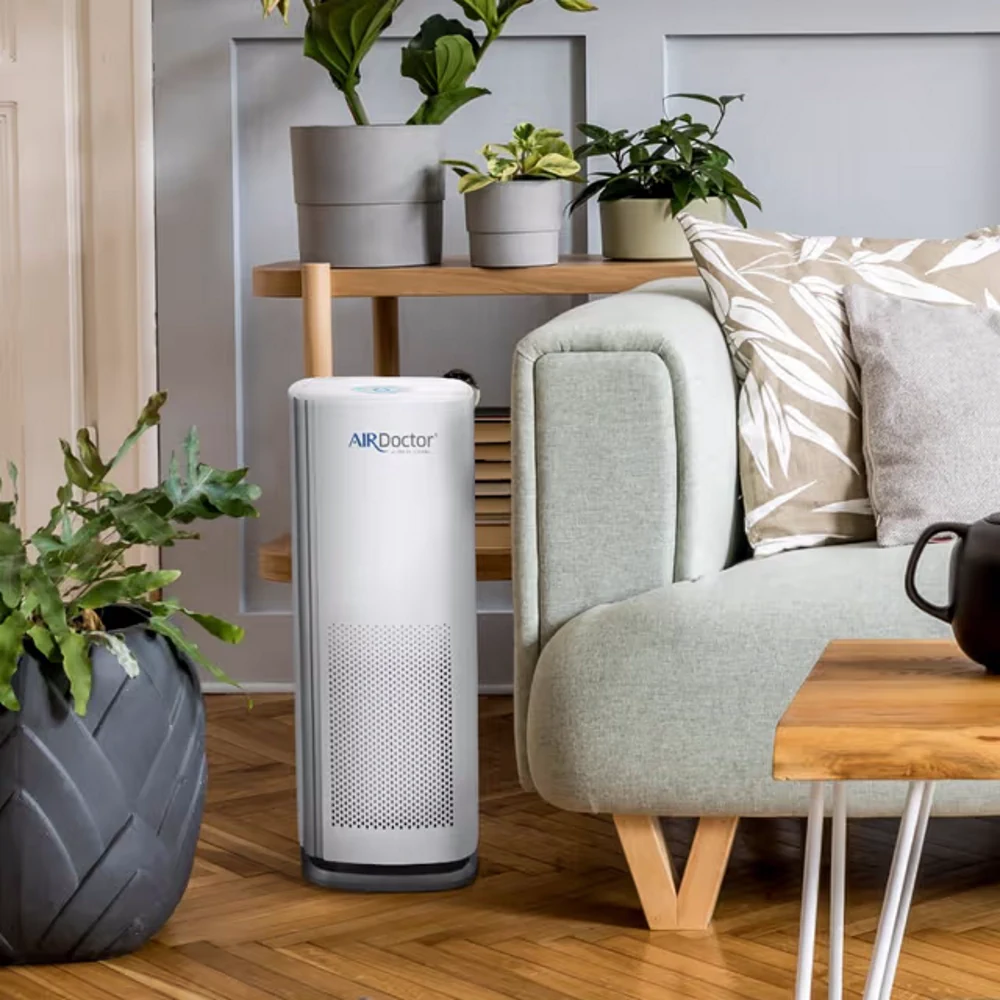
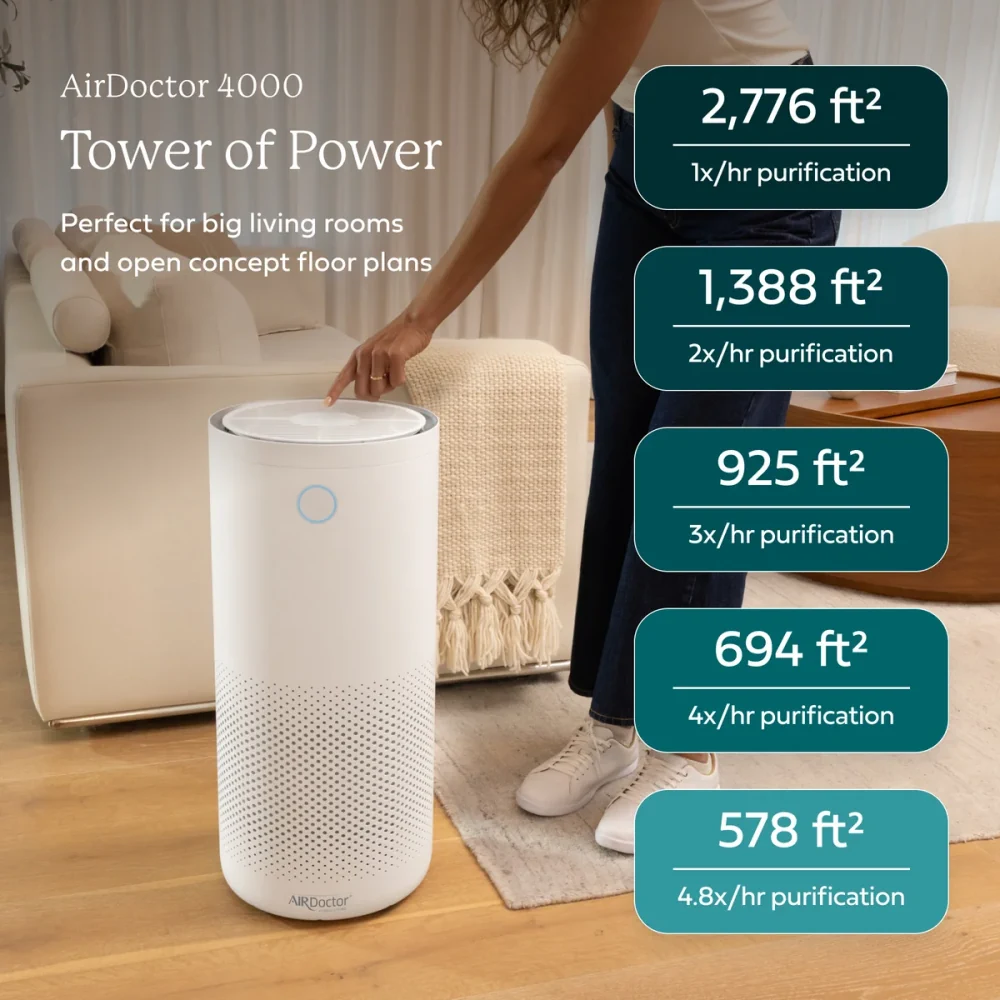
For larger rooms, the AirDoctor 3500 is rated for about 630 square feet at four air circulations per hour, while the newer AirDoctor 4000 increases that figure to approximately 694 square feet. At the top of the range, the AirDoctor 5500 is designed for very large rooms and open spaces, circulating air in about 1,043 square feet four times per hour. This graduated lineup makes it easier to select capacity based on actual room size rather than purchasing one oversized purifier for every location.
Smart Controls and Automatic Air Quality Monitoring
Modern air purification is not only about the filter. Convenience matters too, particularly because a purifier works best when it is actually operating regularly. AirDoctor addresses this with automatic operation and, on compatible Smart models, connected controls. The brand’s Auto Mode can adjust filtration speed according to detected air quality instead of requiring the user to manually change fan settings throughout the day. Several models also feature timers and filter indicators that provide reminders when replacement is required.
Smart versions add access to AirDoctor’s mobile app. According to the app listing, users can view air quality information, receive air quality alerts, customize purifier settings, monitor filter replacement notifications, and control compatible devices remotely. These features are useful rather than purely decorative. A purifier that automatically responds when particle levels rise after cooking, cleaning, opening windows, or other everyday activities requires less attention. The standard models remain suitable for buyers who prefer simpler controls, while the Smart versions are better suited to connected homes.
Performance for Allergies, Smoke, Pets, and Odors
AirDoctor’s filtration configuration makes the range particularly relevant for homes dealing with several types of airborne contamination at once. HEPA-style filtration can reduce airborne pollen, dust, smoke particles, and pet dander, while the separate carbon and VOC stage adds another layer for odors and certain gaseous pollutants. AirDoctor specifically markets its systems for airborne pollutants, allergens, smoke, odors, and VOCs.
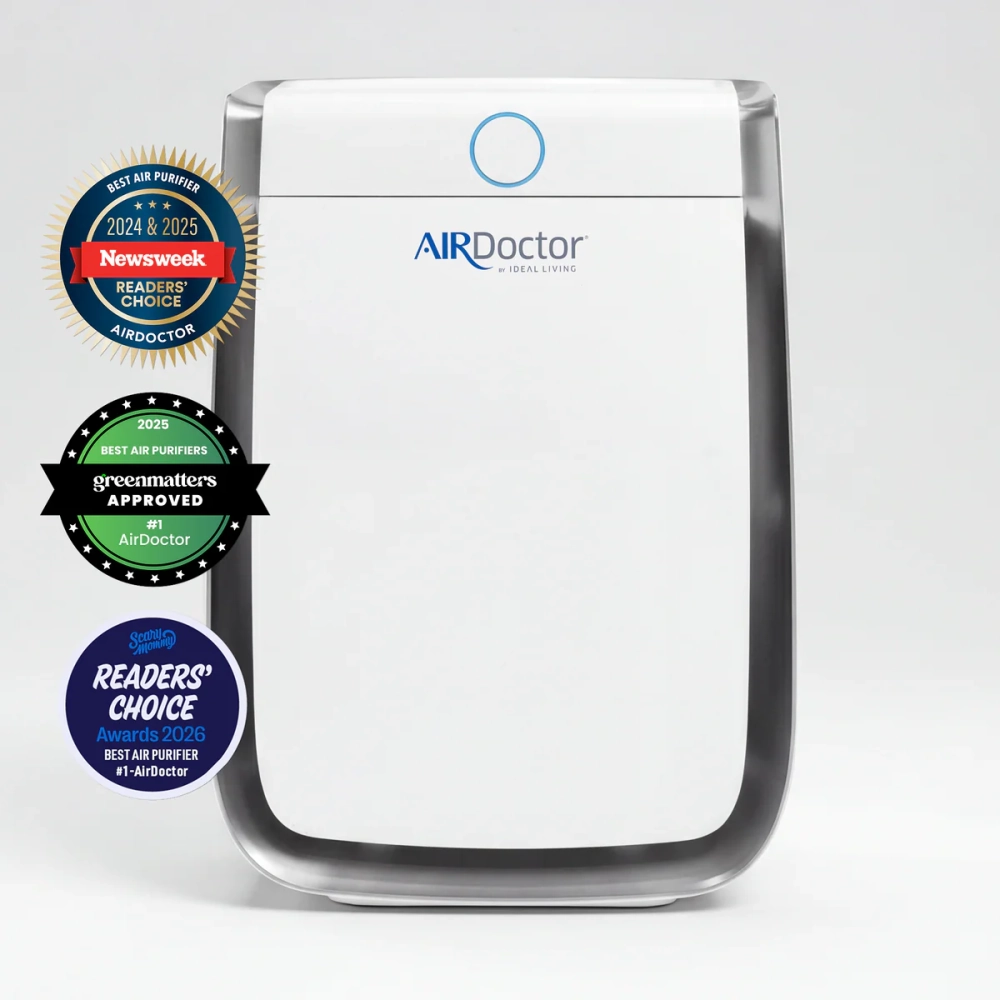
Independent testing also provides some useful context. Verywell Health selected the AirDoctor 3500i Smart as its top option for seasonal allergies in its tested allergy-focused purifier roundup, noting the unit’s HEPA, pre-filter, and carbon/VOC filtration. The publication did identify size and higher noise at maximum speed as drawbacks. WIRED has also highlighted the AirDoctor 5500i for handling PM2.5 and gases, particularly because it combines particle and carbon filtration with high room-air exchange rates. No purifier removes every indoor contaminant, but AirDoctor’s multi-stage setup is well suited to households facing mixed air-quality problems.
Maintenance and the Cost of Long-Term Ownership
Filter maintenance is an important consideration because buying an air purifier is not a one-time expense. Filters gradually accumulate contaminants and must eventually be replaced if the purifier is expected to maintain proper airflow and filtration performance. For the AirDoctor 3500 series, the company recommends replacing the UltraHEPA filter approximately every 12 months and the Carbon/VOC filter about every six months. The AirDoctor 5500 follows a similar schedule but uses two UltraHEPA filters and two Carbon/VOC filters.
The 1000 and 4000 use a different replacement schedule, with AirDoctor indicating that both main filter components should generally be replaced every six months. Filter indicators reduce the guesswork by providing replacement notifications. Still, buyers should factor replacement filters into the overall cost before choosing a model. AirDoctor is positioned as a premium system, so long-term ownership may cost more than operating a basic purifier with inexpensive filters. That recurring expense is one of the clearest tradeoffs.
AirDoctor Pros and Cons
AirDoctor has a strong feature set, but the brand will not be the ideal choice for every household. Its biggest advantages come from filtration depth, capacity options, and convenience. The combination of particle filtration and a dedicated Carbon/VOC stage gives the units broader capability than basic particle-only systems. Multiple purifier sizes also allow buyers to match airflow more accurately to bedrooms, living spaces, offices, and open-plan rooms. Smart models add another layer of convenience through app-based monitoring and control.
Pros
Cons
Safety, Certification, and Practical Expectations
An air purifier should be evaluated not only by filtration claims but also by how it operates inside occupied spaces. AirDoctor states that its air purifiers are certified by the California Air Resources Board to comply with applicable ozone-emission limits. That is useful reassurance for shoppers who are cautious about air-cleaning technologies that intentionally generate significant amounts of ozone.
Expectations should still remain realistic. A portable purifier does not eliminate the need for proper ventilation, source control, HVAC maintenance, regular cleaning, or addressing mold and moisture problems at their source. Room size also matters enormously. A manufacturer’s maximum coverage figure can sound impressive, but the number of air changes per hour is often more useful when comparing actual performance. WIRED specifically recommends matching a purifier’s airflow and CADR to room dimensions and paying attention to how frequently the room’s air can be processed. AirDoctor’s published four-times-per-hour coverage figures make that comparison relatively easy.
Final Verdict: Is AirDoctor Worth It?
AirDoctor earns its premium positioning by offering more than basic filtration. The range combines high-capacity air circulation, particle filtration, dedicated Carbon/VOC filters, automatic sensing, multiple room-size options, and optional smart connectivity. The AirDoctor 2000 provides a practical choice for smaller bedrooms and offices, the 3500 and 4000 make sense for larger everyday living spaces, and the 5500 is designed for substantial open areas where higher airflow is needed.
The biggest hesitation is cost. Purchasing a premium purifier is only the beginning, since replacement filters remain part of ongoing ownership. For buyers primarily interested in the lowest possible operating expense, simpler competitors may offer better value. For households that prioritize robust filtration, VOC and odor reduction, automatic operation, and strong room coverage, however, AirDoctor presents a sophisticated and well-rounded solution. It is particularly attractive for people dealing with allergies, pets, wildfire smoke, urban pollution, or persistent concerns about indoor air quality.