
AquaTru Review: Reverse Osmosis Water Purifiers for Cleaner, Better-Tasting Drinking Water

AquaTru is a water purification brand built around one central promise: making reverse osmosis filtration easier to use in everyday homes and business spaces. The brand focuses on drinking water systems rather than broad whole-house filtration, which gives its product line a clear and practical identity. Instead of selling a wide mix of generic pitchers, faucet attachments, and refrigerator filters, AquaTru concentrates on compact reverse osmosis purifiers that can fit into kitchens, offices, apartments, break rooms, and shared spaces where clean drinking water matters.
The appeal of AquaTru comes from the way it brings advanced filtration into a more approachable format. Traditional reverse osmosis systems often require under-sink installation, plumbing changes, storage tanks, and a level of setup that can discourage renters or homeowners who want a simpler solution. AquaTru answers that concern with countertop and carafe-style systems that do not require major installation. For households that prefer a built-in option, the brand also offers an under-sink system designed for more permanent placement and on-demand access.
AquaTru is especially relevant for people who want more than basic taste improvement. Many common filters focus heavily on chlorine reduction and odor improvement, but reverse osmosis is a more intensive purification method. AquaTru systems are built to reduce a wide range of contaminants, including heavy metals, chemical residues, PFAS-related compounds, microplastics, and other unwanted substances that may be found in tap water. The result is a brand that feels more technical than lifestyle-driven, yet still consumer-friendly. AquaTru serves buyers who want practical filtration, cleaner taste, and stronger contaminant reduction without turning the kitchen into a complicated plumbing project.
Product Range: Countertop, Carafe, and Under-Sink Systems
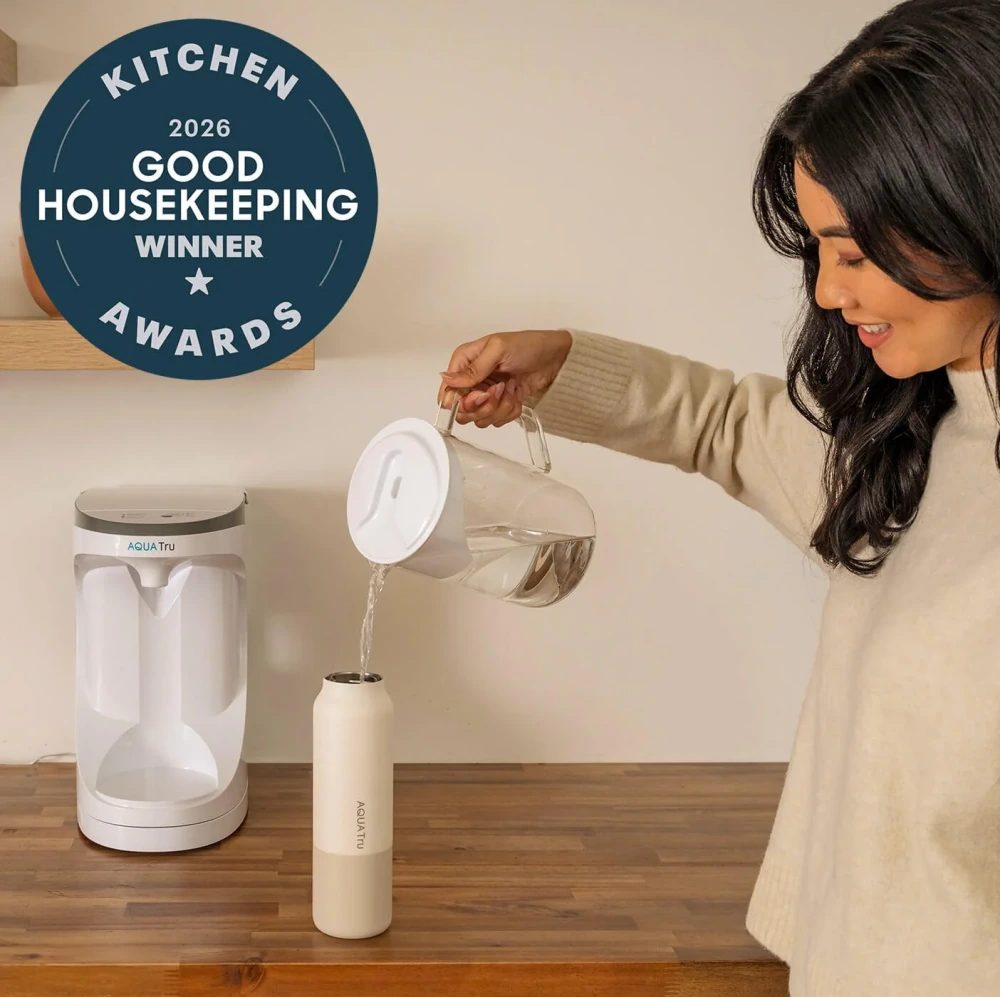
AquaTru’s product range is narrow in the best sense. The brand does not try to cover every type of water filtration category. Instead, it stays focused on reverse osmosis drinking water systems and the replacement filters needed to keep those systems performing properly. This gives the lineup a clean structure. The main choices are countertop purifiers, carafe-style purifiers, under-sink systems, and filter options that support ongoing maintenance or add mineral enhancement.
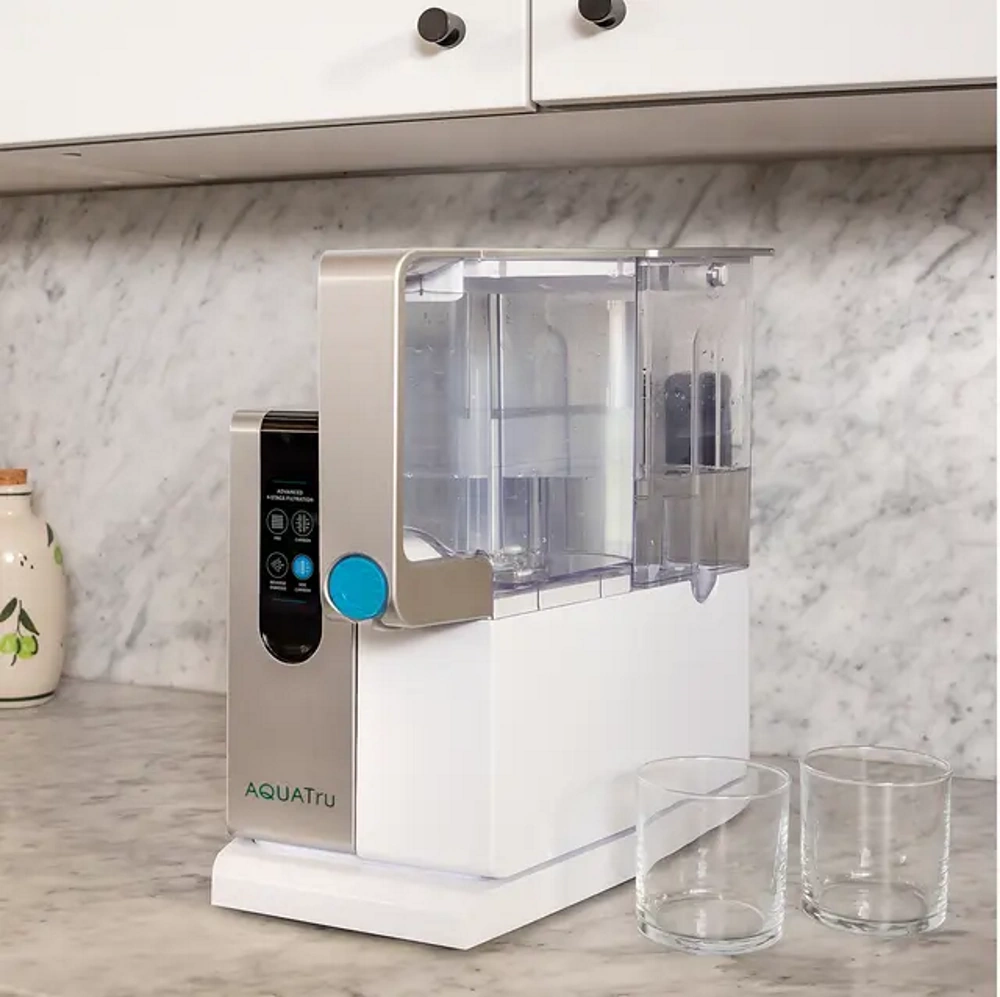
The AquaTru Classic is one of the brand’s core products. It is a countertop reverse osmosis purifier designed for households that want strong filtration without plumbing installation. Users fill the tap water tank, allow the system to purify the water, and collect clean water in a separate clean-water tank. This format works well for renters, apartment dwellers, small households, and anyone who does not want to drill into cabinetry or modify pipes. It also suits families that want to move their purifier from one kitchen to another.
The AquaTru Carafe offers a more compact version of the same general concept. It is smaller, lighter, and better suited for people who have limited counter space or prefer to store purified water in a glass-style carafe. This model fits especially well in apartments, home offices, dorm-style living spaces, and kitchens where a larger countertop appliance would feel intrusive.
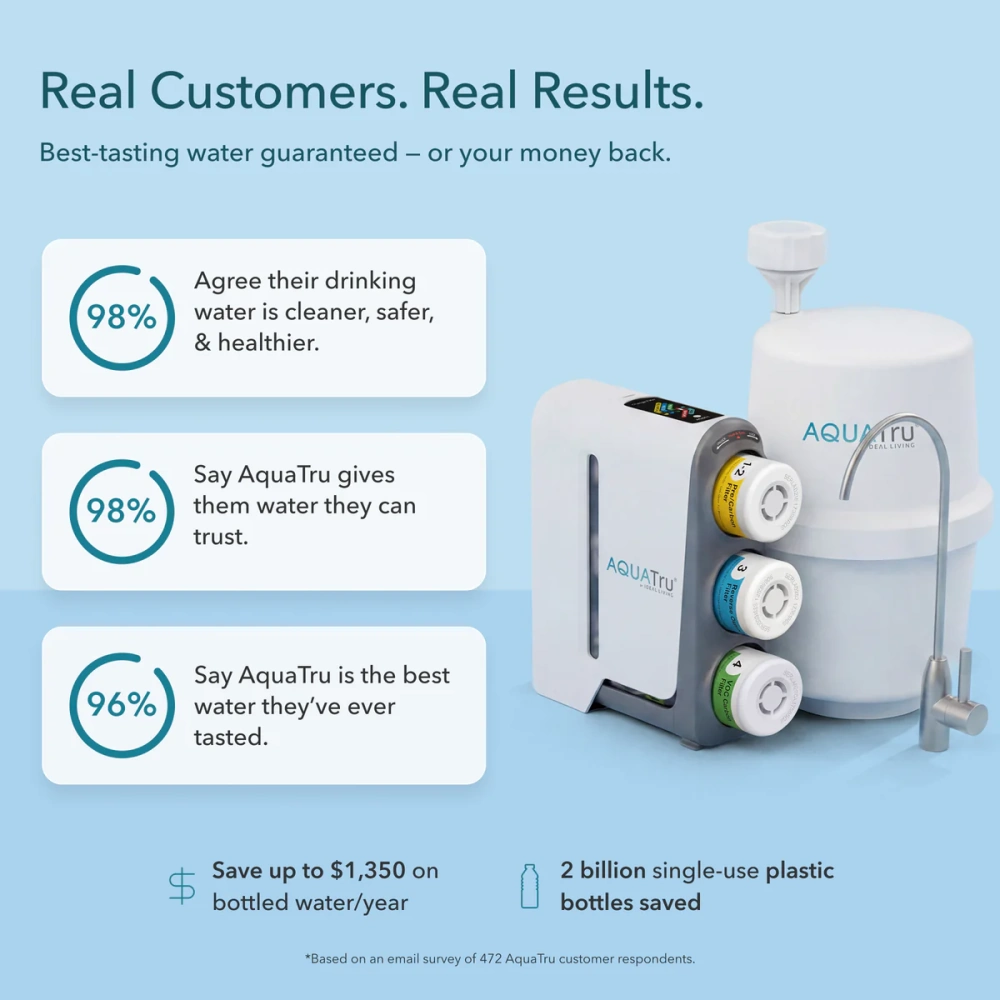
The AquaTru Under Sink system is the more integrated option. It is designed for people who want purified water available from a built-in system with a storage tank. This makes sense for higher-use households, shared offices, and business environments where multiple people rely on purified water throughout the day. Together, these systems create a lineup that covers portability, compact living, and more permanent installation without losing focus.
Reverse Osmosis Technology: What Makes AquaTru Different From Basic Filters
The strongest reason to consider AquaTru is its use of reverse osmosis filtration. Basic carbon filters can improve taste and reduce certain contaminants, but reverse osmosis is a more advanced purification method. AquaTru systems use a multi-stage process that typically begins with pre-filtration, continues through carbon filtration, then moves through a reverse osmosis membrane, and finishes with a VOC-focused carbon stage. This layered process is important because water contamination is rarely one-dimensional. Sediment, chlorine, metals, volatile organic compounds, and dissolved solids require different filtration approaches.
The pre-filter stage helps capture larger particles such as sediment and rust. This matters because larger particles can affect taste, clarity, and filter longevity. The carbon stage helps reduce chlorine and chloramines, which are common reasons tap water smells or tastes unpleasant. The reverse osmosis membrane then performs the most intensive part of the process by reducing many dissolved contaminants that ordinary filters may miss. The final carbon stage is designed to polish the water further, improving taste while addressing certain organic chemicals and residues.
AquaTru’s approach is valuable because it combines technical filtration with a consumer-friendly format. Many people understand that reverse osmosis is effective, but they associate it with bulky under-sink equipment. AquaTru makes RO purification feel more accessible. The countertop and carafe systems make the technology usable for renters, families, and office users who want serious filtration without a permanent installation.
There is also an important tradeoff to understand. Reverse osmosis can remove beneficial minerals along with unwanted contaminants. For some users, that clean, neutral taste is exactly the goal. Others may prefer AquaTru’s mineral-enhancing filter options or mineral drops to restore some body and balance to the water. This flexibility strengthens the brand because it gives buyers a choice between very clean-tasting purified water and a more mineral-rounded drinking experience.
Setup and Everyday Use: Designed for Convenience Without Major Installation
AquaTru’s countertop and carafe systems are strongest when judged by daily usability. Many water filtration products sound impressive on paper, but become frustrating when refilling, cleaning, filter replacement, or setup feels inconvenient. AquaTru reduces much of that friction by keeping the user experience simple. With the countertop and carafe models, users fill the tap water tank, start the purification process, and collect purified water in a separate chamber. There is no faucet diverter, no under-counter drilling, and no complicated plumbing process for these models.
This setup is especially useful for renters. Many apartment residents want stronger water filtration but cannot install permanent systems. AquaTru gives those users access to reverse osmosis purification in a format that can sit on a countertop and move with them. The same benefit applies to people living in condos, dorms, temporary housing, or older homes where plumbing upgrades are not ideal. The systems require countertop space and an electrical outlet, but they remove the need for heavy installation work.
The clean-water tank format also helps users see the purification process clearly. There is a psychological benefit to separating unfiltered tap water from purified drinking water. It makes the system feel more transparent and intentional. The user knows when the tank needs refilling, when clean water is available, and when the system needs attention.
There are still practical limits. Countertop units take up visible kitchen space. They require refilling. They are not intended to supply an entire household’s shower, laundry, and appliance water. They are drinking water systems first. For buyers who understand that purpose, AquaTru is convenient and efficient. For buyers who expect whole-home filtration, the brand’s products may feel too focused. That focus, however, is also what makes AquaTru easier to understand and easier to use.
Filtration Performance and Certification: A Major Strength of the Brand
AquaTru’s credibility rests heavily on its contaminant reduction performance and third-party certification. In the water filtration category, this matters a great deal. Many products make broad purification promises, but strong buyers should look for testing, certification, and performance data rather than marketing language alone. AquaTru has built much of its reputation around systems that are tested and certified by IAPMO to NSF standards for the reduction of a wide range of contaminants.
The brand’s systems are associated with reduction of contaminants such as lead, arsenic, chromium-6, nitrates, chlorine, chloramines, PFAS-related compounds, VOCs, microplastics, and other unwanted substances that may appear in drinking water. This is one of the most important differences between AquaTru and simpler pitcher-style filters. A pitcher may improve taste and reduce certain impurities, but it usually does not provide the same level of broad-spectrum purification as a reverse osmosis system.
AquaTru is also timely because water quality concerns have become more visible. Consumers are more aware of “forever chemicals,” aging pipes, industrial runoff, agricultural contamination, and the difference between water that is legally treated and water that tastes or feels genuinely clean. AquaTru addresses that concern by giving households a purification method that goes beyond basic aesthetic improvement.
This does not mean every user needs reverse osmosis. Some homes already have excellent municipal water and only need taste improvement. Others may have local water concerns that make advanced filtration more appealing. AquaTru is best for people who want a higher standard of drinking water control. Its value is not only in cleaner taste, but in the added confidence that comes from a more rigorous filtration process. For families, health-conscious households, and offices serving multiple people, that confidence can be a major reason to choose the brand.
Design, Build, and Space Considerations
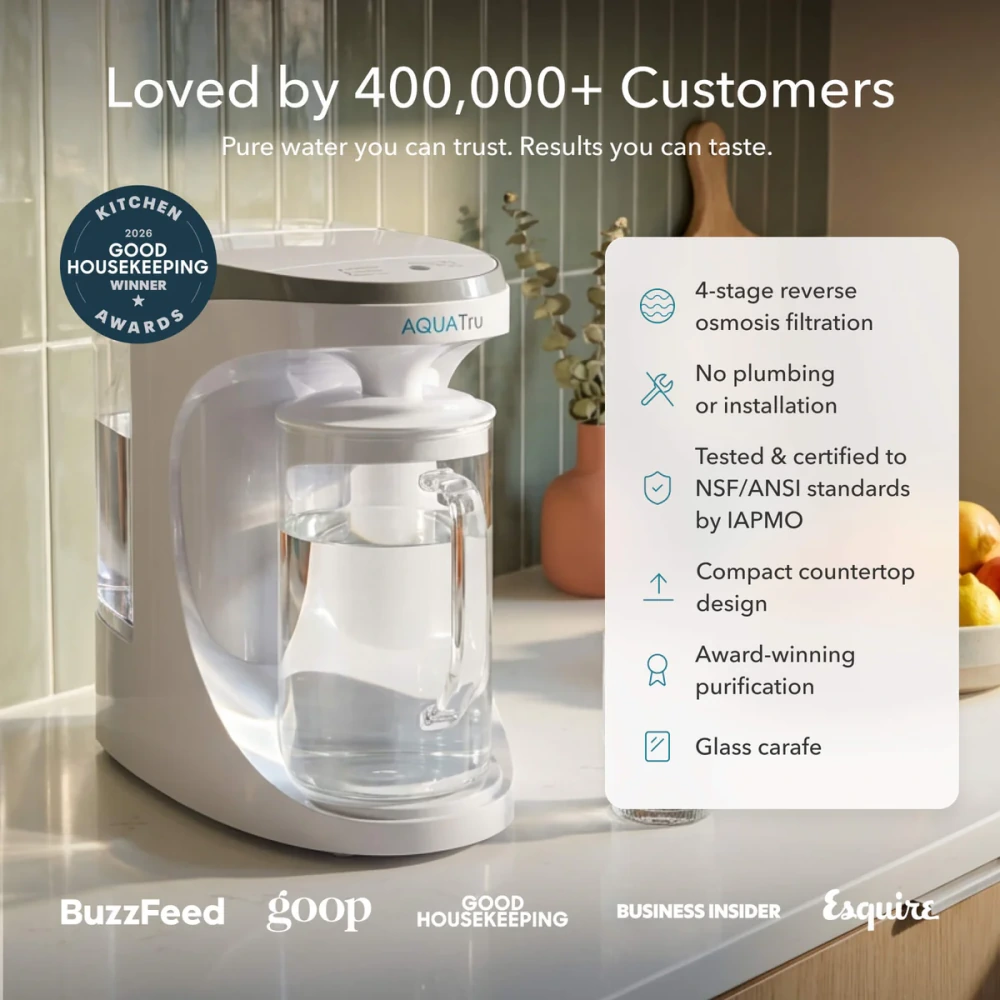
AquaTru systems are designed to be visible, functional appliances rather than hidden accessories. This matters most for the countertop and carafe models because they live in plain sight. A water purifier that sits on a kitchen counter needs to be easy to access, simple to refill, and compact enough not to dominate the workspace. AquaTru balances these priorities reasonably well. The Classic has a larger footprint because it is built for higher capacity, while the Carafe model offers a slimmer and more space-conscious option.
The design language is clean and modern. It is not decorative, but it is polished enough for contemporary kitchens and office pantries. The transparent tanks make the filtration process easy to understand at a glance. Users can see when tap water is loaded, when purified water is available, and when the system needs refilling. This visual clarity supports daily use and reduces guesswork.
The under-sink system serves a different design purpose. It removes the purifier from the countertop and gives users cleaner access to purified water without a freestanding appliance. This can be a better fit for homeowners, larger families, and workplaces that want a more seamless appearance. The tradeoff is installation. A built-in system is less portable and may require more planning, but it also creates a more integrated user experience.
Space is one of the biggest factors when choosing between AquaTru models. A small apartment or home office may benefit from the Carafe. A family kitchen may be better served by the Classic. A business, shared workspace, or higher-use household may prefer the Under Sink system. AquaTru’s lineup works because each design solves a different space problem while maintaining the same core filtration philosophy.
Filter Maintenance, Replacement Costs, and Long-Term Value
AquaTru is not a one-time purchase. Like any serious filtration system, it requires ongoing filter replacement to maintain performance. This is an important part of the ownership experience and should be included in any value calculation. The system itself may be the most visible cost, but replacement filters determine the long-term cost of clean water. Buyers who compare AquaTru only to low-cost pitchers may find it expensive. Buyers who compare it to bottled water delivery, under-sink RO installation, or premium filtration systems may see stronger value.
The replacement schedule depends on the filter type and usage level. Pre-filter and carbon elements usually require more frequent replacement because they handle the first stages of filtration and protect the system from sediment, chlorine, and other common tap water issues. Reverse osmosis membranes tend to last longer because they perform a different role in the purification process. VOC carbon filters and mineral-enhancing filters also have their own maintenance rhythm. The important point is that AquaTru ownership requires consistency. Filters should be replaced on time, not only when water taste changes.
Long-term value also depends on household behavior. A person who drinks very little water may not fully benefit from a premium RO system. A family that uses purified water for drinking, coffee, tea, cooking, pet bowls, and reusable bottles will likely get more value from the purchase. Offices and small businesses can benefit even more because multiple users draw from the same system.
AquaTru also reduces reliance on single-use plastic bottles. This adds both practical and environmental value. Bottled water is expensive over time, heavy to transport, and wasteful when used as a daily drinking solution. AquaTru gives users a more sustainable way to create purified water at home or work, while still maintaining a high level of filtration performance.
Pros and Cons of AquaTru
AquaTru has a strong value proposition, but it is not the perfect choice for every buyer. Its strengths are most obvious for users who want serious contaminant reduction, reverse osmosis purification, and a system that is easier to use than traditional built-in RO setups. Its limitations are mostly related to cost, counter space, refill habits, and the fact that it focuses on drinking water rather than whole-home filtration.
Pros
Cons
Overall, AquaTru’s pros outweigh its cons for buyers who specifically want reverse osmosis drinking water purification. The drawbacks are real, but they are predictable and manageable when the buyer chooses the right model for the space.
Who Should Buy AquaTru?
AquaTru is best for people who care about drinking water quality and want a stronger solution than a basic pitcher. It is especially suitable for households concerned about contaminants such as lead, arsenic, PFAS-related compounds, chlorine byproducts, microplastics, and volatile organic compounds. It also fits users who dislike the taste of tap water and want a cleaner, more neutral flavor for drinking, coffee, tea, and cooking.
Renters are one of AquaTru’s strongest audiences. The countertop and carafe models allow renters to access reverse osmosis purification without altering plumbing or asking for landlord approval. This is a major advantage because many high-performance filtration systems require installation. AquaTru gives renters a way to upgrade their water quality while keeping flexibility.
Families are another strong fit. Children, adults, pets, and guests all rely on the same drinking water source, and a dependable purifier can become part of the household routine. AquaTru is also useful for people who fill reusable bottles daily or want better water for baby formula preparation, cooking grains, brewing coffee, or making tea. Clean water affects more than drinking. It can influence flavor in many everyday kitchen tasks.
Small businesses, studios, clinics, and offices may also benefit from AquaTru, especially the under-sink model or larger countertop system. Providing purified water in shared spaces can improve convenience and reduce bottled water waste. For business settings, AquaTru makes the most sense where daily use is moderate and where a full commercial filtration setup would be unnecessary.
AquaTru is less ideal for people who need whole-home filtration, very high-volume water production, or a no-maintenance solution. It is also not the best choice for buyers who only want the cheapest way to reduce chlorine taste. This is a premium drinking water purifier for people who value deeper filtration.
Final Verdict: Is AquaTru Worth It?
AquaTru is worth considering for buyers who want a serious drinking water purification system without the complexity of traditional reverse osmosis installation. Its strongest advantage is the combination of advanced filtration, approachable design, and flexible product formats. The brand makes reverse osmosis feel less intimidating, which is a meaningful achievement in a category that often feels technical and difficult to compare.
The Classic is the best fit for many households because it offers strong purification in a countertop format that does not require plumbing. The Carafe is ideal for smaller spaces and lighter use. The Under Sink system is the better option for homeowners, larger households, and shared spaces that want more continuous access to purified water. This range gives AquaTru enough flexibility to serve different lifestyles while staying committed to its core technology.
The brand is not cheap compared with basic filters, and buyers should factor in replacement filter costs from the beginning. That said, AquaTru should not be judged as a simple pitcher alternative. It belongs in a more advanced category. When compared with bottled water habits, professional RO installation, and the long-term desire for better control over drinking water quality, AquaTru becomes a compelling investment.
AquaTru is especially strong for people who want clean-tasting water, contaminant reduction, and a system that fits into everyday routines. It is practical for renters, valuable for families, useful for offices, and reassuring for anyone who wants more confidence in what comes out of the tap. For buyers who want reverse osmosis purification in a more convenient format, AquaTru stands out as one of the most focused and well-rounded brands in the home water filtration market.