
Jade Leaf Matcha Review: Japanese Matcha Made Approachable for Everyday Routines

Jade Leaf Matcha is built around a simple idea: authentic Japanese matcha should feel accessible rather than intimidating. The brand offers pure matcha powders, latte mixes, starter sets, tools, hojicha products, and other drink-focused options for everyone from beginners to experienced matcha drinkers. Its website separates products by grade, caffeine level, format, and intended use, making it easier to understand what belongs in a traditional bowl, a creamy latte, or a baking recipe. Instead of treating matcha as a niche luxury, Jade Leaf presents it as a flexible daily beverage that can be prepared hot, iced, sweetened, unsweetened, blended with milk, or added to food. The overall identity feels casual and contemporary, while still giving meaningful attention to Japanese sourcing and tea-making traditions.
Brand Story, Farmers, and Japanese Sourcing
The sourcing story gives Jade Leaf more substance than a typical trendy beverage label. The brand states that its matcha is produced through the Kizuna Tea Collective, a network of family-run farms across Japanese growing regions. Kizuna is headquartered in Kyoto and has supplied Japan’s domestic tea market since 1858, while the Jade Leaf name entered the United States in 2014. Jade Leaf also identifies Uji and Kagoshima as key sourcing regions. According to the company, tea masters select and blend leaves from partner farms to create consistent flavor profiles across harvests. That approach matters because agricultural products naturally vary from season to season. Rather than promising that every batch comes from one tiny plot, the brand emphasizes relationships, tea-master expertise, and farm-direct supply. For shoppers who care about origin but still want dependable everyday matcha, that is a sensible middle ground.
A Product Range for Different Matcha Habits
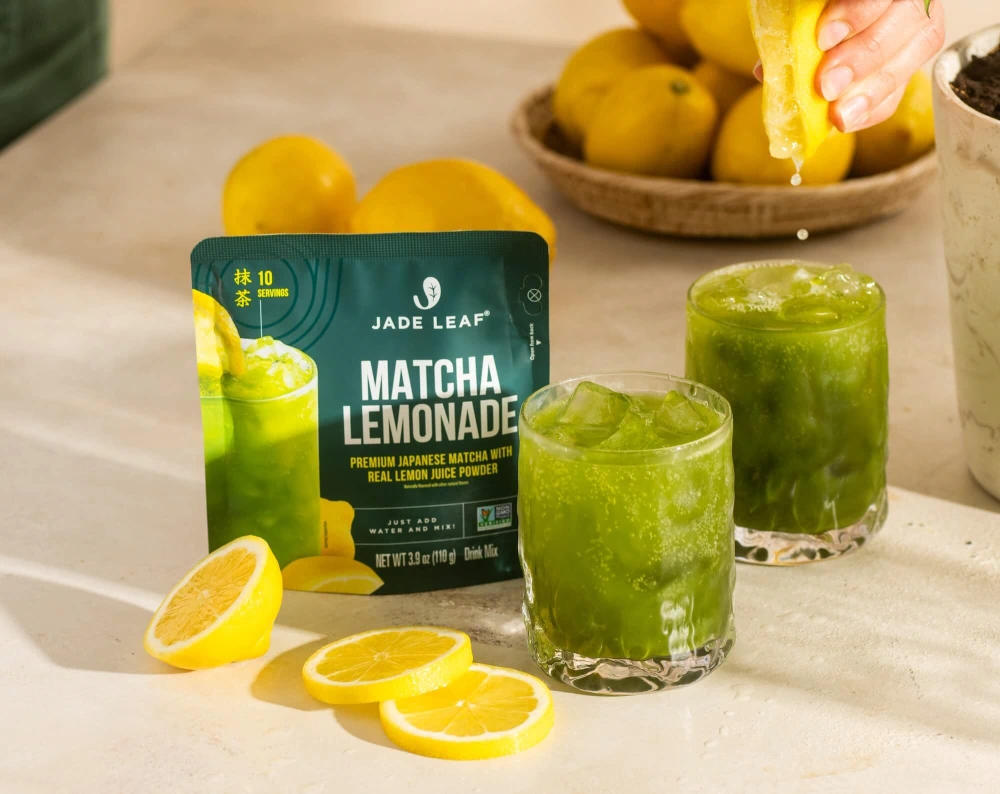
Jade Leaf’s catalog is broad enough to serve several types of customers without wandering far from its specialty. The range includes ceremonial powders, culinary powder, sweetened and sugar-free latte mixes, flavored options such as vanilla and strawberry, stick packs, starter sets, bamboo whisks, bowls, frothers, hojicha powder, and matcha lemonade. The shop also distinguishes first-harvest ceremonial teas from second-harvest culinary matcha and proprietary blends used in latte products. This is more useful than relying on vague labels such as premium or classic. A traditional tea drinker can buy pure powder, a commuter can choose stick packs, and someone who mainly wants café-style lattes can start with a premixed product. The drawback is that beginners may still need to read carefully because several products appear quite similar at first glance.
Ceremonial Matcha for Tea and Lattes
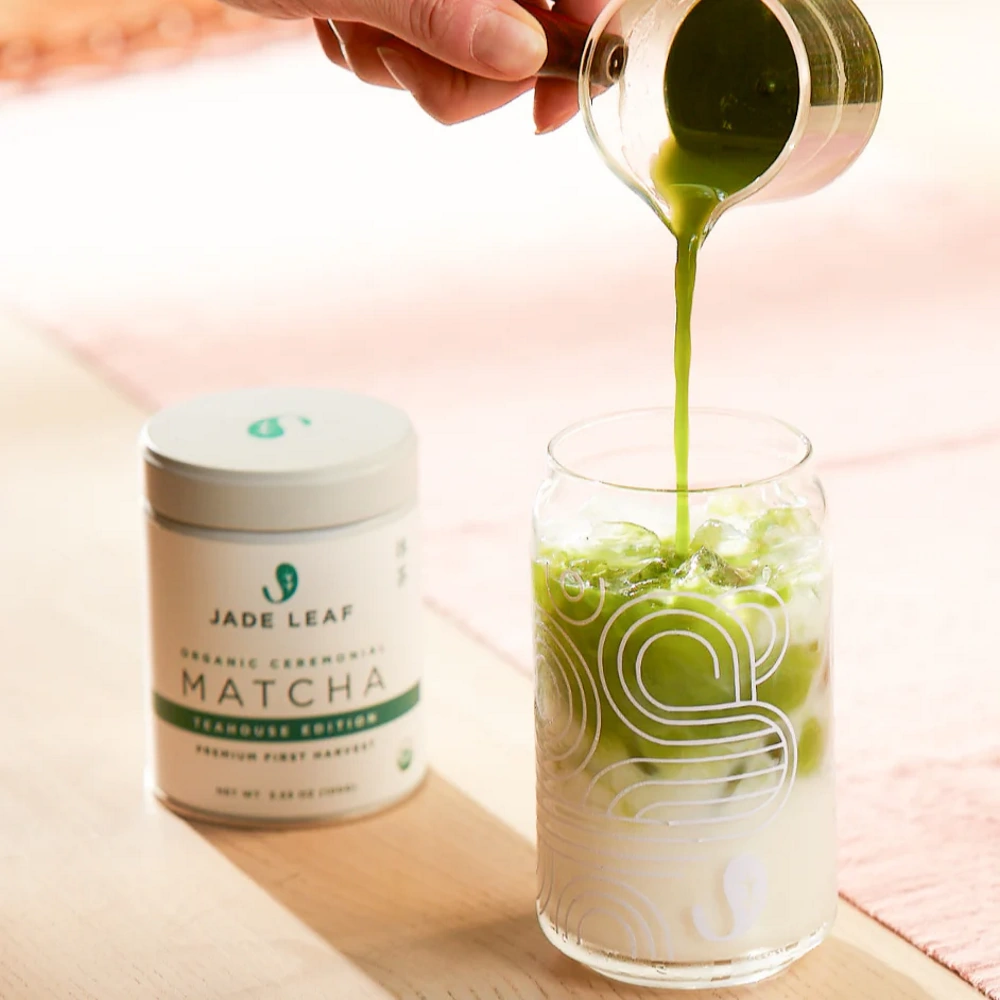
The ceremonial line is the clearest expression of Jade Leaf’s quality-focused side. Its Teahouse Edition is positioned as the most premium blend, made from first-harvest leaves and intended for traditionally prepared hot or iced matcha. Its listed flavor profile is smooth, lightly nutty, and softly floral. The Barista Edition also uses first-harvest leaves, but it is designed for both straight matcha and milk-based drinks, with mild nutty and umami notes. Both contain only organic Japanese matcha green tea powder and are listed as USDA Organic, vegan, gluten-free, dairy-free, and farm-direct. They come from Uji and Kagoshima and list 20 to 40 milligrams of caffeine per serving. The distinction is useful. Teahouse Edition suits drinkers seeking a delicate straight tea, while Barista Edition is the more adaptable option for frequent lattes.
Latte Mixes Put Convenience First
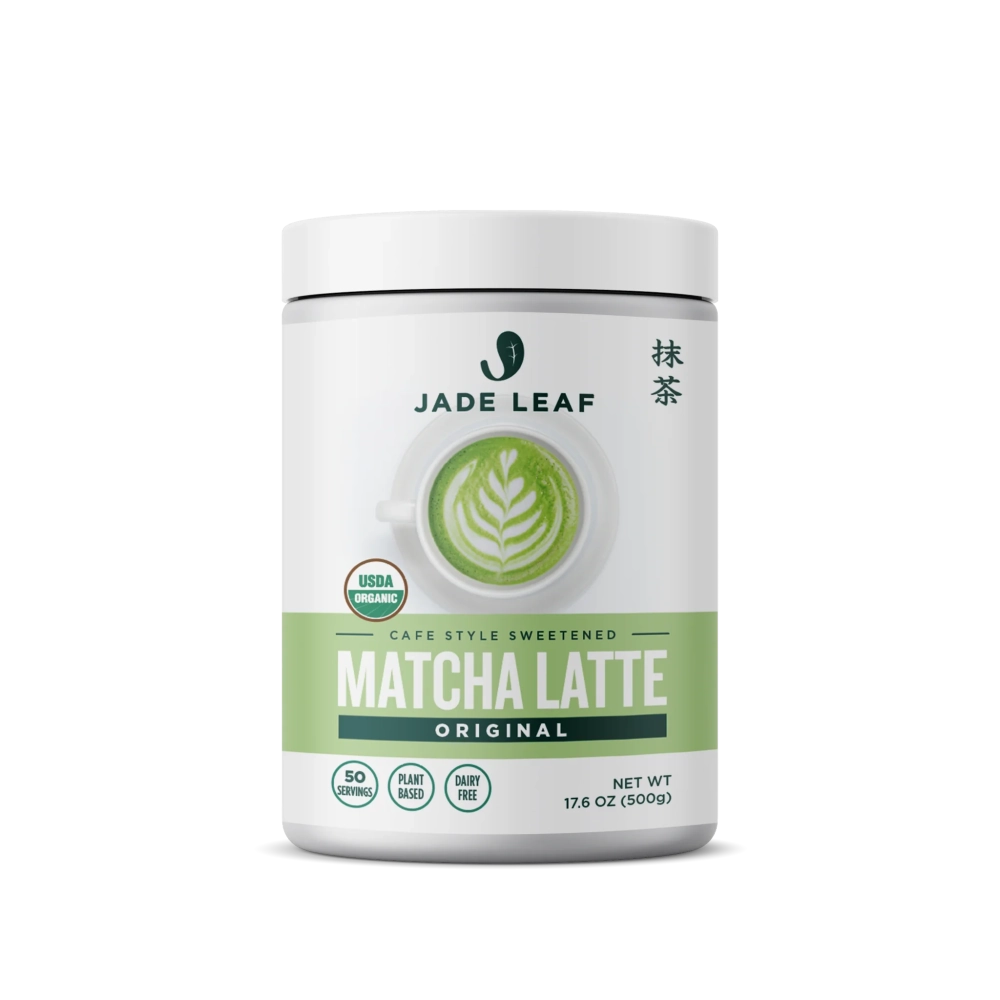
Jade Leaf’s latte mixes may appeal to the widest audience because they remove much of the measuring and flavor balancing involved in homemade matcha. The Original Organic Cafe Style Sweetened Matcha Latte Mix contains organic unrefined cane sugar and organic Japanese matcha. Preparation is simple: mix the powder with warm water, then add hot or cold milk. The brand also sells flavored, sugar-free, collagen, and single-serve variations, covering several tastes and routines. Convenience is the main advantage, especially for people who enjoy coffee-shop drinks but do not want to test different matcha-to-sweetener ratios. The tradeoff is clear. A premixed product gives less control over sweetness and strength than pure powder. Customers monitoring sugar intake or seeking the simplest ingredient list should inspect each label rather than assuming every Jade Leaf product is only ground tea.
Culinary Matcha Adds Real Versatility
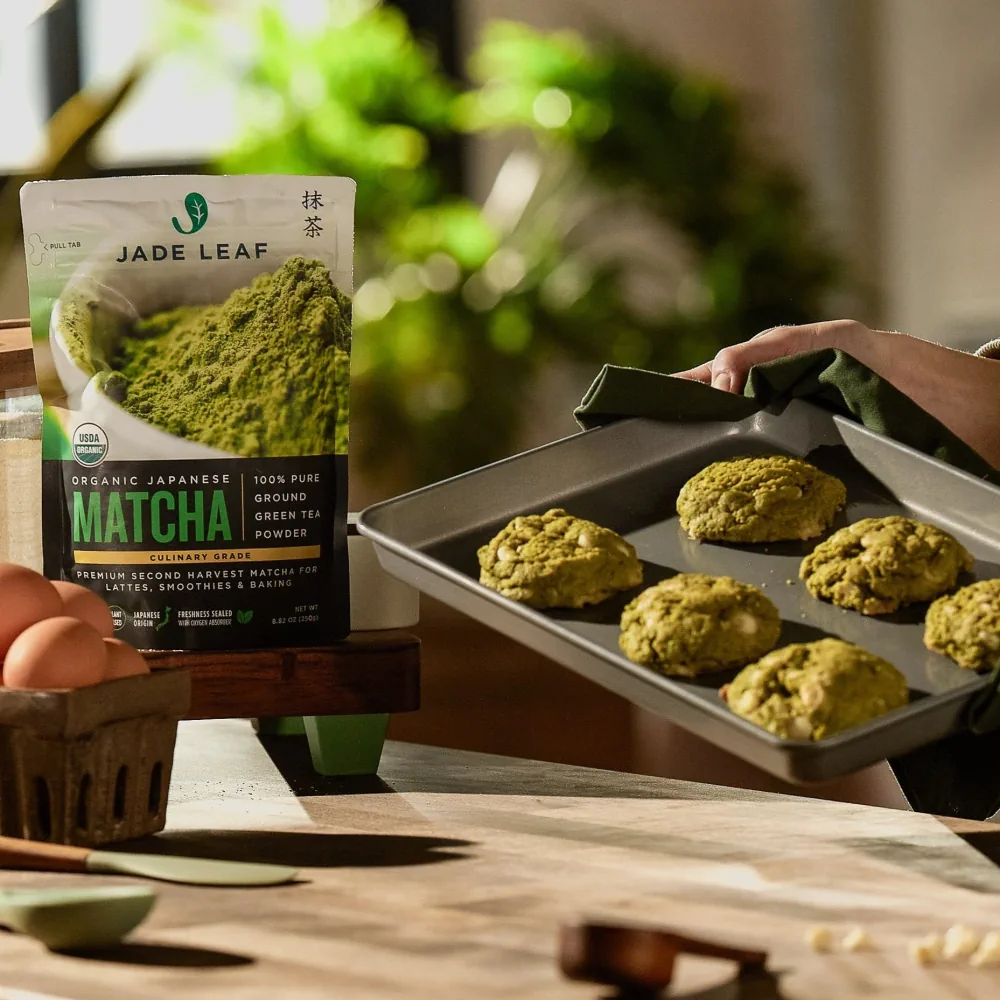
Organic Culinary Matcha is designed for blending, baking, smoothies, desserts, and recipes where ceremonial powder would be unnecessarily expensive or too delicate. Jade Leaf describes culinary matcha as a second-harvest tea with a more pronounced earthy, nutty, and umami profile. That stronger taste helps it stand up to milk, flour, fruit, chocolate, and sweeteners. The product contains only organic Japanese matcha green tea powder and carries USDA Organic, vegan, gluten-free, dairy-free, and farm-direct descriptions. Suggested use ranges from adding one to three teaspoons per cup of flour to mixing half a teaspoon with water for a drink. This is one of the brand’s most practical products. It gives home cooks an affordable way to make matcha pancakes, cookies, smoothies, ice cream, and lattes without using premium ceremonial powder in every recipe.
Quality Standards, Caffeine, and Preparation
Jade Leaf provides more quality and preparation information than many mainstream beverage brands. The company says every batch is tested by an independent certified third-party laboratory and that its operation is FDA-registered and compliant with current Good Manufacturing Practices. Caffeine varies by product. Pure matcha powders generally contain 16 to 40 milligrams per serving, latte mixes contain about 20 to 30 milligrams, and hojicha powders offer 5 to 10 milligrams. Preparation guidance is equally specific. A typical serving uses about one-half to one teaspoon of powder with two ounces of water between 140°F and 175°F. Boiling water is discouraged because it can create bitterness. A bamboo whisk is traditional, but an electric whisk, blender, or milk frother can also work. These details make the range beginner-friendly and reduce the chance that poor preparation will be mistaken for poor-quality matcha.
Price, Shipping, and Buying Experience
Jade Leaf sits between inexpensive grocery-store green tea powder and specialized matcha sold at luxury prices. Current entry prices on the official site include culinary matcha and the original latte mix from $10.99, while the Teahouse and Barista ceremonial editions begin at $22.99. Starter tools and sets provide a convenient route for first-time buyers, although bundles can raise the order total quickly. The site offers free standard shipping on orders over $60 and charges a flat $7.99 fee below that threshold. A 60-day satisfaction guarantee applies to qualifying purchases from the company or authorized United States sellers, but customers may be responsible for return shipping. Overall, the store is easy to understand, and descriptions provide useful details about grade, origin, caffeine, flavor, and use. The main challenge is choosing among closely related formats rather than finding basic information.
Jade Leaf Matcha Pros and Cons
Pros
Jade Leaf Matcha works with family-run farms in Japan and sources tea from well-known growing regions such as Uji and Kagoshima.
The collection includes ceremonial matcha, culinary powder, latte mixes, flavored drinks, stick packs, hojicha, starter sets, and preparation tools.
Beginners can start with convenient latte mixes or bundles, while experienced matcha drinkers can choose premium ceremonial powders.
Product pages explain the matcha grade, flavor profile, caffeine content, origin, suggested use, and preparation method.
The ceremonial and culinary powders contain only organic Japanese matcha green tea powder without unnecessary additives.
Cons
Sweetened latte products offer convenience but provide less control over sweetness and overall sugar intake.
Customers seeking pure, traditionally prepared matcha may prefer the ceremonial powders over flavored or collagen-based drinks.
Matcha should be kept tightly sealed and protected from heat, moisture, air, and direct sunlight after opening.
Final Verdict: An Accessible Entry Into Better Matcha
Jade Leaf Matcha succeeds because it respects matcha tradition without making the category feel exclusive. Its farm relationships, Japanese sourcing, organic options, clear grading system, and practical preparation guides give the brand a stronger foundation than products built mainly around attractive packaging or wellness buzzwords. The Teahouse Edition is the natural fit for straight matcha, the Barista Edition works well for flexible daily drinks, the latte mixes prioritize speed and familiarity, and the culinary powder offers strong value for recipes. Not every product will suit every customer, particularly those avoiding sugar or seeking rare single-estate teas. Still, the range is thoughtful, approachable, and easy to work into everyday routines. For shoppers who want reliable Japanese matcha with enough variety to progress from beginner drinks to more traditional preparation, Jade Leaf offers a convincing balance of quality, convenience, and price.