
Ka’Chava Review: Plant-Based All-in-One Nutrition for Busy, Health-Conscious Routines

Ka’Chava is built for people who want a convenient nutritional option without reducing a meal to protein alone. Its flagship Superblend Shake combines plant protein, fiber, fats, vitamins, minerals, fruits, vegetables, seeds, functional mushrooms, adaptogens, probiotics, prebiotic fiber, digestive enzymes, and other plant-based ingredients in a single powder. The formula is designed to work as a small meal, a substantial snack, or a nutritional foundation that can be customized with fruit, nut butter, oats, or nondairy milk.
This broad formula separates Ka’Chava from basic protein powders. A conventional protein powder usually has one primary job: helping the user increase protein intake. Ka’Chava takes a wider approach by combining macronutrients with micronutrients and multiple ingredient blends. That makes it especially attractive to busy professionals, travelers, students, parents, fitness enthusiasts, and anyone who sometimes struggles to assemble a balanced breakfast or midday meal.
Convenience is central to the experience. Two packed scoops can be mixed with cold water and ice, eliminating the need to measure several powders or purchase a long list of smoothie ingredients. The shake is vegan and made without dairy, soy, gluten, artificial colors, artificial flavors, artificial sweeteners, or preservatives. These qualities broaden its appeal, although the long ingredient list also means that people with allergies, medical conditions, or medication concerns should read the label carefully.
Ka’Chava is not a substitute for every whole-food meal. It is a premium convenience product that can make consistent nutrition easier when time, appetite, travel, or daily responsibilities interfere with normal meal preparation.
Nutrition Profile and All-in-One Formula
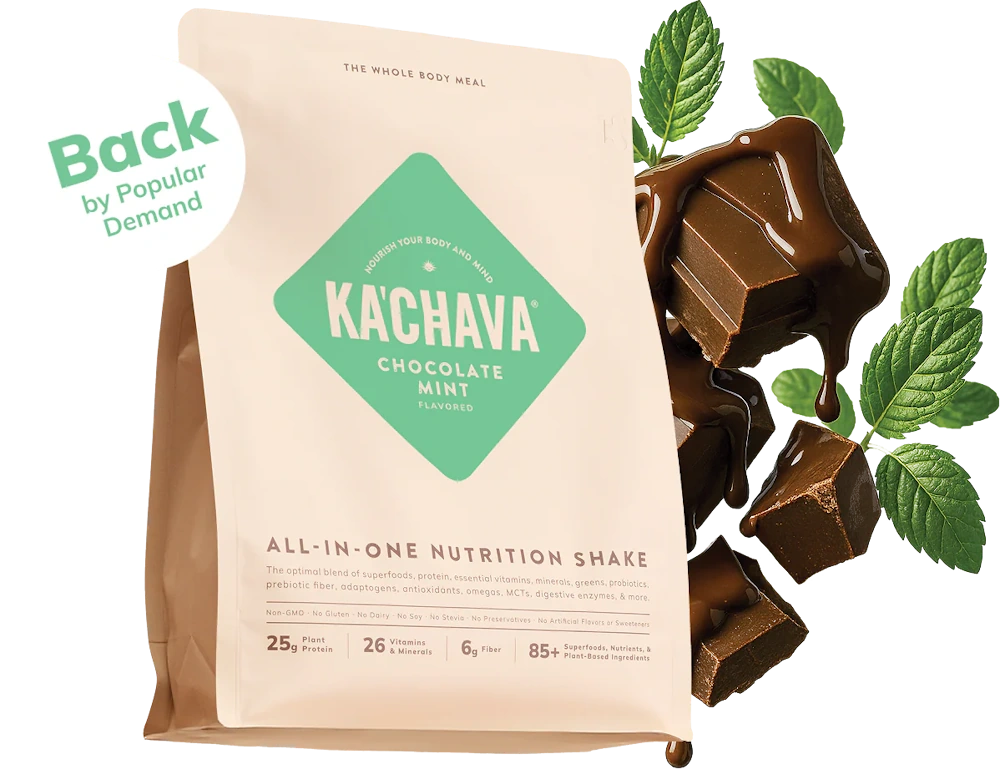
The nutritional structure of Ka’Chava is one of its greatest strengths. A standard serving contains about 240 calories, 25 grams of plant protein, 6 grams of fiber, and 6 grams of fat. Sugar content generally falls around 7 grams, with a slightly different amount in certain flavors. This combination creates a more substantial drink than many low-calorie protein powders, yet it remains lighter than a typical restaurant meal or large homemade smoothie.
The calorie level makes Ka’Chava best suited to a small meal or filling snack. Some users may find one serving satisfying on its own, particularly at breakfast or during a busy afternoon. Others, including larger adults, highly active people, and athletes with greater energy needs, may need to add fruit, oats, nut butter, seeds, or nondairy milk. This flexibility is useful because it allows the same powder to serve different routines. The base shake can remain relatively light, or it can become a higher-calorie meal with a few additions.
Ka’Chava also supplies a broad vitamin and mineral blend. This can help fill nutritional gaps on days when meals are rushed or produce intake is limited. However, the presence of many vitamins does not make the shake equivalent to a varied diet built around vegetables, fruit, legumes, whole grains, nuts, seeds, and other minimally processed foods. Whole foods provide texture, chewing satisfaction, diverse plant compounds, and culinary variety that a powdered drink cannot fully reproduce.
The formula works best as a practical supplement to a balanced routine. It brings several nutritional categories together in one serving, simplifies portioning, and reduces the temptation to skip a meal entirely. Its value comes from convenience and breadth rather than from any single miracle ingredient.
Plant Protein, Fiber, and Everyday Satiety
Ka’Chava uses a blend of plant protein sources, including yellow pea protein, brown rice protein, organic sacha inchi protein, and other plant ingredients. Combining protein sources is a sensible strategy because individual plant proteins can differ in amino acid composition. A blend helps create a more complete overall profile while also improving texture and reducing dependence on one crop.
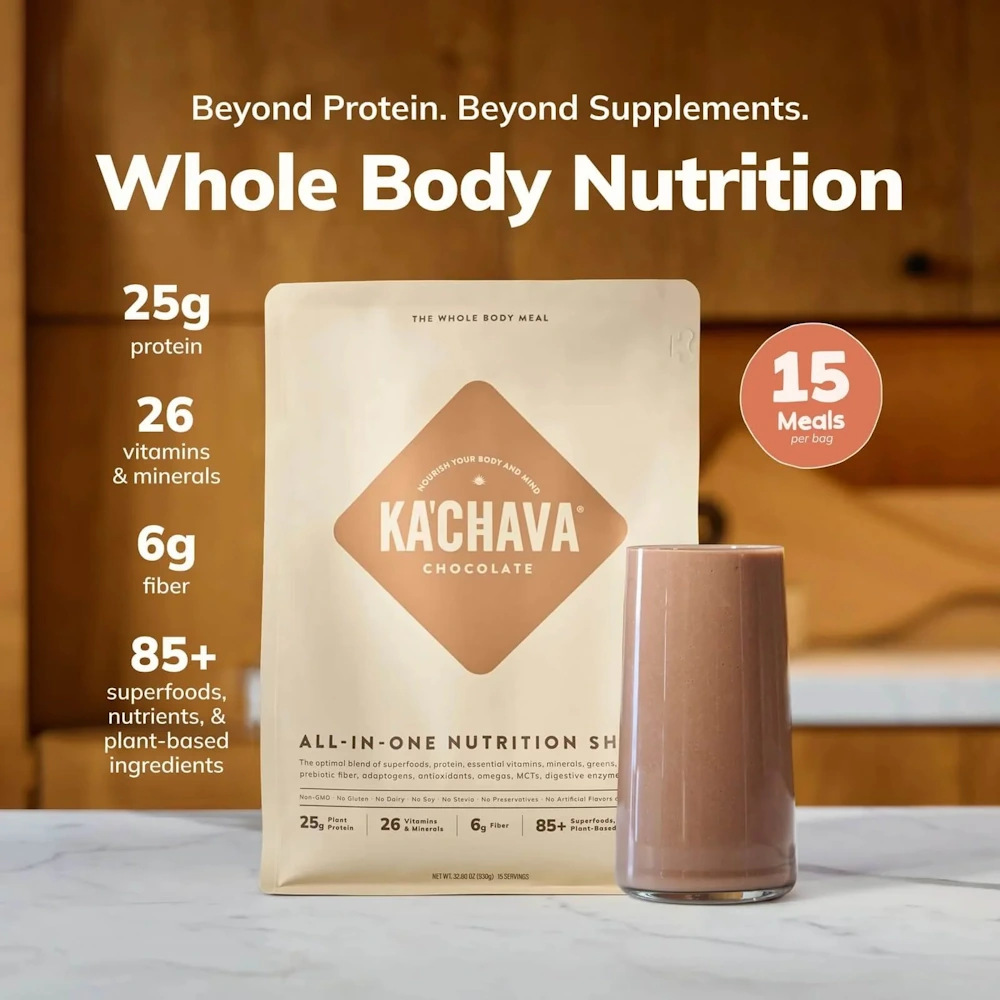
The 25 grams of protein per serving is enough to make the shake useful for breakfast, post-workout nutrition, or a midday meal. Protein contributes to the maintenance and repair of body tissues and can help make a meal more satisfying. It is particularly valuable for people who eat little meat, follow a vegan diet, or regularly discover that their breakfast consists mainly of coffee and refined carbohydrates.
Fiber adds another layer of practicality. Ka’Chava provides 6 grams per serving, which is meaningful but not excessive for most adults. Fiber slows the eating process when consumed in whole foods, supports digestive regularity, and contributes to fullness. In a shake, it also creates thickness and gives the drink more substance than a thin protein beverage. People who currently consume very little fiber may want to begin with a partial serving and increase gradually, since a sudden rise in fiber intake can cause gas, bloating, or digestive discomfort.
The formula also includes fat from ingredients such as coconut and seeds. Fat contributes flavor, texture, and satiety, and it helps the body absorb certain fat-soluble nutrients. Together, protein, fiber, and fat make Ka’Chava more meal-like than many powders. Still, individual responses vary. A liquid meal may satisfy one person for several hours while leaving another hungry sooner than a solid meal containing similar calories.
Superfoods, Adaptogens, Mushrooms, and Digestive Ingredients
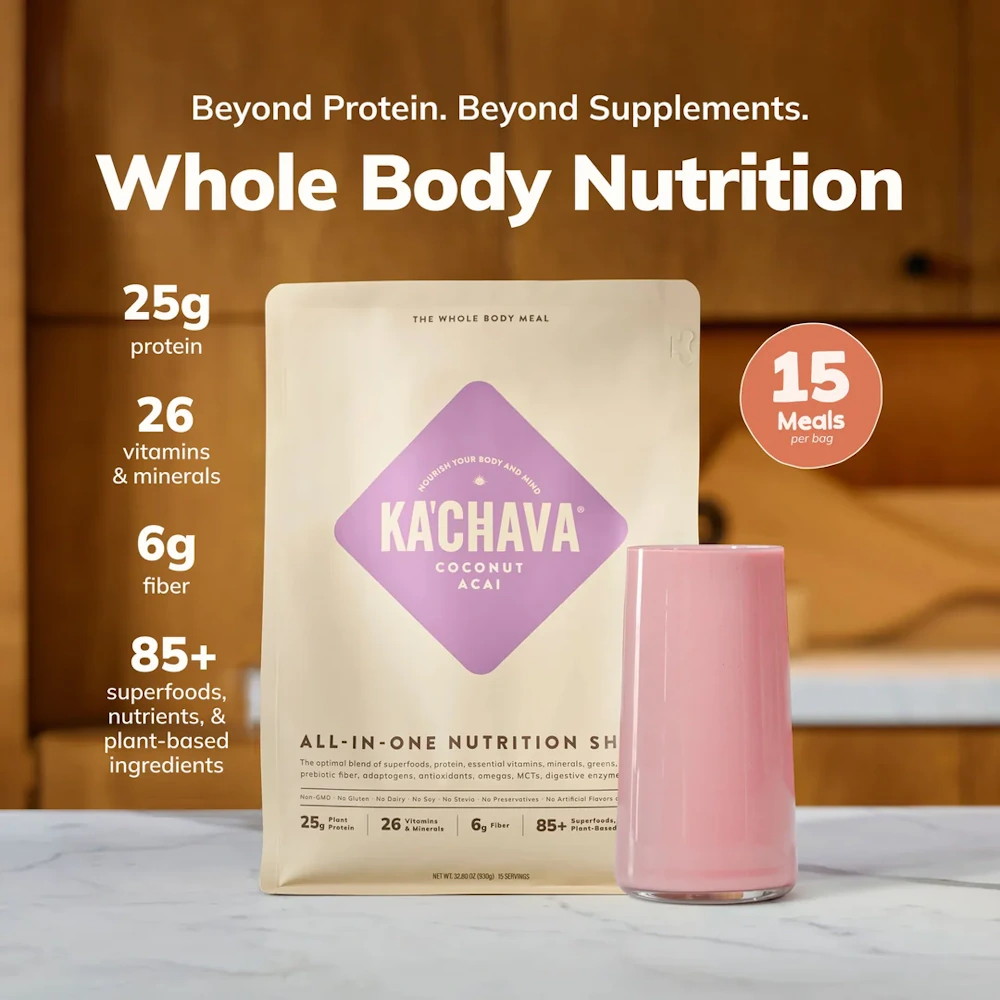
Ka’Chava contains an unusually broad collection of plant-based ingredients. The formula includes fruits and berries such as acai, camu camu, blueberry, blackberry, raspberry, and maqui berry. It also incorporates greens and vegetables such as spinach, kale, beetroot, chlorella, and barley grass. Seeds, coconut ingredients, cocoa, ginger, and other whole-food components add further variety.
Functional mushrooms and adaptogenic plants form another prominent part of the blend. Ingredients such as reishi, shiitake, maitake, cordyceps, and maca appear in relatively complex combinations. Adaptogens are commonly used in wellness products because they are associated with the body’s response to physical or emotional stress. However, evidence differs significantly among ingredients, doses, preparations, and health outcomes. Their presence makes the formula more interesting, but buyers should not expect a powdered shake to treat fatigue, anxiety, hormonal issues, immune disorders, or other medical conditions.
Ka’Chava also includes probiotics, prebiotic fiber, and digestive enzymes. These ingredients are intended to support digestion and the intestinal environment. Probiotics are strain-specific, meaning their effects depend on the exact organism, amount, storage conditions, and person consuming them. Digestive enzymes may be useful in certain circumstances, but their benefits are not identical for everyone. The most dependable digestive contribution in the formula is likely its fiber content, although even fiber tolerance differs from person to person.
The large ingredient list is both a strength and a limitation. It offers nutritional diversity and saves users from buying multiple powders. At the same time, individual amounts for many botanical ingredients may be modest, and the complexity makes it harder to identify the cause of any sensitivity. Ka’Chava should be viewed as a well-rounded food product, not as a collection of guaranteed therapeutic doses.
Flavor Selection, Texture, and Mixing Experience
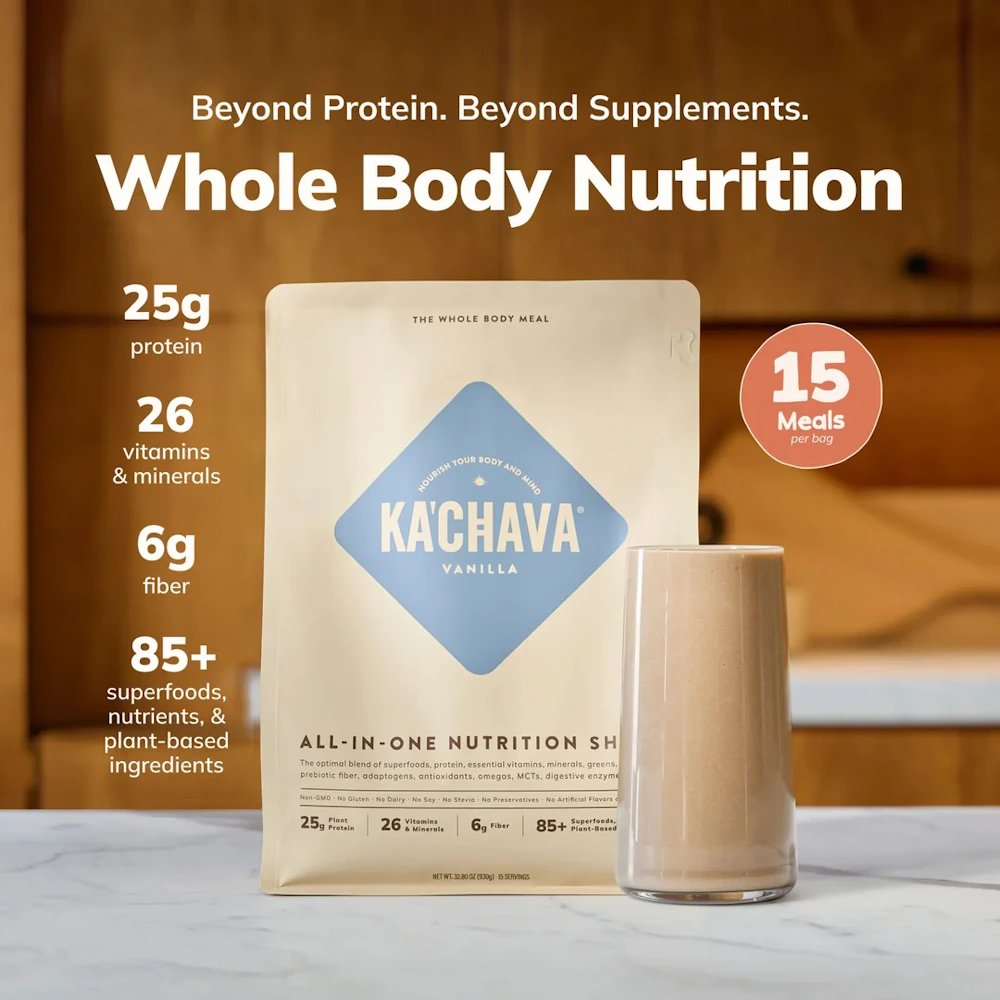
Taste is critical for a product intended to become part of a daily routine. Ka’Chava currently offers a varied selection that includes Chocolate, Vanilla, Strawberry, Coffee, Chai, Matcha, Coconut Acai, and Chocolate Mint. Availability can change, and certain flavors may be seasonal or temporarily limited. Chocolate and Vanilla remain the most versatile choices because they work well on their own and combine easily with fruit, coffee, nut butter, cinnamon, or other additions.
The texture is thicker and creamier than a basic plant protein drink. Coconut-based ingredients, fiber, seeds, and the overall serving size give the mixture more body. This richness can be a major advantage for people who dislike watery shakes. It can also require some adjustment for users who prefer lighter beverages. Cold water and ice produce the best simple preparation, while a blender creates a smoother and more consistent result than hand stirring.
A shaker bottle is convenient for travel or office use, but the powder needs vigorous mixing. Clumps are more likely when liquid is added after the powder or when the shake is prepared with insufficient water. Adding the liquid first, using the recommended amount, and shaking immediately improves the result. A blender is preferable when adding frozen fruit, oats, avocado, nut butter, or extra ice.
Flavor preference is highly personal. Matcha and Chai offer more distinctive profiles, while Strawberry and Coconut Acai appeal to users who prefer fruit-forward shakes. Coffee uses decaffeinated coffee, making it suitable for people who want a café-style flavor without relying on a strong caffeine dose. The sweetening level is moderate compared with many dessert-like powders, although users sensitive to monk fruit or coconut nectar may still notice the finish.
Convenience as a Meal Replacement or Substantial Snack
Ka’Chava is most convincing when evaluated as a tool for real-life scheduling problems. Many people understand what a balanced meal should contain but still skip breakfast, rely on vending-machine snacks, or order expensive takeout when work becomes demanding. A shelf-stable powder can reduce those disruptions. Preparation takes only a few minutes, and the bag is easier to store than a refrigerator full of short-lived smoothie ingredients.
Each bag contains 15 full servings, with one serving measured as two packed scoops. The powder can be mixed with water for the simplest option. It can also serve as a base for a more complete smoothie. Banana, berries, peanut butter, almond butter, oats, chia seeds, or nondairy milk can increase calories and alter the texture. This makes the product adaptable, but every addition changes the nutritional profile. Someone using Ka’Chava for calorie control should account for these extras rather than assuming every smoothie remains a 240-calorie meal.
The shake can be useful before or after exercise, although it is not a specialized sports supplement. Athletes who need precise carbohydrate timing, very high protein intake, or rapid digestion may prefer products designed for those goals. Ka’Chava works better as general nutrition for active people than as a tightly engineered endurance or bodybuilding formula.
It also performs well as an emergency meal kept at home, in an office, or in travel luggage. Premeasured single-serve options make travel easier, while full bags provide better routine value. The product’s greatest benefit is not that it replaces cooking. It gives people a more nutritionally considered alternative when cooking is unrealistic.
Dietary Compatibility, Allergies, and Responsible Use
Ka’Chava is certified vegan and formulated without dairy, soy, gluten, artificial sweeteners, artificial colors, artificial flavors, added preservatives, or genetically modified ingredients. These characteristics make it easier to fit into many plant-based and allergy-conscious lifestyles. The absence of dairy is particularly helpful for people who avoid whey or experience discomfort with lactose-containing shakes. Soy-free formulation also serves users who prefer alternative plant proteins.
However, free-from labeling does not eliminate every allergy concern. Ka’Chava contains a long list of plants, seeds, coconut-derived ingredients, mushrooms, fibers, and botanical compounds. Anyone with known food allergies should review the current ingredient panel for the exact flavor, since flavoring components can differ. People with severe allergies should also investigate manufacturing and cross-contact information rather than relying only on front-of-package claims.
Medical context matters. Individuals who are pregnant or breastfeeding, managing diabetes, treating kidney or liver disease, taking blood-thinning medication, using immune-modifying drugs, or following a medically restricted diet should discuss the product with a qualified clinician or registered dietitian. Botanical ingredients, minerals, and vitamins can interact with medications or become inappropriate at certain doses. A formula that is reasonable for a healthy adult may require adjustment for someone with a specific condition.
Ka’Chava should not be used as the sole source of nutrition unless a healthcare professional has designed and supervised that plan. Replacing every meal with the same powder would reduce food variety and could provide an unsuitable calorie level. A more balanced use is one serving per day or occasional use during busy periods, with the rest of the diet built around varied whole foods. Responsible use strengthens the product’s value because it keeps expectations realistic.
Ingredient Quality, Testing, and Transparency
A complex nutrition powder depends heavily on sourcing and manufacturing controls. Ka’Chava states that it follows current Good Manufacturing Practices and uses accredited third-party laboratories to test ingredients and products. These procedures matter because powders containing plants, minerals, and protein concentrates can be affected by microbial contamination, undeclared allergens, inaccurate nutrient levels, or naturally occurring heavy metals if quality controls are weak.
Plant-based ingredients grow in soil, so trace heavy metals can occur naturally in fruits, vegetables, grains, herbs, and protein crops. The meaningful question is not whether a plant product contains an absolute zero amount, which may be unrealistic, but whether testing confirms that levels remain within applicable safety limits. Ka’Chava provides public information about its testing approach, although highly cautious consumers may still want more batch-specific documentation and detailed certificates of analysis.
Transparency is strongest around the broad ingredient categories, nutrition facts, dietary exclusions, serving size, and preparation instructions. The company makes the full formula available rather than hiding the product behind vague wellness language. Still, proprietary blends and long formulas can make it difficult to judge the exact amount of every adaptogen, mushroom, enzyme, or superfood. A label may list many appealing ingredients without showing that each one appears at a clinically studied dose.
That limitation does not erase the product’s nutritional value. Protein, fiber, fat, vitamins, minerals, and calories remain measurable and useful. The more specialized botanical components should be treated as complementary rather than central. Buyers should focus first on the nutrition panel, ingredient tolerance, and practical fit, then regard the extended superfood blend as an added feature.
Pricing, Subscription Options, and Overall Value
Ka’Chava sits in the premium tier of meal replacement powders. At the time of review, a standard bag costs about $69.95 as a one-time purchase and contains 15 servings, placing the cost near $4.66 per serving. Subscription pricing reduces the bag price to about $59.95, or roughly $3.99 per serving. Prices, promotions, and shipping thresholds can change, so buyers should confirm the final checkout total.
The subscription offers the strongest financial value for regular users. Customers can generally change quantities, swap flavors, adjust delivery timing, skip shipments, and cancel. Pre-shipment reminders are helpful because they reduce the chance of an unexpected renewal. Even so, subscribers should monitor consumption carefully. Two bags may represent a four-week supply for someone drinking one serving on most days, but a casual user could accumulate unopened product if deliveries arrive too frequently.
Compared with homemade meals, Ka’Chava is expensive. Oats, beans, rice, eggs, frozen vegetables, fruit, and other staples can deliver more total food for the money. Compared with café breakfasts, delivery meals, protein bars, or convenience-store purchases, the cost can appear more reasonable. The value depends on what the shake replaces. It is poor value when it sits unused in a cupboard. It is stronger value when it prevents skipped meals or repeated takeout orders.
The Love-It Guarantee lowers some of the risk for first-time buyers, and variety packs can help users compare flavors before committing to several large bags. Free shipping may apply once an order reaches the required threshold. Overall, Ka’Chava charges a premium for formulation complexity, convenience, flavor development, and brand experience. It is not budget nutrition, but it can be economical for people who genuinely use it consistently.
Pros and Cons
Pros
Cons
Final Verdict: Is Ka’Chava Worth Buying?
Ka’Chava is one of the more complete and thoughtfully formulated options in the premium nutrition shake category. It delivers substantial plant protein, useful fiber, moderate fat, a broad vitamin and mineral profile, and a diverse mixture of plant ingredients. The powder is easy to prepare, pleasant enough for regular use, and flexible enough to support breakfast, travel, post-workout nutrition, or an emergency meal.
Its strongest customer is someone who values convenience but still wants more than a simple protein drink. Busy professionals, plant-based eaters, frequent travelers, and people who routinely skip meals may find it especially useful. The formula also appeals to consumers who prefer to purchase one comprehensive powder instead of maintaining separate containers of protein, greens, fiber, probiotics, and superfood blends.
The main obstacle is price. Ka’Chava costs considerably more than basic protein powder, and a full serving may still need additions for people with high calorie requirements. The extensive ingredient list can also create problems for those with sensitive digestion, allergies, or medication interactions. Its adaptogens and functional mushrooms should be viewed as secondary features, not as treatments or guaranteed solutions for specific health concerns.
Ka’Chava is worth considering when it replaces less nutritious convenience food, prevents missed meals, or creates a sustainable morning routine. It is less compelling for buyers who enjoy cooking, have a limited grocery budget, or only need extra protein. Used sensibly alongside varied whole foods, it offers an intelligent balance of nutrition, flavor, and convenience.