
Munchkin Review: Intelligent Baby Essentials Designed to Grow With Every Stage

10% Off First Order w/ Email & SMS Signup
× Buy 1 Infant Formula Trial Can, Get 1 Free
×Munchkin has become one of the most recognizable names in baby and toddler essentials by concentrating on a simple idea: everyday parenting products should remove friction rather than create more of it. The company has operated for more than three decades and now sells products across feeding, mealtime, bath, diapering, travel, safety, and everyday care. It also reports more than 350 patents and over 250 international product and design awards. That history matters because Munchkin is not competing through playful colors alone. Many of its strongest products are built around developmental transitions, such as moving from bottles to straws, from spill-proof cups to open cups, or from infant feeding to more independent toddler hydration. The catalog therefore feels connected by function rather than assembled as a collection of unrelated accessories.
Product Design That Follows Developmental Milestones
One of Munchkin’s strongest qualities is the way its feeding range is organized around what children are learning to do. The updated Cups for Every Stage collection illustrates this clearly. Miracle 360 and Any Angle begin at 6+ months, when children are developing sipping, sucking, tilting, and hand-to-mouth coordination. Perfect Angle moves toward greater independence at 12+ months. Control Flow is intended for children 18+ months who are refining open-cup skills, while Stay Cool targets 24+ months and more mature on-the-go hydration. This progression gives each cup a clear reason to exist. It also reflects a broader Munchkin philosophy: a useful children’s product should solve an immediate problem while helping prepare the child for the next skill.
Munchkin Infant Formula and Feeding Support
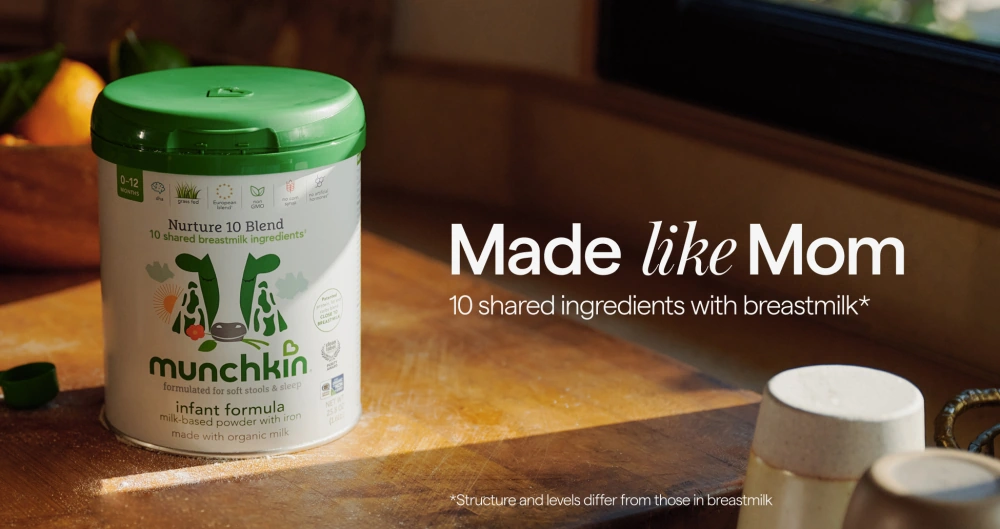
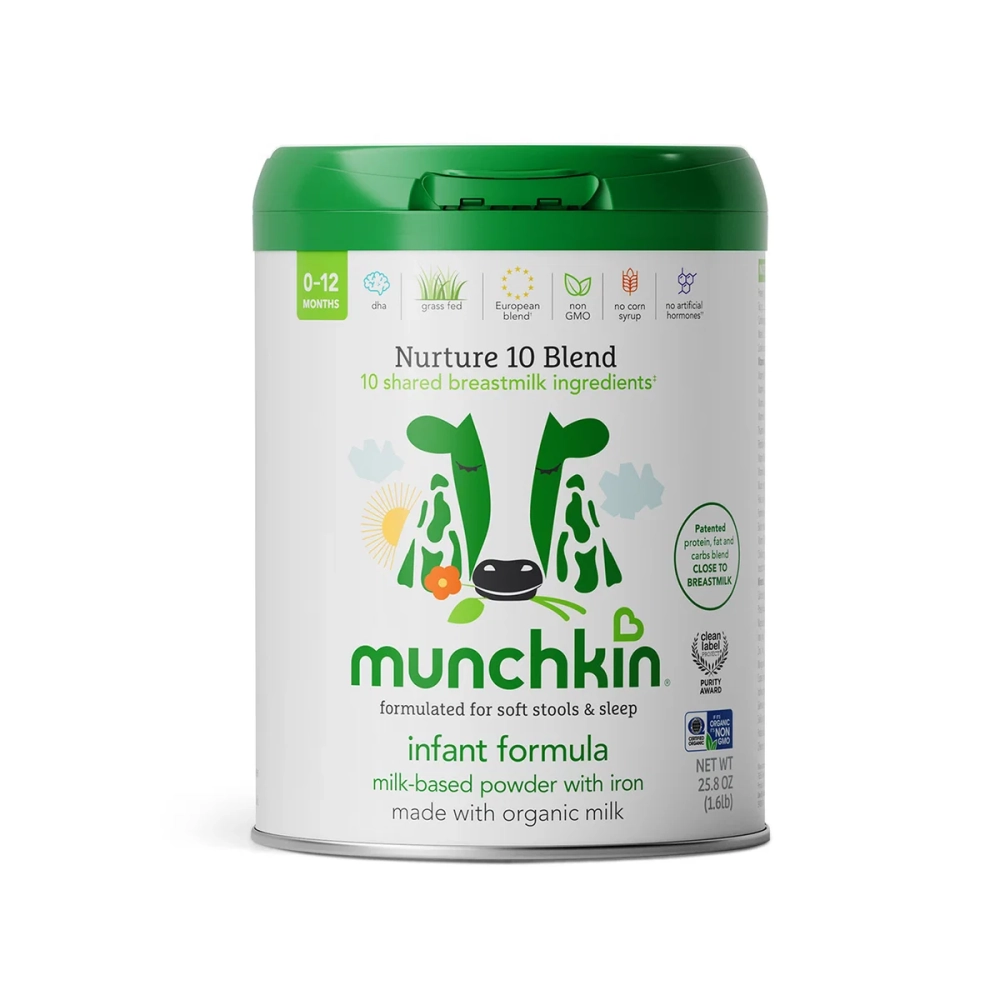
Munchkin’s expansion into infant formula adds a nutrition-focused dimension to a brand long associated with feeding accessories. Its current formula range includes versions made with Original Milk and USDA Organic Milk, both described as milk-based powders with iron for babies from birth to 12 months. Munchkin highlights its Nurture 10 Blend, which contains ten ingredients also found in breast milk, while noting that their structures and levels differ from those in breast milk. The Organic Milk version uses USDA Organic milk from grass-fed New Zealand cows. The company also emphasizes production standards, testing, and detailed preparation instructions. Feeding accessories remain part of the picture. The Smart Blend Formula Mixing Pitcher can prepare and store up to 24 ounces, is designed to reduce air bubbles compared with bottle shaking, and includes a time ring for tracking preparation. Together, these products show Munchkin addressing both nutrition and feeding routine.
Any Angle Weighted Straw Cup and Miracle 360 Spoutless Sippy Cup
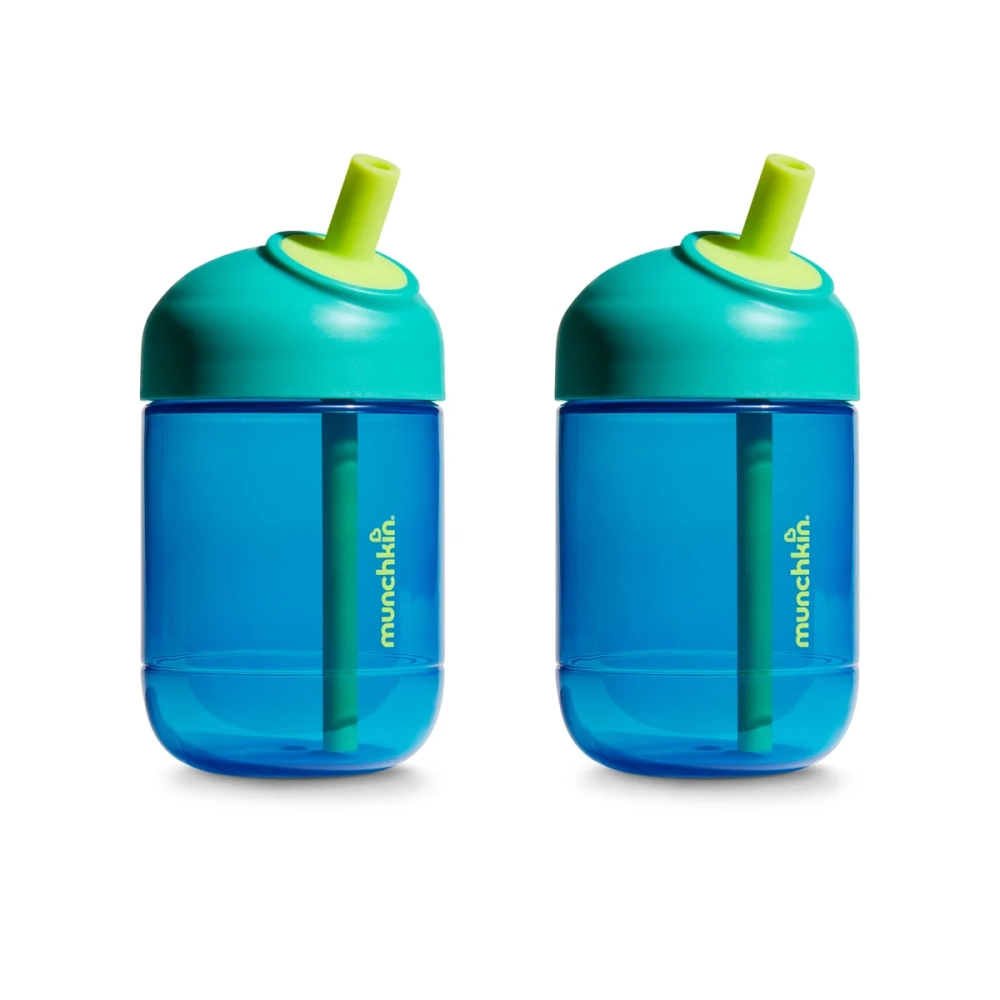
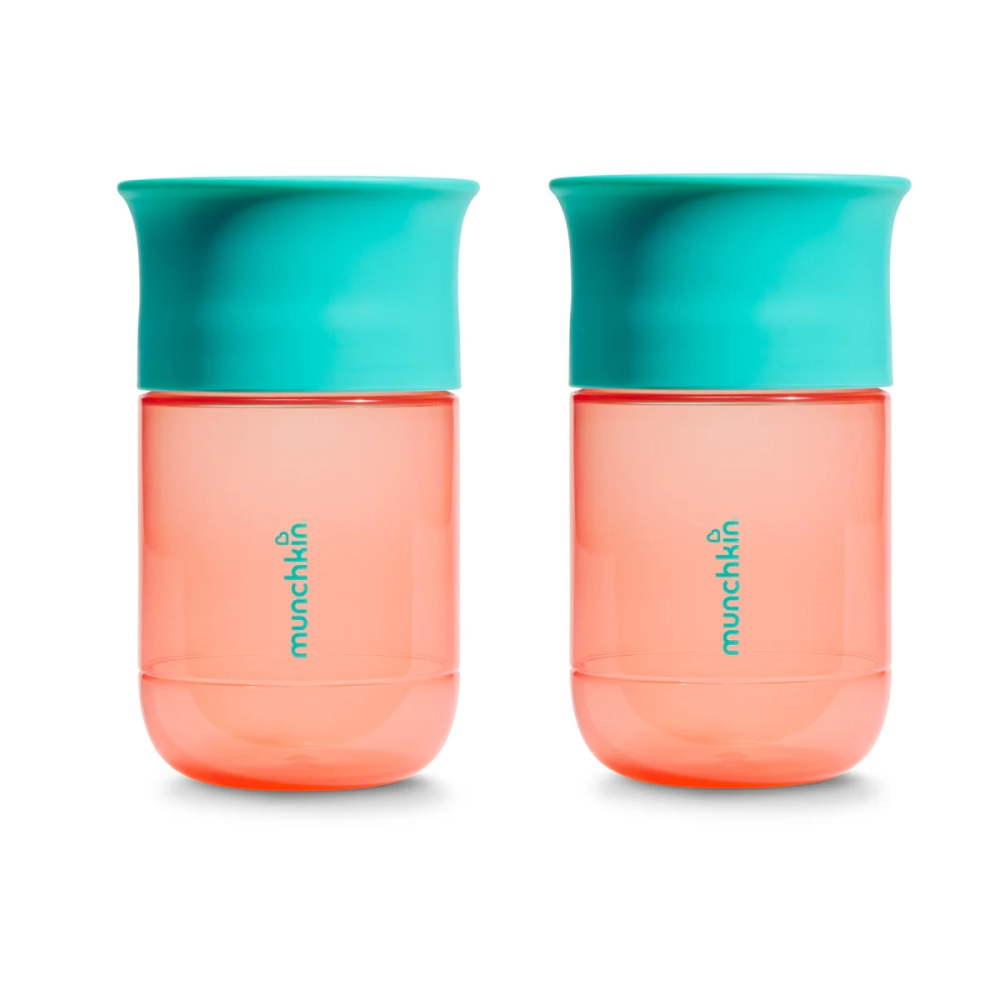
The updated Any Angle Weighted Straw Cup and Miracle 360 Spoutless Sippy Cup address two important early drinking transitions in different ways. Any Angle uses a weighted straw that follows liquid as the cup moves, allowing a child to drink while holding it at different angles. The 10-ounce version includes a soft flexible straw, Click Lock technology, a cleaning brush, and an updated matte design with revised lid threading. Miracle 360 takes another route. Its spoutless rim allows drinking from anywhere around the edge and automatically seals when the child stops drinking. The 7-ounce version is designed for 6+ months and uses a slow-flow valve. Both designs reduce spills without relying on a conventional protruding spout. They teach different mechanics, but each aims to move children toward more mature drinking skills.
Perfect Angle Straw Cup, 10oz and Stay Cool Water Bottle
For toddlers who have already developed basic straw skills, the Perfect Angle Straw Cup, 10oz is one of the more thoughtfully engineered products in the updated collection. Its straw is positioned at an angle so the child can reach the remaining liquid without repeatedly tipping the cup. Munchkin lists it for 12+ months, with a spill-proof valve, soft flexible straw, tinted body, four-piece construction, and a shape that fits most cup holders gain confidence.
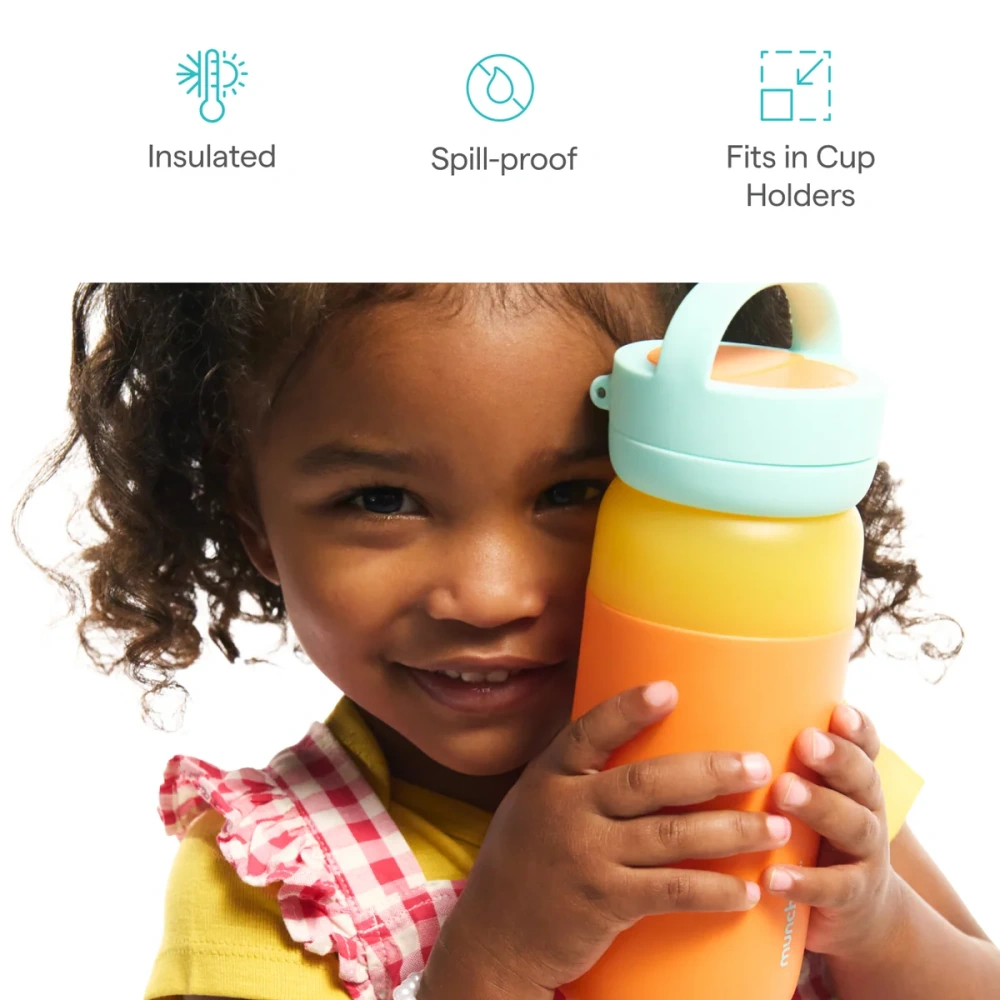
Stay Cool Insulated Water Bottle advances the idea for children 24+ months. It offers a 12-ounce capacity, insulation to help keep drinks cool, a flip-top lid, carrying handle, spill-proof valve, and semi-transparent body. It feels less like a transitional sippy cup and more like a first independent water bottle. Together, these products show how Munchkin reduces built-in assistance as children gain confidence.
Control Flow Open Training Cup and the Transition to Real Cups
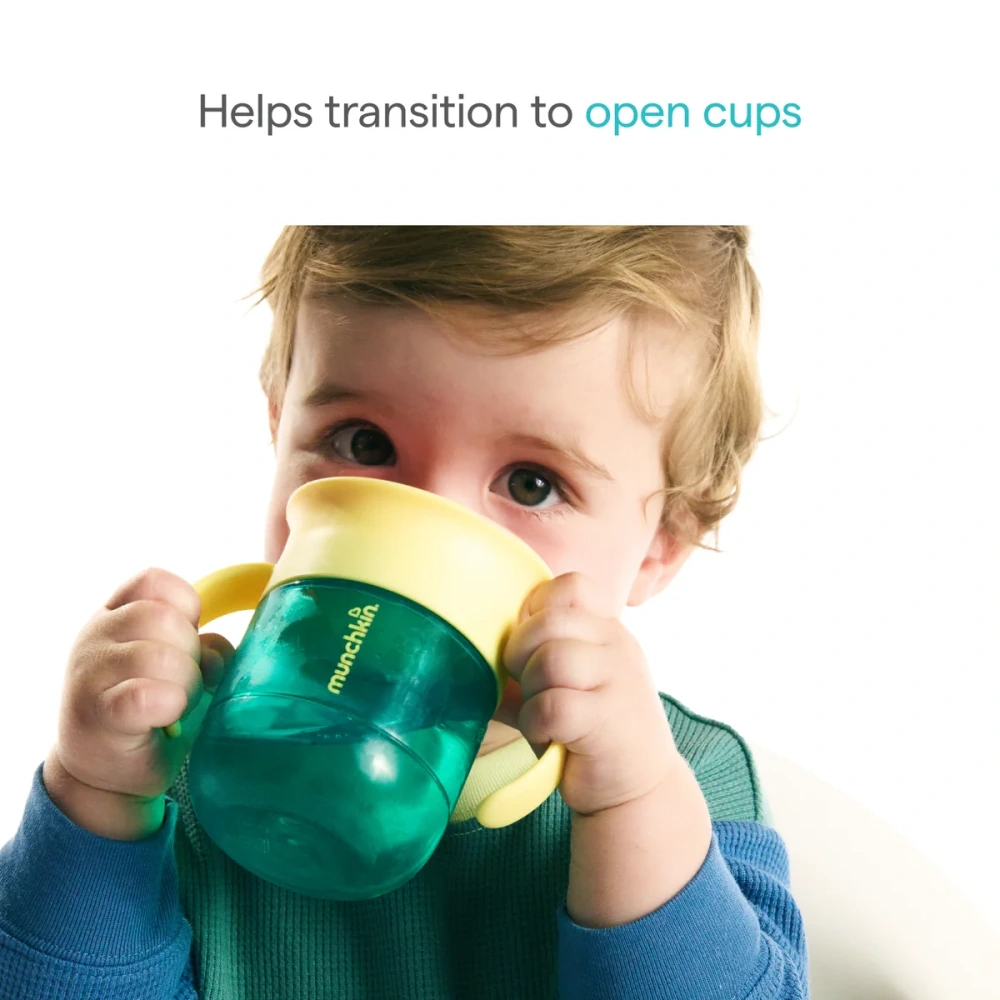
The Control Flow Open Training Cup may be the most developmentally interesting product in the updated lineup because it targets the difficult final step between spill-resistant toddler cups and a normal open cup. Intended for children 18+ months, it uses a removable control-flow valve that releases water at a steady pace. Toddlers can therefore practice tipping and drinking from an open-style rim without immediately facing an unrestricted rush of liquid. Once confidence improves, the inner valve can be removed and the same 10-ounce vessel functions as a true open cup. This two-stage approach gives the product a longer useful life and makes the learning process more gradual. It is also a logical follow-on to the Miracle 360 system, moving children from sealed-rim sipping toward controlling liquid flow themselves.
Everyday Usability, Cleaning, and Value
Munchkin’s best products tend to work because they balance child-friendly design with parent maintenance. Spill resistance matters, but only when a cup can still be disassembled and cleaned properly. The current collection reflects this through relatively modest part counts. Miracle 360 uses only a few major components, while Perfect Angle and Stay Cool are listed with four-piece constructions. Any Angle includes a straw brush, which is important because weighted straw systems require more careful cleaning than open cups. Transparent or semi-transparent bodies on several models also help caregivers monitor how much a child has consumed. Current official-site pricing for the highlighted updated cups generally sits around $9.99 to $11.49, depending on model and pack configuration. One caution is compatibility: updated Any Angle matte lids are not interchangeable with older glossy lids, so replacement parts should be checked carefully.
Munchkin Pros and Cons
Munchkin offers a compelling mix of innovation, practical pricing, and developmental thinking, but the range is not entirely effortless. Its strongest advantage is variety with purpose. Parents can choose a cup for a specific skill rather than simply buying a different shape. The formula line also broadens the brand beyond accessories. On the other hand, specialized designs naturally create more parts, valves, and cleaning requirements than a basic open cup. Families may also replace one cup type with another as children progress, which can increase clutter.
Pros:
Cons:
Final Verdict: Is Munchkin Worth Considering?
Munchkin remains a strong baby and toddler brand because its products are designed around persistent parenting problems rather than novelty alone. The refreshed cup collection is a particularly good example. Any Angle supports straw drinking from flexible positions, Miracle 360 introduces rim-based sipping with spill control, Perfect Angle improves straw ergonomics, Control Flow creates a bridge toward true open-cup use, and Stay Cool gives older toddlers a more independent hydration option. The infant formula range adds another significant category, supported by preparation guidance and complementary tools such as the Smart Blend pitcher. Not every family will need every stage or specialized accessory, and cleaning requirements should be considered before choosing a cup. Even so, Munchkin’s combination of functional design, developmental progression, broad product coverage, and accessible pricing makes it a persuasive option for families seeking products that support children from early feeding through increasingly independent mealtimes.