
OutIn Review: Portable Espresso Machines Built for Coffee Anywhere

Portable coffee equipment often forces buyers to accept a compromise. Manual brewers can be lightweight, but they still require a separate source of hot water and a fair amount of hands-on effort. Battery-powered devices can simplify the process, yet some produce coffee that feels closer to concentrated drip coffee than true espresso. OutIn approaches the category differently by combining water heating, pressure generation, brewing, and travel-friendly construction within compact electric machines.
The brand is best known for its Nano Portable Espresso Machine, a cylindrical brewer that can work with ground coffee or compatible capsules. OutIn has since expanded its range with the more rugged Mino, the Fino portable electric grinder, milk-frothing equipment, protective cases, baskets, cups, stands, scales, and complete gift sets. This broader catalog makes OutIn more than a one-product novelty. It gives travelers and outdoor coffee drinkers the parts needed to build a complete mobile espresso routine.
OutIn is particularly relevant for campers, commuters, road-trip travelers, office workers, van owners, photographers, hikers, and anyone who regularly spends time away from a conventional kitchen. Its machines do not eliminate every limitation of portable brewing. Water capacity remains modest, battery life depends heavily on whether the machine must heat cold water, and cleanup still requires attention. Even so, OutIn offers one of the clearest solutions for people who want legitimate espresso-style extraction without carrying a kettle, manual pump, and multiple loose components.
Brand Philosophy and Product Direction
OutIn builds its identity around removing the practical boundary between indoor comfort and outdoor mobility. Coffee is the focus, but the larger idea is convenience without surrendering the ritual and sensory quality that make espresso appealing. Instead of treating outdoor coffee as a basic caffeine delivery system, the brand develops equipment for users who still care about aroma, crema, temperature, dose, grind, and presentation while traveling.
That philosophy is visible in the design language. OutIn machines have rounded cylindrical bodies, understated finishes, integrated cups, and relatively simple controls. The styling is modern enough for an office desk yet durable-looking enough for a campsite or vehicle console. The compact format also reduces the visual and physical clutter associated with conventional espresso preparation. One machine can heat the water, create pressure, and complete the extraction with minimal intervention.
The catalog has also matured in a logical direction. The Nano serves as the accessible core product. The Mino advances the concept with faster heating, more pressure, improved environmental resistance, and better cold-weather and high-altitude capability. The Fino grinder supports users who prefer freshly ground beans rather than capsules. Accessories such as larger baskets, protective cases, stands, scales, cups, and frothers help buyers refine the setup according to their habits.
This is an important distinction. OutIn is not attempting to replace a prosumer home espresso machine with a tiny cylinder. It is solving a different problem: how to make a compact, repeatable, electrically powered espresso away from a full kitchen. Judged by that purpose, the brand’s direction is focused, coherent, and increasingly sophisticated.
OutIn Nano Portable Espresso Machine
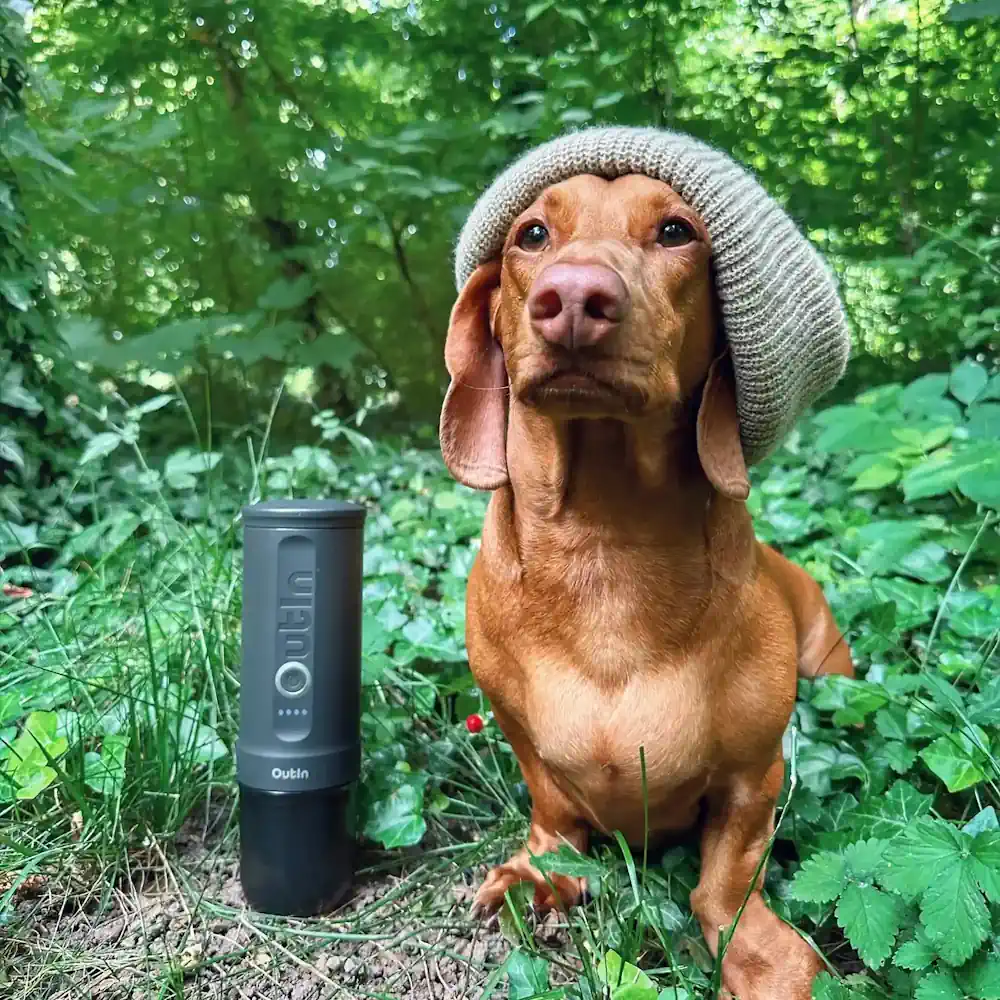
The Nano remains the most recognizable OutIn product and the easiest entry point into the brand. It weighs approximately 670 grams, making it light enough for a backpack, work bag, vehicle storage compartment, or carry-on. Its compact body contains a rechargeable battery, water-heating system, pump, brewing chamber, and drinking cup. That level of integration is the Nano’s greatest strength because it reduces the number of separate items required for a fresh espresso.
The machine can heat room-temperature water to approximately 92 degrees Celsius and generate up to 20 bars of pressure. Heating takes around 200 seconds under the brand’s test conditions. Users can brew with ground coffee or Nespresso Original-style capsules, giving the Nano two distinct personalities. Capsules prioritize speed, cleanliness, and consistency. Ground coffee offers more control over bean choice, roast, grind, and flavor.
Battery performance depends strongly on water temperature. Starting with room-temperature water requires the machine to spend substantial energy on heating, limiting it to about five 50-milliliter brews per charge. When hot water is added, the battery mainly powers extraction, allowing far more brewing cycles. This makes the Nano especially practical in hotels, offices, vehicles, and campsites where hot water may already be available.
The standard ground-coffee basket holds a relatively small dose, which suits a short single espresso. Buyers who prefer a stronger shot can add the Nano Basket Plus, which accommodates approximately 16 to 18 grams. The Nano is not a replacement for a large countertop machine, but it is remarkably capable for its size and remains the most versatile choice for everyday portable use.
OutIn Mino Portable Electric Espresso Machine
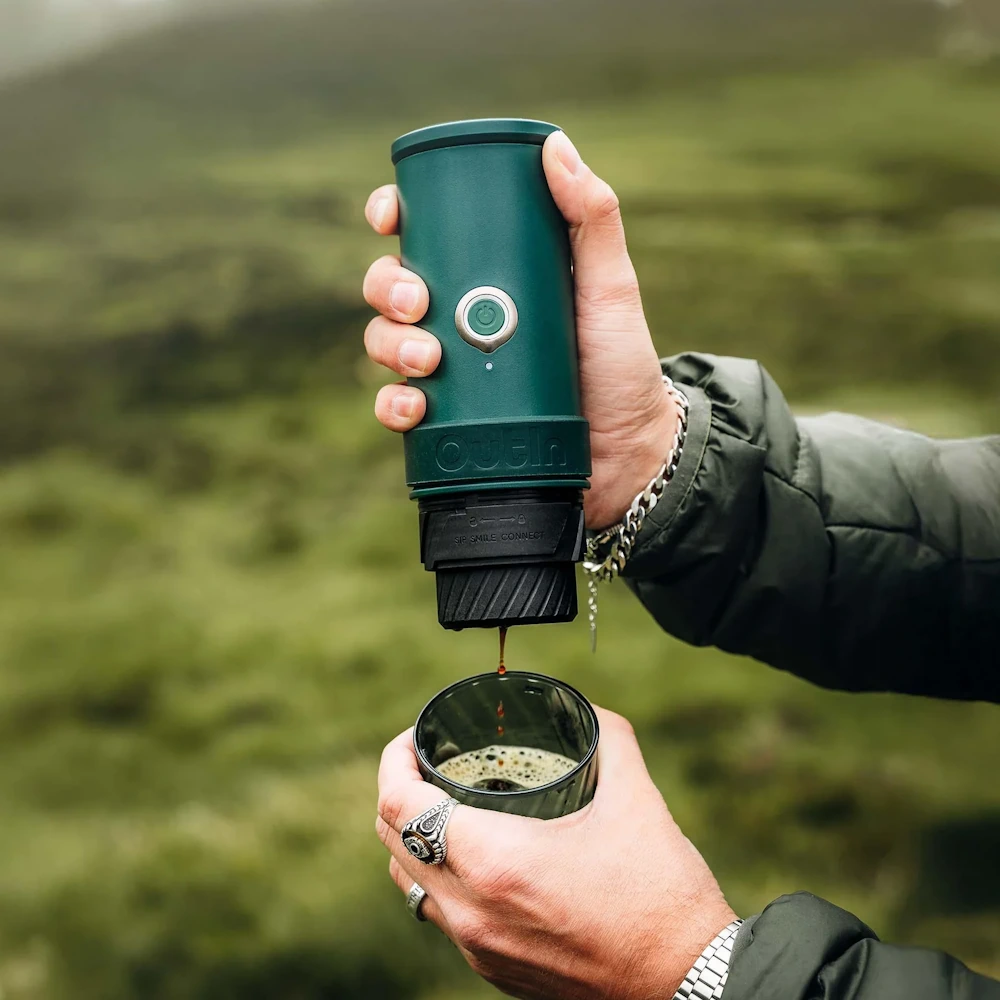
The Mino is the more advanced option for buyers who expect to brew in demanding outdoor conditions. It retains the slim, one-hand format of the Nano while increasing performance in several important areas. The machine weighs approximately 685 grams and measures about 67 millimeters in diameter by 195 millimeters in height, so it remains compact despite its upgraded battery, pump, and environmental protection.
Heating speed is one of the most noticeable improvements. The Mino can prepare room-temperature water for brewing in roughly 149 seconds under standard test conditions. It extracts at approximately 93.3 degrees Celsius and generates up to 22 bars of pressure. A 9,000 mAh battery supports up to six extractions when heating 50 milliliters of room-temperature water. With preheated water, the number of possible extractions increases dramatically because the battery no longer carries the full thermal load.
The Mino also adds features that directly support outdoor use. Its IP67 rating provides resistance to dust and water exposure, although liquid damage is not covered as a blanket warranty condition and resistance can decline with wear. OutIn has engineered the machine for operation from approximately minus 15 to 45 degrees Celsius and for consistent brewing at elevations reaching 5,000 meters. Real-world battery life can still decrease in extreme temperatures, but these specifications make the Mino more credible for winter travel, mountain trips, and remote adventures.
It supports both ground coffee and Nespresso Original capsules. Fast USB-C charging can move the battery from 20 to 80 percent in about 45 minutes and reach full power in roughly 90 minutes. For frequent travelers who value faster heating, better protection, and stronger performance, the Mino justifies its higher price more convincingly than a simple cosmetic upgrade would.
Espresso Quality, Pressure, and Flavor Control
OutIn machines can produce an espresso with visible crema, concentrated flavor, and a texture that is substantially closer to café espresso than ordinary portable drip methods. The electric pump removes much of the inconsistency associated with hand-pumped travel brewers. Once the dose, water quantity, and attachment are prepared correctly, the machine manages heating and extraction automatically.
Pressure figures of 20 bars for the Nano and up to 22 bars for the Mino sound impressive, but pressure alone does not determine cup quality. Grind size, coffee freshness, basket design, dose, roast level, water temperature, and puck preparation all influence the result. A poorly ground or unevenly packed dose can produce weak, sour, bitter, or restricted extraction even when the pump is powerful. Capsules reduce these variables and are therefore easier for beginners, though they also limit control over freshness and coffee selection.
Ground-coffee users should choose a fine espresso grind and avoid overfilling the basket. The standard Nano basket is best for a small, concentrated serving, while the 16-to-18-gram Basket Plus creates a stronger base for Americanos, lattes, cappuccinos, and other milk drinks. The Mino’s integrated brewing design aims to deliver a fuller extraction without requiring the Nano’s larger accessory basket.
OutIn works best when expectations are realistic. It cannot match the temperature stability, adjustable pressure profiling, large portafilter, steam power, and repeated-shot capacity of a serious home espresso station. What it can do is produce a satisfying, aromatic shot in places where conventional espresso would otherwise be impractical. That is the standard by which its coffee quality should be judged, and by that standard the machines perform a genuinely useful role.
Portability, Battery Life, and Charging Practicality
OutIn’s main advantage is not simply that its machines are small. It is that they reduce an entire brewing setup into a manageable travel object. A traditional mobile espresso kit may require a brewer, kettle, heat source, cup, pump, filter parts, and storage bag. The Nano and Mino combine most of those functions inside one body, with the cup attached to the base and the brewing components packed into a compact assembly.
For commuting and road travel, the weight is reasonable. Around 670 to 685 grams is heavier than a basic manual brewer, but the comparison changes once the weight of a kettle and other equipment is included. The machines fit more naturally in a backpack, luggage case, camper cabinet, truck compartment, or office drawer than a conventional coffee appliance.
Battery expectations require more careful consideration. Heating water consumes far more energy than pumping it through coffee. Users who begin with room-temperature water should plan around approximately five Nano brews or six Mino brews per charge. That is enough for a day trip, a workday, or a small number of travelers, but it may not cover a long group camping trip. Adding already hot water turns both machines into much more efficient extractors and can extend practical use for many servings.
The Nano requires a compatible charger delivering at least 15 watts and cannot brew while charging. The Mino offers faster USB-C charging and a larger battery. Both should travel in carry-on luggage rather than checked baggage, and neither should be used during a flight. Buyers should also pack the brewer empty, dry, and protected from impacts. A fitted case is a sensible purchase for anyone placing the machine beside tools, cookware, or outdoor gear.
Fino Grinder, Frother, and Accessory Ecosystem
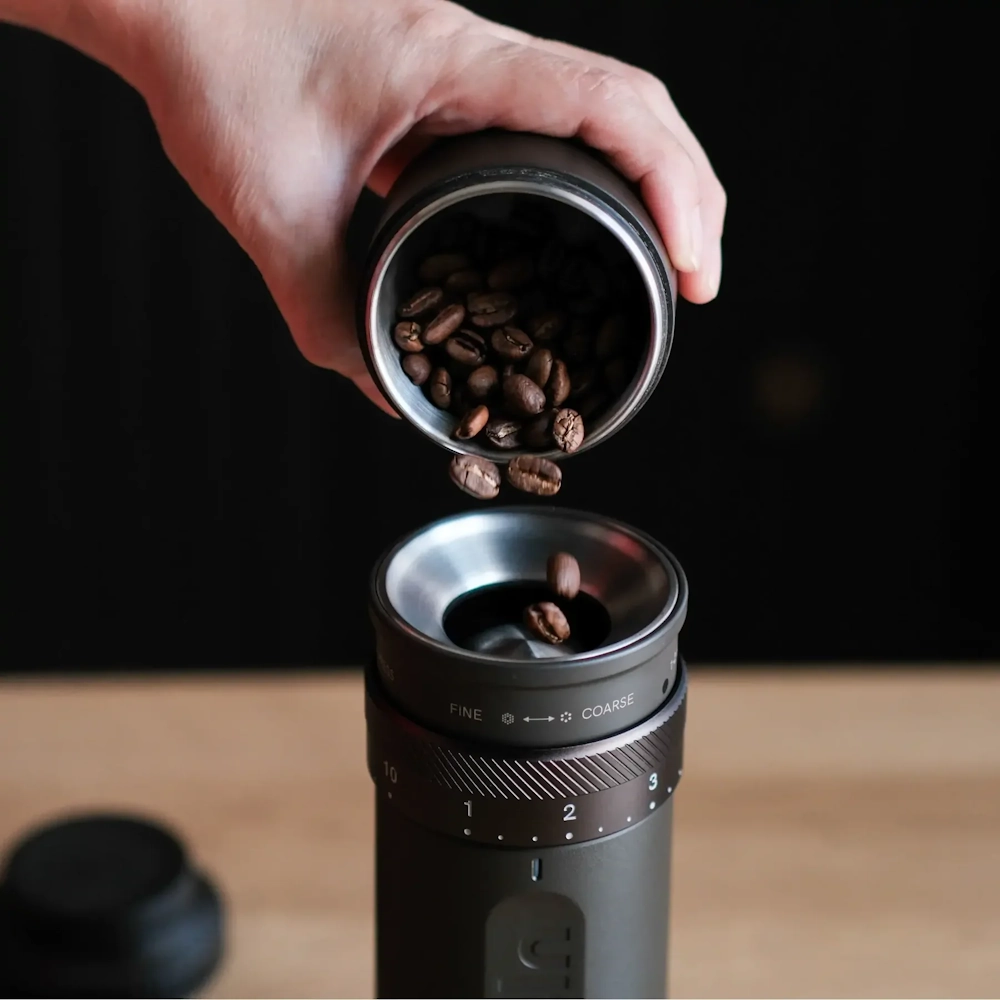
The Fino Portable Electric Coffee Grinder expands OutIn from portable brewing into portable coffee preparation. Fresh grinding can improve aroma and flavor, particularly for users who buy whole beans and adjust grind size according to the brewing method. The Fino offers 28 settings and is intended for espresso, pour-over, moka pot, AeroPress, cold brew, and other common methods. That range makes it useful beyond OutIn espresso machines.
The grinder is compact, cordless, and designed with an anti-static system to reduce scattered grounds. It can grind approximately 18 grams for espresso in around 105 seconds or 15 grams for pour-over in around 50 seconds under OutIn’s tests. A full charge is intended to support about a week of use when grinding for two cups per day. It also includes a protective pouch, which improves its value as a travel product.
The accessory collection is extensive, but compatibility needs careful attention. The Nano Basket Plus, standard Nano filter baskets, Nano replacement cup, and Nano adapter kit are designed specifically for the Nano. The Mino does not accept the Nano Basket Plus. Universal and foldable stands support different travel priorities, with the foldable option emphasizing lower weight and the universal stand offering greater height adjustment.
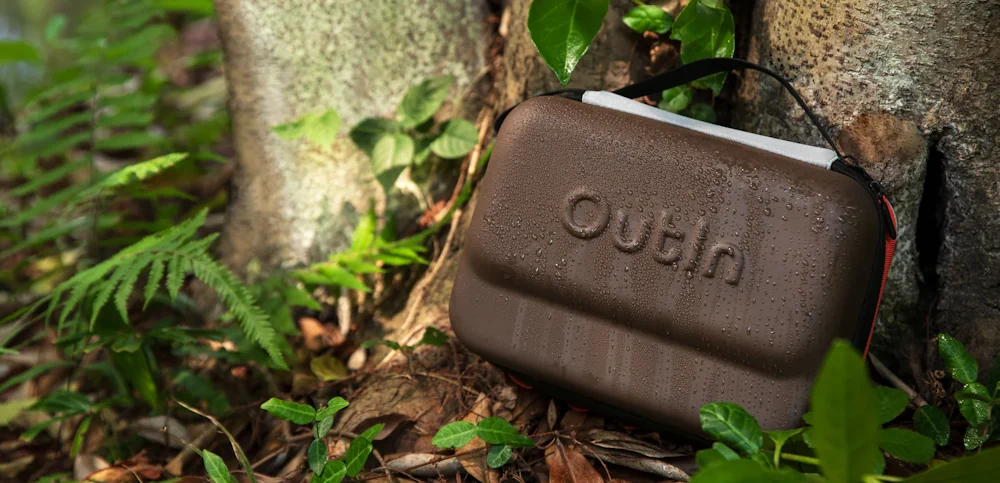
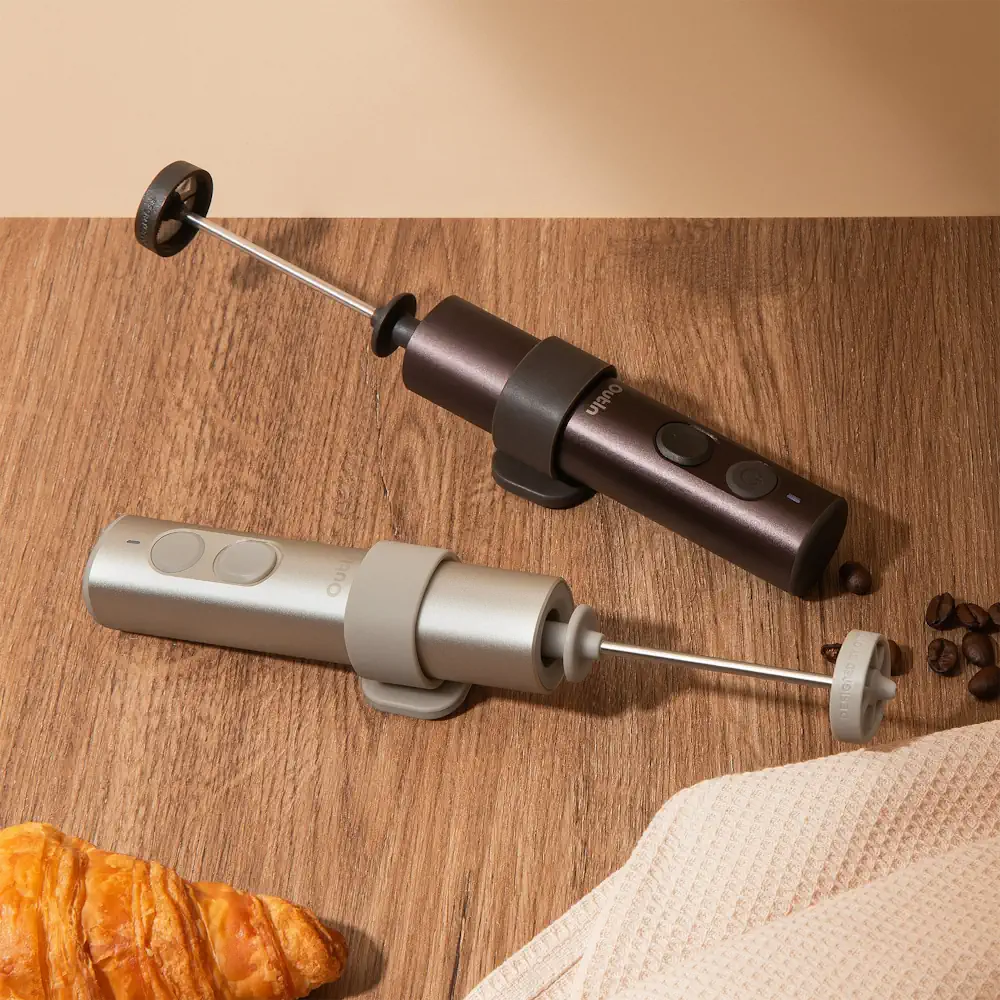
Other available items include protective EVA cases, travel tumblers, espresso cups, a titanium cup, the Claro coffee scale, silicone mats, gear pouches, and the LattoGo milk frother. These accessories can turn a basic portable espresso machine into a more complete mobile coffee station. However, buyers should resist purchasing every add-on immediately. The best approach is to start with the machine, identify actual limitations, and add only the accessories that improve a frequently used routine.
Ease of Use, Cleaning, and Daily Ownership
OutIn machines are simple once the basic sequence becomes familiar. For ground coffee, the user fills the basket, levels or tamps the dose as required, attaches the brewing assembly, adds water, and activates the machine. Capsule preparation is faster because the coffee dose and grind are already standardized. A long press begins the heating cycle when room-temperature water is used, while a shorter extraction process is available when the reservoir already contains hot water.
The automated operation is a major benefit. There is no need to maintain hand pressure or monitor a separate kettle. Indicator lights and audible signals communicate heating and battery status. This makes the machines practical during a commute stop, at a campsite, beside a parked vehicle, or in a hotel room. Even so, the user must attach the portafilter components correctly. Improper assembly can interrupt extraction or cause leakage, and overpacked coffee can restrict flow.
Cleaning is manageable but should not be ignored. Coffee oils and fine particles can collect in the basket, outlet, seals, and adapter. The removable parts should be rinsed promptly after brewing, then dried before storage. The main body contains electronics and should never be treated like a fully washable bottle. OutIn advises cleaning carefully with a sponge and mild detergent rather than exposing the body to boiling water. The Mino’s water resistance improves resilience, but it does not eliminate the need for cautious handling.
Daily ownership becomes easier when the user keeps a small cloth, brush, and spare basket in the case. Capsule users will have less mess, while ground-coffee users gain better flavor control at the cost of additional preparation and cleanup. The machines reward a tidy routine. Neglecting seals, threads, and coffee residue will reduce convenience and may eventually affect performance.
Pricing, Value, Warranty, and Customer Support
OutIn equipment sits in the premium portion of the portable coffee market. The Nano is generally listed around $149.99, while the Mino and Fino grinder are commonly listed around $199.99 each. Protective cases, stands, scales, larger baskets, frothers, cups, and gift sets increase the total investment. A complete OutIn setup can therefore cost as much as an entry-level countertop espresso machine.
The value depends on where the equipment will be used. Someone who drinks coffee almost exclusively at home will usually receive more capability from a conventional machine or grinder. A frequent traveler, camper, commuter, field worker, van owner, or office user may find the portable format far more valuable. The machine can also reduce repeated café purchases, although the savings depend on coffee type, frequency, and accessory spending.
OutIn accepts eligible returns within 30 days of delivery for purchases made through its official website. Products should be kept in good condition with their packaging, accessories, and proof of purchase. Return shipping may be the buyer’s responsibility when the return is based on preference rather than a defect. The company also provides a 12-month limited warranty for its portable espresso machines, covering qualifying quality-related problems rather than accidental or user-caused damage.
Customer service authorization is required before returning a product. Buyers may be asked to provide photos, video, order details, and troubleshooting information. This process can feel more involved than a simple retail-store return, but it is common for electronic appliances. Keeping the original packaging and testing the machine soon after delivery are sensible precautions.
Sustainability and Responsible Use
OutIn connects portable coffee with reusable equipment, waste reduction, and longer-term product ownership. A refillable brewer can reduce dependence on disposable takeaway cups, especially when the user carries a reusable cup or drinks directly from the integrated vessel. Ground coffee also avoids single-use capsules, although capsules remain a convenient option and their environmental impact depends on material, recycling access, and disposal habits.
The brand’s sustainability program includes reusable products, recycling themes, coffee-ground-based accessories through its Rebrew initiative, and partnerships connected to ocean conservation, coffee research, and breast cancer research. It has supported Shark Angels, World Coffee Research, and the Breast Cancer Research Foundation through specific collaborations and product initiatives. These efforts give the brand a broader community dimension beyond selling equipment.
Still, the environmental picture should be considered in full. Rechargeable appliances contain batteries, electronics, plastics, metals, and components that require energy and resources to manufacture. Buying a portable espresso machine only to use it occasionally is less responsible than purchasing one for a genuine, repeated need. Product longevity, repairability, battery care, reusable coffee preparation, and proper end-of-life recycling matter more than marketing language alone.
Owners can improve the sustainability of the setup by using ground coffee, carrying a reusable cup, charging efficiently, avoiding unnecessary accessories, cleaning the machine to extend its life, and recycling electronic components through appropriate channels. OutIn offers a useful tool for reducing café dependence, but the greatest benefit comes from consistent long-term use rather than consumption for its own sake.
Pros and Cons
Pros
Each machine combines water heating, pressure generation, extraction, and a drinking cup, reducing the number of separate tools needed for mobile coffee preparation.
Users can choose ground coffee for greater flavor control or Nespresso Original-style capsules for faster and cleaner preparation.
Faster heating, a larger battery, IP67 resistance, high-altitude performance, and a broad operating temperature range make it suitable for more challenging trips.
Their electric pumps create concentrated coffee with visible crema, which is difficult to achieve with many ordinary travel brewers.
When the machine does not need to heat cold water, more battery power remains available for repeated extractions.
The Fino grinder, carrying cases, baskets, stands, cups, scales, and frothers allow users to create a coordinated portable coffee setup.
Cons
Lorem ipsum dolor sit amet, consectetur adipiscing elit. Ut elit tellus, luctus nec ullamcorper mattis, pulvinar dapibus leo.
Americano drinkers and users who prefer full mugs will need an additional supply of hot water.
Proper dosing, fine grinding, secure assembly, and prompt cleaning are necessary for reliable extraction and consistent flavor.
Some Nano components, including the Basket Plus, cannot be used with the Mino.
Adding a grinder, protective case, scale, frother, stand, and extra brewing accessories significantly increases the total investment.
They offer less steaming power, shot capacity, temperature control, and extraction adjustment than a serious home espresso setup.
Final Thoughts: Is OutIn Worth Buying?
OutIn has developed one of the most complete portable electric espresso systems available for people who refuse to treat travel coffee as an afterthought. The machines are compact, visually refined, and practical enough for regular use. More importantly, they address the two hardest parts of portable espresso, heating water and producing pressure, without requiring the user to carry a separate kettle or operate a manual pump.
The Nano is the strongest choice for most buyers. It costs less than the Mino, supports capsules and ground coffee, remains light enough for everyday travel, and has an established range of replacement parts and accessories. It is especially well suited to office use, commuting, road trips, hotels, gym bags, and relaxed camping where conditions are not extreme.
The Mino is the better investment for serious outdoor users. Faster heating, a larger battery, stronger environmental resistance, improved charging, and high-altitude capability make it more appropriate for demanding trips. Its advantages matter most when the machine will regularly face cold mornings, dust, moisture, mountain elevation, or long periods away from conventional facilities.
OutIn is not the cheapest route to coffee, and it is not a miniature substitute for a full home espresso station. It is a specialized tool that delivers a level of convenience and extraction quality that manual travel methods often struggle to match. Buyers who frequently travel and genuinely value espresso will find the brand compelling. Those who mainly drink coffee at home or prefer large servings may receive better value elsewhere. For the right user, however, OutIn turns a difficult travel ritual into a compact, repeatable, and enjoyabe routine.