
PetSafe Review: Practical Pet Technology for Training, Safety, Feeding, and Everyday Care

$60 Off Sitewide Minimum Order $300
×PetSafe has built one of the broadest product ecosystems in the modern pet care market. Rather than concentrating on a single category, the brand develops equipment for training, containment, feeding, hydration, litter management, household access, travel, mobility, play, and routine maintenance. This wide scope gives dog and cat owners the ability to solve several practical problems through one familiar company, whether the concern involves a dog escaping the yard, a cat needing a cleaner litter setup, or a senior pet struggling to enter a vehicle.
The strongest quality of PetSafe is its problem-solving approach. Many products are created around repetitive tasks that consume time or create stress, such as serving meals on schedule, refilling water bowls, cleaning litter, opening doors, controlling unwanted barking, or helping a large dog climb into a car. PetSafe often combines simple mechanical design with electronic features, mobile connectivity, programmable settings, or replaceable components. The results range from affordable everyday accessories to advanced systems that require a larger investment and more careful setup.
PetSafe is not a brand that can be judged through one signature product alone. Its catalog contains both basic household items and sophisticated pet technology, so quality, complexity, and value can vary by category. A careful review must therefore consider ease of use, maintenance demands, training responsibility, replacement-part availability, and the long-term cost of consumables. Overall, PetSafe is best suited to owners who value practical convenience and are willing to choose products according to their pet’s size, temperament, habits, and living environment.
Brand Background and Product Philosophy
PetSafe has spent decades developing products around the relationship between pet safety, household convenience, and responsible ownership. The company began with a focus on keeping pets secure and gradually expanded into a much larger collection for dogs and cats. That history remains visible in the current catalog. Containment systems, training tools, pet doors, fountains, feeders, self-cleaning litter boxes, travel equipment, and replacement parts all address situations in which reliable equipment can reduce risk or make daily care more manageable.
The brand’s philosophy is practical rather than decorative. Appearance matters, especially in newer connected devices and home products, but function remains the central priority. PetSafe frequently develops several versions of the same basic solution so buyers can match the product to the property, animal, budget, and desired level of automation. A pet owner choosing a fence, for example, may consider GPS, wireless, or in-ground systems. A cat owner choosing a litter box can compare traditional, crystal-based, clumping, self-cleaning, and app-connected options.
This range is useful, but it also places responsibility on the buyer. PetSafe products are not universally interchangeable, and model-specific compatibility matters for collars, chargers, filters, litter trays, door flaps, batteries, pumps, and accessories. The brand supports its main devices with a substantial replacement-parts catalog, which is a major advantage for long-term ownership. However, customers should confirm exact model numbers before purchasing accessories.
PetSafe succeeds because it treats pet care as a collection of real household systems. Training, containment, hydration, sanitation, access, and mobility are connected to the owner’s routine. The strongest products reduce friction without removing the need for supervision, maintenance, or thoughtful pet care.
Training and Behavior Solutions

Training is one of PetSafe’s most established categories, and the selection covers far more than a single type of collar. The range includes remote trainers, bark-control devices, spray systems, vibration tools, tone-based options, ultrasonic products, harnesses, leashes, headcollars, indoor barriers, and accessories. This variety allows owners to choose a method that fits the behavior being addressed and the dog’s sensitivity, size, and learning history.
The Easy Walk harness is among the brand’s most recognizable training products because it addresses leash pulling through body control rather than static correction. Its front-attachment concept redirects forward movement and can make everyday walks more manageable when the harness is fitted correctly. Electronic tools serve a different purpose. Remote trainers can provide tone, vibration, spray, or adjustable static stimulation depending on the model, while bark-control products respond to repeated barking through model-specific feedback. Small-dog options such as the compact NanoBark line show that PetSafe has worked to reduce unnecessary bulk for smaller necks.
The breadth of this category is valuable, but it requires careful selection. A tool that is appropriate for distance recall may be unsuitable for anxiety, fear, boredom, or separation-related barking. Static correction should never replace exercise, environmental enrichment, veterinary guidance, or patient training. Fit also matters. A collar that is too loose may work inconsistently, while one that is too tight may irritate the skin.
PetSafe performs best when its equipment is used as part of a structured training plan. Owners should begin with the least intense effective method, reward desired behavior, read the instructions fully, and observe the dog’s response. Used responsibly, the brand’s training tools can improve communication. Used carelessly, even a well-designed device can create confusion.
Containment and Outdoor Safety
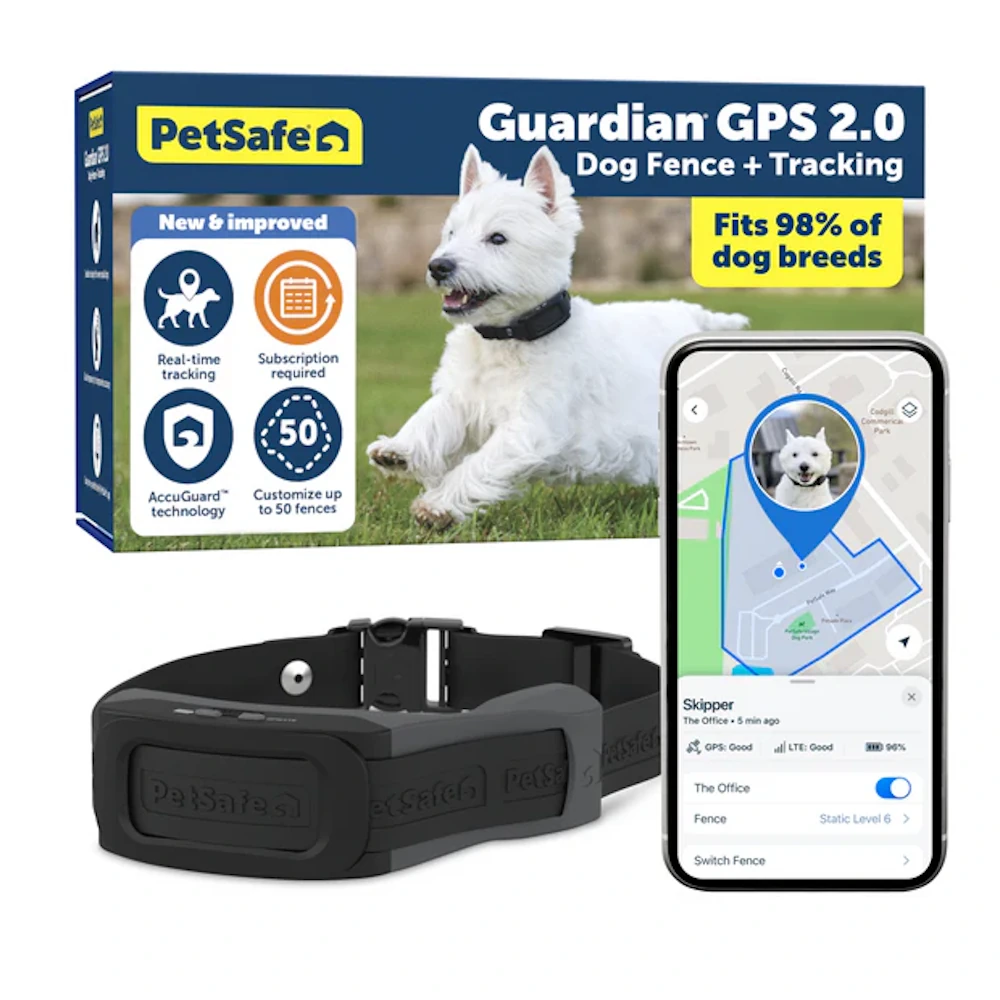
Containment remains a defining PetSafe strength. The brand offers GPS fences, traditional wireless systems, and in-ground solutions, giving homeowners several ways to establish boundaries without relying exclusively on a physical fence. This is especially useful for large properties, rental situations, irregular yards, or households that need a portable setup. The correct choice depends on land size, boundary shape, installation tolerance, signal conditions, and the dog’s behavior.
GPS systems provide the greatest flexibility because they can create customizable virtual boundaries and, on certain models, support location tracking. They are particularly relevant for larger properties where a circular wireless boundary would be too restrictive. Traditional wireless fences are easier to relocate and can often be installed more quickly because they do not require buried wire. In-ground systems demand more labor, but they allow greater control over the boundary shape and can protect specific areas such as gardens, pools, or driveways.
These systems are not instant solutions. Boundary training is essential. Flags, audible cues, gradual introduction, leash work, and repeated supervised sessions help a dog understand where it may safely roam. Owners also need to consider terrain, signal reliability, battery charging, collar fit, and the possibility that a highly motivated dog may cross a boundary despite correction. No electronic fence prevents another animal, person, or vehicle from entering the property.
PetSafe’s containment catalog is impressive because it offers multiple technologies, add-a-dog options, replacement collars, wire, flags, chargers, and troubleshooting support. The main weakness is complexity. Buyers must understand exactly what their property requires. When matched correctly and paired with consistent training, PetSafe containment can provide useful freedom. It should still be treated as one layer of safety rather than an excuse to leave a pet unsupervised for long periods.
Feeding and Hydration Products
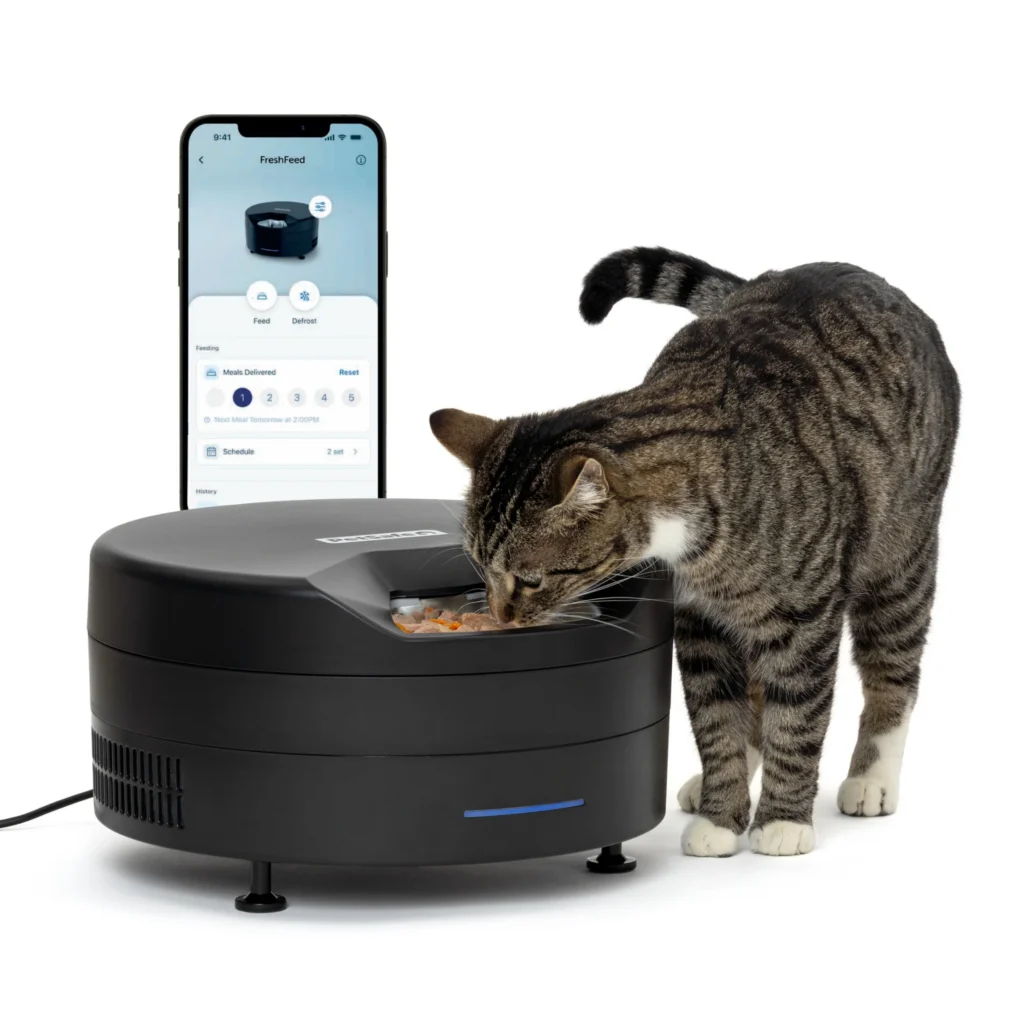
PetSafe’s feeders and fountains focus on routine, portion control, water freshness, and convenience. Automatic feeders can help households maintain regular mealtimes when work, school, travel, or changing schedules make manual feeding inconsistent. Depending on the model, owners may be able to schedule multiple meals, control portion sizes, slow down dispensing, or serve food through connected features. This is useful for cats that wake owners early, pets that eat too quickly, and multi-pet households that benefit from predictable structure.
The larger-capacity Smart Feed style of feeder is especially appealing for owners who want several scheduled meals from one hopper. It can reduce daily measuring and support controlled feeding, although it does not eliminate the need to monitor body condition, food freshness, and total calorie intake. Automatic equipment can jam if kibble shape or size is incompatible, so users should test the feeder before relying on it during an absence.
PetSafe fountains range from practical plastic units to stainless steel and cordless models. Flowing water may encourage some cats and dogs to drink more frequently than they would from a still bowl. Filtration can also reduce hair, debris, taste, and odor. Newer fountain designs emphasize easier cleaning, hygienic surfaces, rechargeable operation, and flexible placement.
The main tradeoff is maintenance. Pumps, reservoirs, filters, and drinking surfaces require regular cleaning. A neglected fountain can become less hygienic than a simple bowl. Filters and pumps also create recurring costs. PetSafe improves long-term usability by selling many replacement parts, but buyers should factor those items into the true cost. For owners who maintain the equipment properly, the feeding and hydration range can make daily routines more consistent and less demanding.
Cat Care and Self-Cleaning Litter Systems
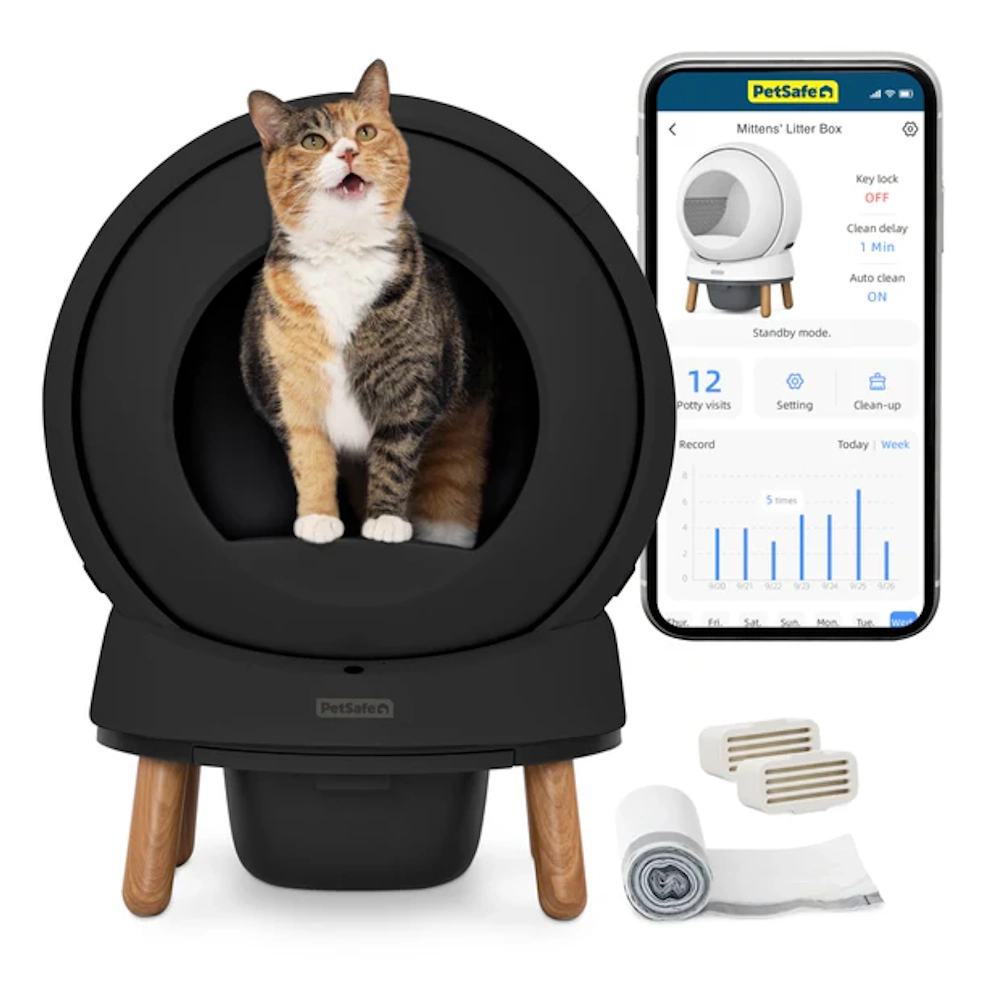
PetSafe has developed a substantial cat-care range, led by its ScoopFree litter systems. The catalog includes crystal litter boxes, clumping-litter models, app-connected units, health-monitoring features, reusable accessories, disposable trays, and more advanced rotating designs. This variety is important because litter preferences differ sharply between cats. Some adapt easily to crystal litter and automatic cleaning, while others prefer familiar clumping litter, an open layout, or a quieter mechanism.
The greatest benefit of a self-cleaning litter box is routine waste removal. Automatic raking or rotating systems can reduce odor buildup and keep the usable litter surface cleaner between full maintenance sessions. This is especially valuable for busy owners, people with limited mobility, and multi-cat households. Connected models may also provide usage information that helps owners notice changes in litter-box frequency. Such changes can be meaningful, although app data should never be treated as a substitute for veterinary evaluation.
Automatic litter boxes still require work. Waste bins must be emptied, sensors and moving components must remain clean, and litter must be replenished. Some systems perform best with specific litter types or branded accessories, which increases ongoing expense. Space is another consideration. Larger self-cleaning units need adequate clearance and may not fit comfortably in a small bathroom or apartment.
Transition should be gradual. Cats may reject a new box if the sound, movement, litter texture, entrance height, or enclosed shape feels unfamiliar. Keeping the old box available during adaptation can reduce stress. PetSafe’s litter systems are strongest for owners who want less daily scooping and are comfortable maintaining a mechanical appliance. They are less suitable for buyers expecting a completely hands-off sanitation solution.
Pet Doors, Travel Gear, and Mobility Products
PetSafe’s lifestyle catalog extends well beyond electronic training. Pet doors, travel equipment, ramps, steps, seat covers, carriers, barriers, and safety tethers address everyday movement inside and outside the home. These products are often less technologically complex than GPS fences or automatic litter boxes, yet they can have an equally meaningful effect on a pet’s independence and comfort.
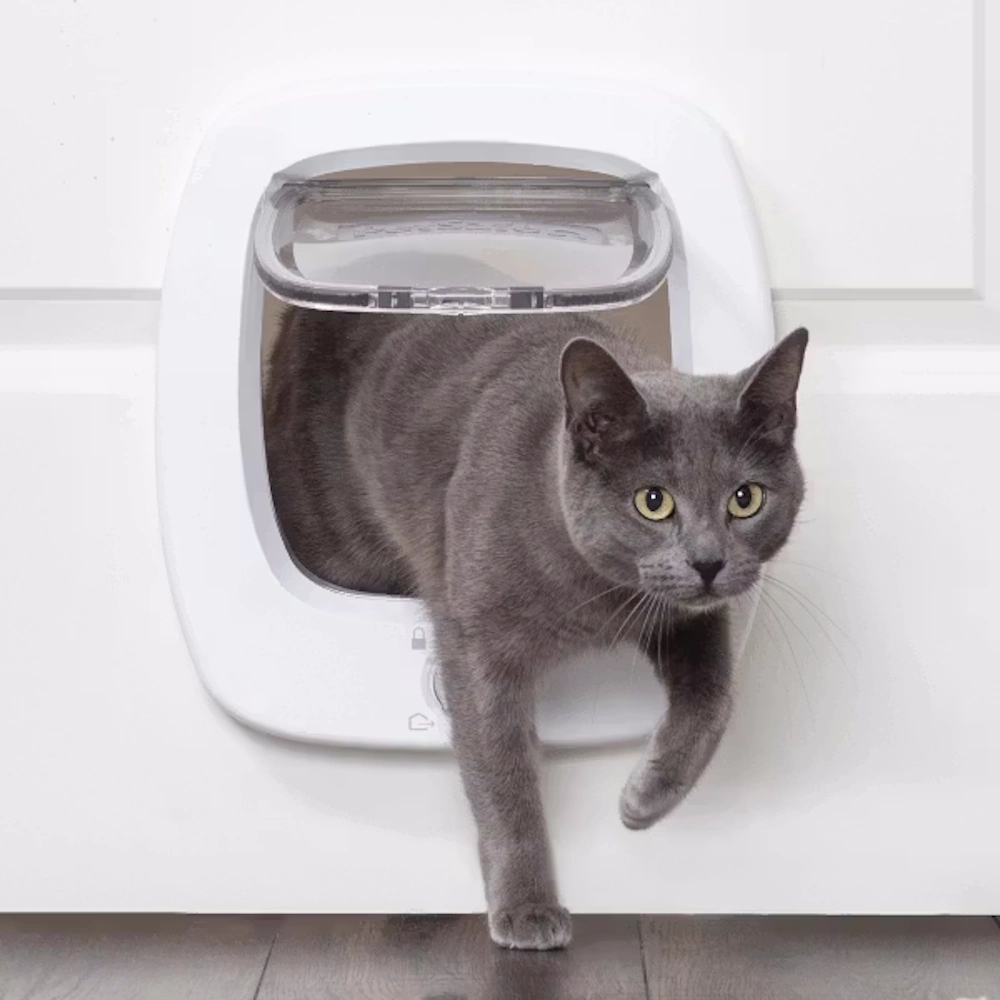
The pet-door range includes traditional flaps, wall-entry options, sliding-glass inserts, weather-resistant designs, electronic doors, and selective-access models. This variety makes the category relevant to homeowners and renters. Sliding-glass inserts can offer a less permanent solution, while wall-entry doors provide flexibility when a standard exterior door is unsuitable. Electronic access can help prevent unauthorized animals from entering, although installation measurements and collar or key compatibility must be checked carefully.
Travel products under the Happy Ride collection include crates, carriers, booster seats, protective covers, ramps, steps, and restraint accessories. A long telescoping ramp can make vehicle access easier for large dogs, senior pets, and animals recovering from injury. Compact ramps and side-door steps are easier to store, but the surface angle, vehicle height, weight rating, and grip should be evaluated before use.
These products work best when introduced before they are urgently needed. A dog should practice using a ramp on a low, stable surface before attempting a steep vehicle entry. Car seats and tethers should connect to a properly fitted harness rather than a neck collar. Pet doors also require patient training. PetSafe’s lifestyle products are valuable because they reduce lifting, repeated door opening, interior mess, and travel stress, but careful installation and gradual introduction remain essential.
Design, Technology, Usability, and Maintenance
PetSafe’s design quality varies by category, but the overall approach favors understandable controls, practical materials, and repairable systems. Many products are built around replaceable components rather than sealed, disposable construction. Replacement pumps, filters, flaps, chargers, batteries, straps, trays, liners, collars, wire, and mounting parts can extend product life and prevent a minor failure from making the entire system unusable.
The more advanced devices use mobile apps, GPS, programmable schedules, sensors, health counters, rechargeable batteries, or connected notifications. These features can improve convenience, but they also introduce more opportunities for setup problems. Wi-Fi compatibility, phone permissions, firmware, account access, battery status, and app updates may affect the experience. Buyers who prefer simple equipment may be happier with a non-connected feeder, a standard wireless fence, or a mechanical pet door.
Usability depends heavily on preparation. PetSafe usually provides manuals, fitting guidance, training instructions, and troubleshooting resources, but owners still need to read them. Guessing during installation can lead to weak signals, incorrect boundaries, food dispensing problems, water leaks, poor collar contact, or an improperly fitted door. Measuring twice is particularly important for pet doors and harnesses.
Maintenance is not optional. Fountains require pump cleaning, litter boxes need waste-bin and sensor care, electronic collars need charging or battery replacement, and outdoor systems require occasional inspection. The brand’s broad accessory catalog makes maintenance easier, but it also means customers should record model numbers and keep proof of purchase. PetSafe products deliver the best experience when owners treat them as equipment that needs routine care, not as appliances that can be installed and forgotten.
Pricing, Value, and Long-Term Ownership
PetSafe covers a wide price range. Basic leashes, replacement parts, filters, toys, and travel accessories can be relatively accessible, while GPS containment, connected pet doors, and premium self-cleaning litter boxes require a much larger investment. This range allows different households to enter the brand at different levels, but price alone does not determine value. The more important question is how much time, labor, risk, or frustration a product can realistically reduce.
A self-cleaning litter box may justify its cost for someone who struggles with daily scooping, but it may feel excessive for a single-cat household already satisfied with a traditional box. A GPS fence can be valuable on a large property, yet unnecessary for a securely fenced urban yard. An automatic feeder may improve portion consistency, though a simple timed feeder might be sufficient for owners who do not need app control.
Long-term cost deserves close attention. Filters, batteries, litter trays, liners, deodorizers, spray refills, replacement flaps, and other consumables can add substantially to ownership expense. Connected features may also have model-specific service requirements. Buyers should examine what the device needs over one or two years, not only the initial purchase price.
PetSafe earns value points through category depth, replacement-part availability, and the ability to choose between simpler and more advanced solutions. It loses value when buyers select technology that exceeds their actual needs or when proprietary accessories create a recurring expense they did not anticipate. The smartest PetSafe purchase is not necessarily the most advanced model. It is the product that solves a recurring problem, fits the pet correctly, matches the household routine, and can be maintained without resentment.
Customer Support, Warranty, and Buying Experience
PetSafe supports a complex catalog with manuals, product-specific troubleshooting, app downloads, replacement components, customer-care channels, and warranty procedures. This infrastructure matters because many of the brand’s products require setup, fitting, training, installation, or electronic configuration. A feeder, fence, collar, fountain, litter box, or door may need more assistance than an ordinary pet accessory.
The standard limited warranty for many products covers defects in materials or workmanship for one year when the item is purchased new from PetSafe or an authorized reseller. Proof of purchase is important, and coverage does not generally extend to products bought used, refurbished without authorization, or through unauthorized sellers. Installation labor, landscaping, electrical work, and contractor expenses are also separate from product warranty coverage. Buyers considering in-ground fences or wall-mounted doors should understand this distinction before installation.
The authorized-retailer requirement is reasonable, but it means customers should be cautious with unusually cheap marketplace listings. Saving money on an unsupported product may create a larger expense if the item fails or arrives incomplete. Keeping the receipt, model number, packaging, and accessory list can simplify support.
The buying experience is strongest when customers use PetSafe’s category filters and verify size, capacity, correction method, installation type, and compatibility. The catalog can feel overwhelming because similar products may serve different conditions. Customer support is therefore part of the product’s value, not merely an after-sales extra. PetSafe offers a more dependable ownership experience than many unknown electronics brands, although customers must still follow the written terms and perform initial troubleshooting when requested.
Pros and Cons
Pros
PetSafe covers training, containment, feeding, hydration, litter management, doors, travel, mobility, toys, and replacement parts for dogs and cats.
Lorem ipsum dolor sit amet, consectetur adipiscing elit. Ut elit tellus, luctus nec ullamcorper mattis, pulvinar dapibus leo.
GPS, wireless, and in-ground options suit different properties, boundary shapes, and installation preferences.
Pumps, filters, flaps, collars, batteries, chargers, liners, trays, wire, and other components can extend product life.
Automatic feeders and self-cleaning litter boxes can reduce repetitive daily tasks when maintained properly.
Manuals, troubleshooting guidance, app downloads, customer care, and warranty procedures help owners manage more complicated products.
Cons
Filters, batteries, litter supplies, liners, deodorizers, and refills can make ownership more expensive over time.
Similar-looking accessories may only work with specific models or generations.
Connected devices may involve apps, Wi-Fi, charging, updates, calibration, and troubleshooting.
Electronic collars and containment systems can be ineffective or stressful when poorly fitted or introduced without a proper training plan.
Litter boxes, fountains, feeders, and doors still need cleaning, inspection, and replacement components.
GPS fences and advanced litter boxes may be difficult to justify unless they solve a frequent and meaningful problem.
PetSafe’s advantages are strongest for owners who appreciate practical systems and are willing to maintain them. Its weaknesses mainly appear when customers expect advanced equipment to function without setup, training, cleaning, or recurring costs.
Final Verdict
PetSafe is a strong and credible choice for pet owners seeking functional solutions rather than novelty products. Its greatest advantage is the ability to address many stages of daily pet care through one brand. A household can use PetSafe for leash training, yard containment, scheduled feeding, filtered water, litter management, vehicle access, pet-door independence, and replacement components. Few competitors offer the same breadth.
The brand is particularly successful in categories where reliability and support matter. Containment systems benefit from detailed setup guidance and accessory availability. Fountains and feeders benefit from replaceable pumps, filters, and parts. ScoopFree litter systems offer several levels of automation rather than forcing every cat owner into one format. Travel ramps, steps, doors, and harnesses solve straightforward physical problems without unnecessary complexity.
PetSafe is not automatically the best choice for every pet or every budget. Some products require significant training, installation, cleaning, or consumable spending. Electronic correction tools must be selected carefully and used with restraint. Smart products may also be frustrating for owners who dislike apps or technical troubleshooting.
The final assessment is favorable. PetSafe offers a mature product ecosystem, meaningful innovation, and strong practical value when the buyer chooses carefully. The brand works best for owners who define the problem first, compare the available technology levels, confirm compatibility, and account for long-term maintenance. With that approach, PetSafe products can improve safety, routine, mobility, and household convenience while preserving the owner’s responsibility to supervise, train, and care for the animal thoughtfully.