
Scandinavian Biolabs Review: A Closer Look at Bio-Pilixin Haircare

30% Off Sitewide
×Scandinavian Biolabs puts a daily scalp serum at the center of its haircare lineup, with shampoos, conditioners, and targeted applicators built around it. The appeal is easy to understand: a drug-free routine aimed at reducing shedding and supporting fuller-looking hair, without turning the bathroom counter into a miniature pharmacy.
But haircare deserves a closer look than attractive packaging and before-and-after photos. This Scandinavian Biolabs review examines the Bio-Pilixin® formula, the research behind its claims, and the practical differences between its main products.
There’s plenty to appreciate here, particularly the distinction between scalp treatments and everyday washing products. The key is understanding what the evidence supports, what the routine requires, and how much commitment comes with that first bottle.
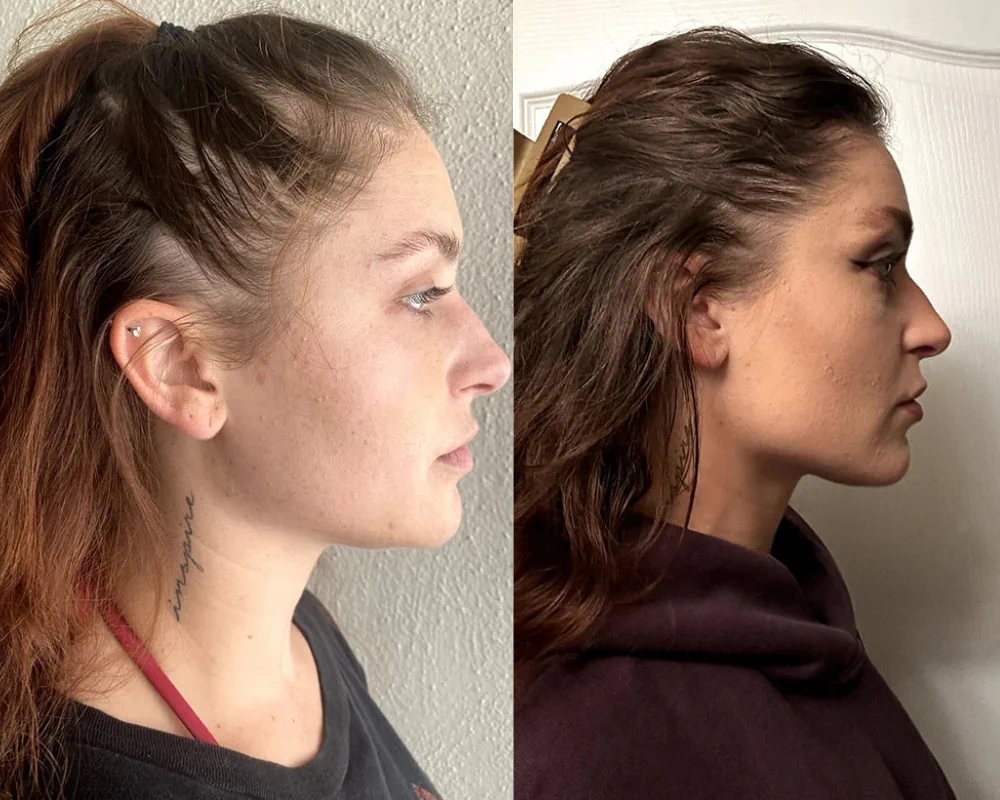
What Bio-Pilixin Actually Offers
Bio-Pilixin is the proprietary formula behind the brand’s main scalp products. Scandinavian Biolabs positions it as a cosmetic approach to reducing shedding and supporting hair density, with options marketed to men and women. Its drug-free positioning includes the absence of minoxidil, a distinction that will interest shoppers specifically seeking a nonmedicated product. That distinction doesn’t establish equivalent effectiveness, however.
The ingredient list gives buyers something concrete to assess. The Activation Serum contains niacinamide, caffeine, panthenol, and turmeric-derived Curcuma longa callus conditioned media. Capilia Longa™, the turmeric-derived ingredient highlighted throughout the range, is a central part of the formula’s story.
Another notable ingredient is vanillyl butyl ether, also called HotFlux®, which produces a warming sensation. The serum also contains alcohol and eucalyptus oil. Those details deserve attention if scalp comfort is high on your shopping checklist. Plant-derived ingredients can still cause sensitivity, and the company explicitly acknowledges that its products aren’t allergen-free. A warm scalp isn’t proof that hair is growing, either. The sensation and the eventual outcome are separate considerations.
The Clinical Results Need Careful Reading
Scandinavian Biolabs provides more research detail than a product page that simply promises thicker hair. Its published study involved 30 participants using the Activation Serum daily for 150 days. The company reports that 93% had a measured reduction in hair loss and 73% had a measured increase in hair density by the end of that period.
Here’s the crucial distinction: 73% of participants showing increased density does not mean hair became 73% denser. Likewise, 93% showing reduced shedding doesn’t establish a 93% reduction in the amount of hair shed. Some prominent website wording compresses those findings into phrases that can be read too broadly. The more detailed study descriptions provide the clearer interpretation.
These are encouraging findings, but a 30-person study provides a limited basis for predicting any individual shopper’s results. It also doesn’t establish that Bio-Pilixin performs as well as medication.
For context, the American Academy of Dermatology identifies minoxidil as an established option for certain forms of hair loss. Buyers should treat Bio-Pilixin’s cosmetic positioning and product-specific research on their own terms, rather than assuming all hair-growth approaches have interchangeable evidence.
Activation Serum or Hairline Booster?
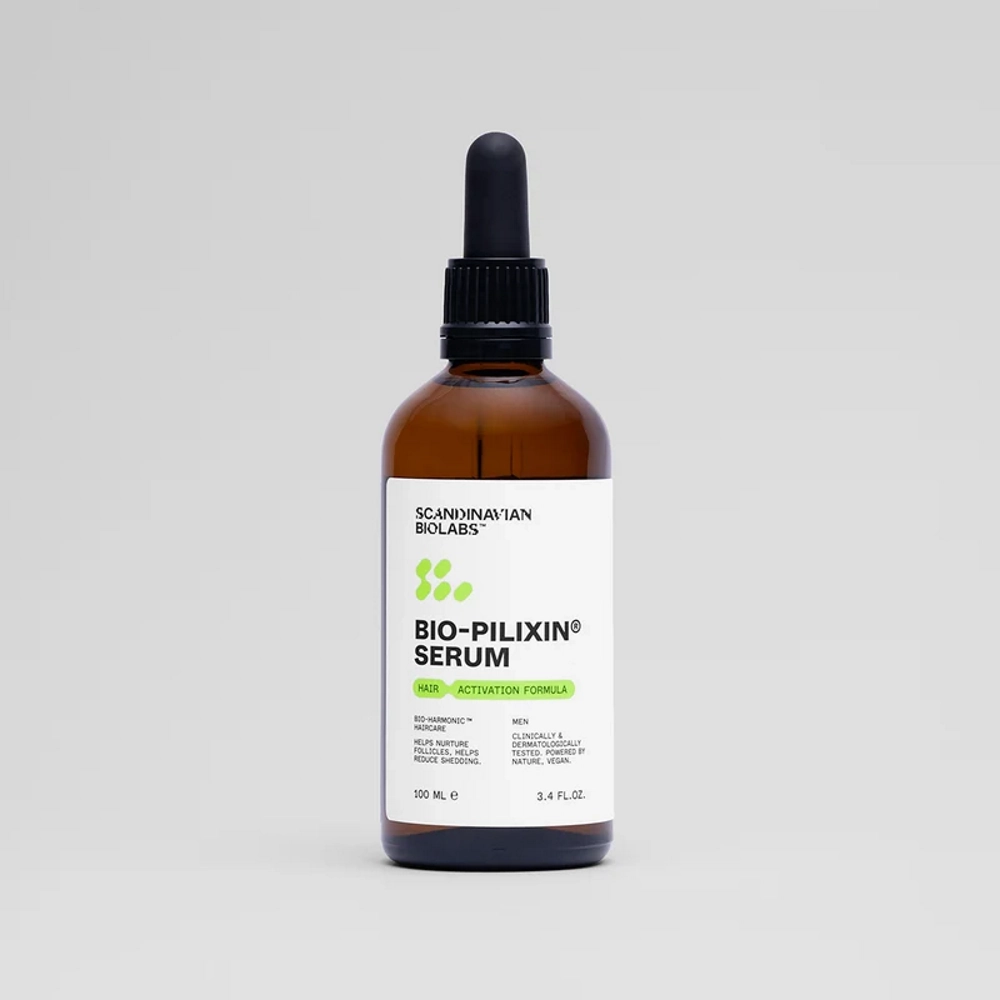
The Bio-Pilixin Activation Serum is the most direct starting point for shoppers interested in the formula itself. Its pipette applicator suits broader scalp coverage, making it the more practical format to consider for general thinning or crown concerns. The current men’s product FAQ specifies 3.25 milliliters daily, with a 100-milliliter bottle lasting approximately 30 days. It also explains that some older materials still use different pipette wording.
The Bio-Pilixin Hairline Booster takes a more targeted approach. It uses the same formula in a refillable applicator with six rollerballs, designed to distribute product around the hairline, corners, and temples. The initial purchase includes the applicator an
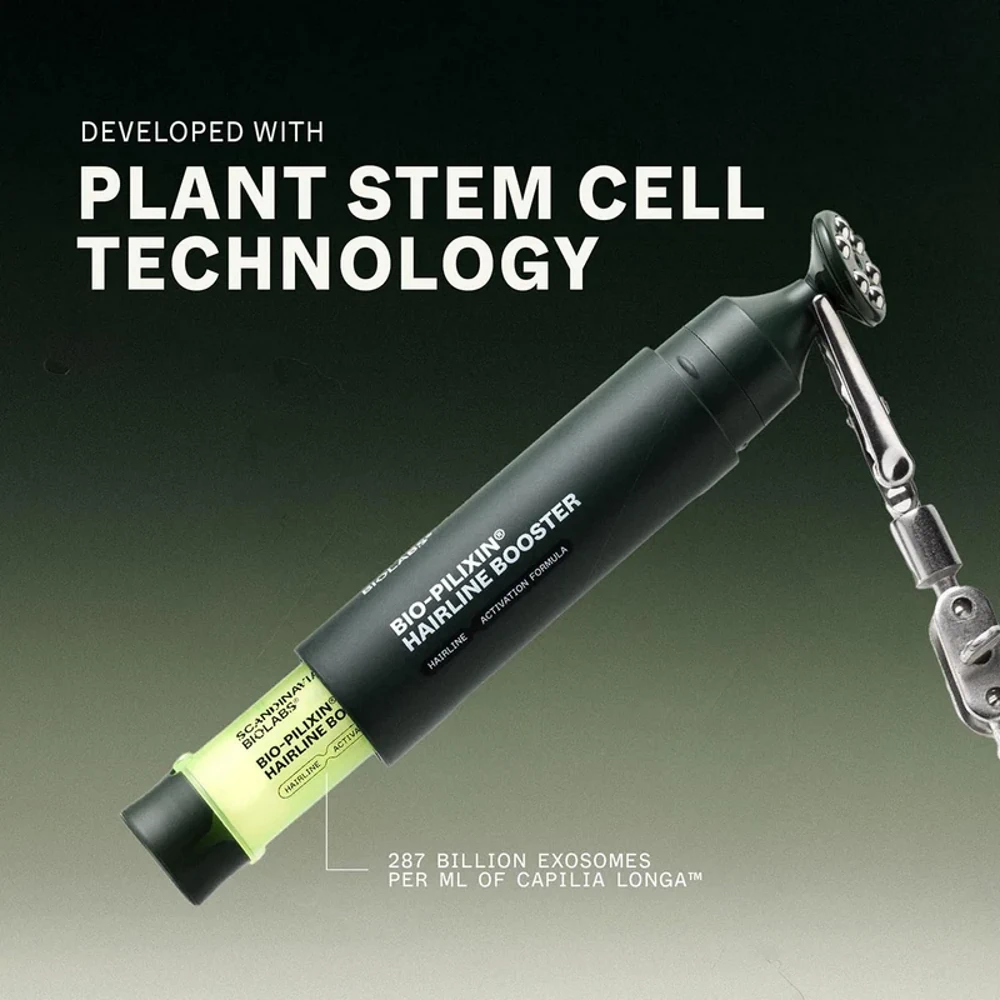
The useful difference is application, rather than evidence of a stronger formula. A pipette makes sense for covering a larger area; a rollerball offers more control along an exposed hairline. The company cautions against using the roller in denser hair because it can pull strands.
For someone choosing a single product, the area they want to cover is a better guide than automatically buying both.
What the Shampoo and Conditioner Add
The Hair Activation Routine combines the serum with Hair Strength Shampoo and Hair Recovery Conditioner. It’s a convenient option for shoppers who want a coordinated wash-and-scalp routine, though each product has a different job. The shampoo cleanses, the conditioner supports the hair strands, and the serum is the focus of the brand’s shedding and density claims.
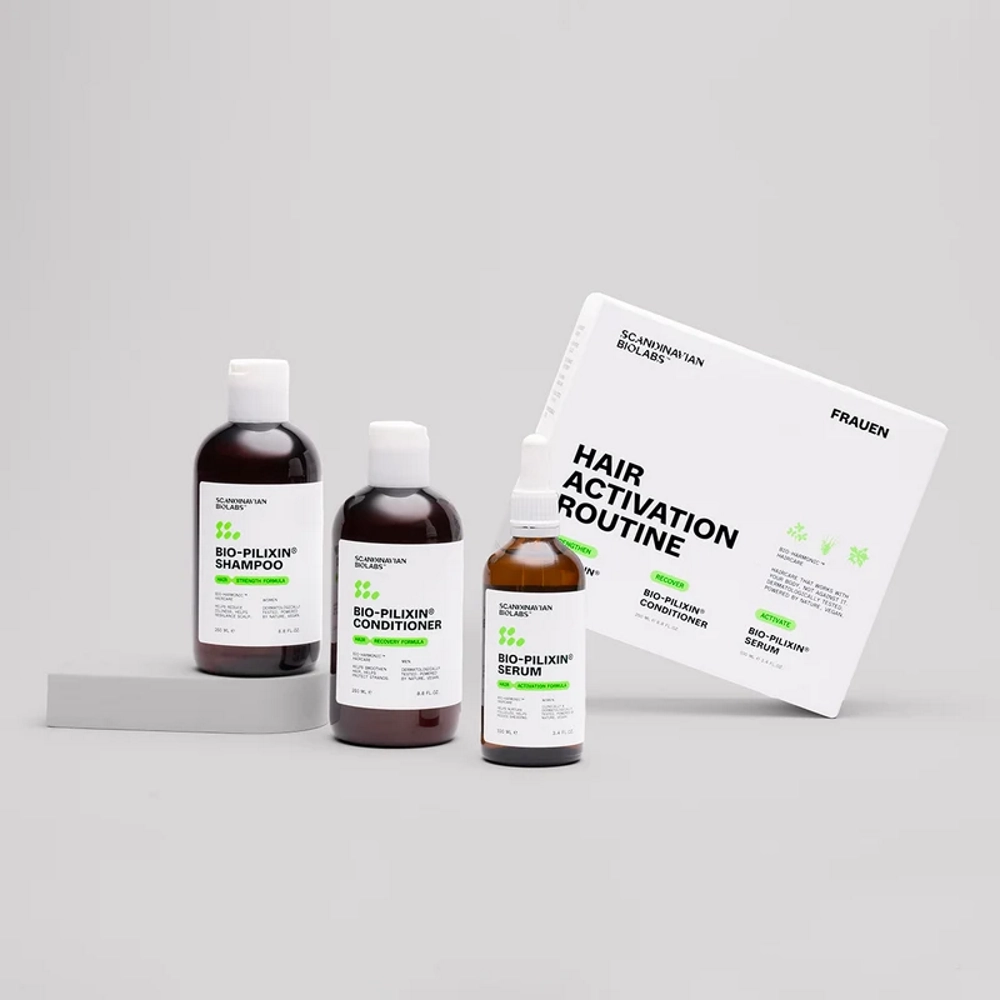
The shampoo’s listed ingredients include niacinamide, caffeine, cleansing agents, and an amino acid blend. The conditioner includes ingredients such as cetearyl alcohol, hydrolyzed quinoa, and oil-derived conditioning components. These are rinse-out haircare products, so their appeal should also be judged through ordinary priorities such as cleansing preferences and conditioning needs.
Refreshingly, the company acknowledges that shampoo and conditioner alone aren’t intended to deliver the serum’s hair-growth function. Buyers can use the serum without replacing their existing wash products.
That makes the bundle an optional convenience rather than an automatic requirement. Gentle cleansing and conditioning have a useful place in caring for fragile hair, but protecting existing strands from breakage is a different goal from increasing follicular growth. The American Academy of Dermatology makes that practical distinction in its hair-loss care advice.
Budgeting for the Routine and Its Guarantee
At the time of research, the U.S. storefront displayed the men’s Activation Serum from $68, alongside a $79 reference price. The three-step men’s Hair Activation Routine appeared from $105, against $149. These are displayed starting prices, so check the selected quantity and whether the offer requires a subscription before comparing totals.
The bigger purchasing question is the cost of consistent use. This is a months-long commitment, so one bottle’s price won’t capture the full budget. Buyers who already like their shampoo and conditioner may find the serum-only approach easier to justify.
The 150-day money-back guarantee offers some reassurance, but it requires planning. Conditions include daily use throughout the period, approximately five qualifying bottles or tubes, and monthly photographic documentation. It applies to eligible first-time purchases made directly through the official store, with claims due within four months after completing the routine.
Standalone shampoo and conditioner don’t qualify. The guarantee page also says refunds for bundles apply to qualifying items. Save the terms that apply when ordering and take a starting photo before the first application. The paperwork is easier when it isn’t an afterthought.
Pros and Cons
Pros
Cons
Final Thoughts
Scandinavian Biolabs is worth considering for shoppers interested in a drug-free cosmetic scalp routine who are comfortable with a measured, patient approach. The Activation Serum offers the simplest entry point, while the Hairline Booster provides a useful application alternative for smaller areas.
Its strongest appeal lies in product choice, disclosed ingredients, and research that buyers can examine. The limitations deserve equal attention: results aren’t assured, and the routine takes both time and money.
For unexplained hair loss, identifying the cause with a dermatologist remains a sensible first step. That knowledge makes it easier to decide whether this particular purchase fits the problem you’re trying to address.