
Best Baby Formulas: A Complete Comparison Guide for Parents
Choosing baby formula involves more than comparing the price on the can. Parents and caregivers may also want to consider the milk base, key nutrients, added prebiotics, ingredient preferences, convenience, availability, and overall value.
This roundup compares Munchkin, Little Spoon, and Bobbie using the same core criteria for each formula. The goal is to make the differences easy to understand without turning the comparison into a highly technical breakdown.
Prices and promotions may change, so current offers should always be checked before purchasing.
Munchkin Infant Formula Made with Organic Milk
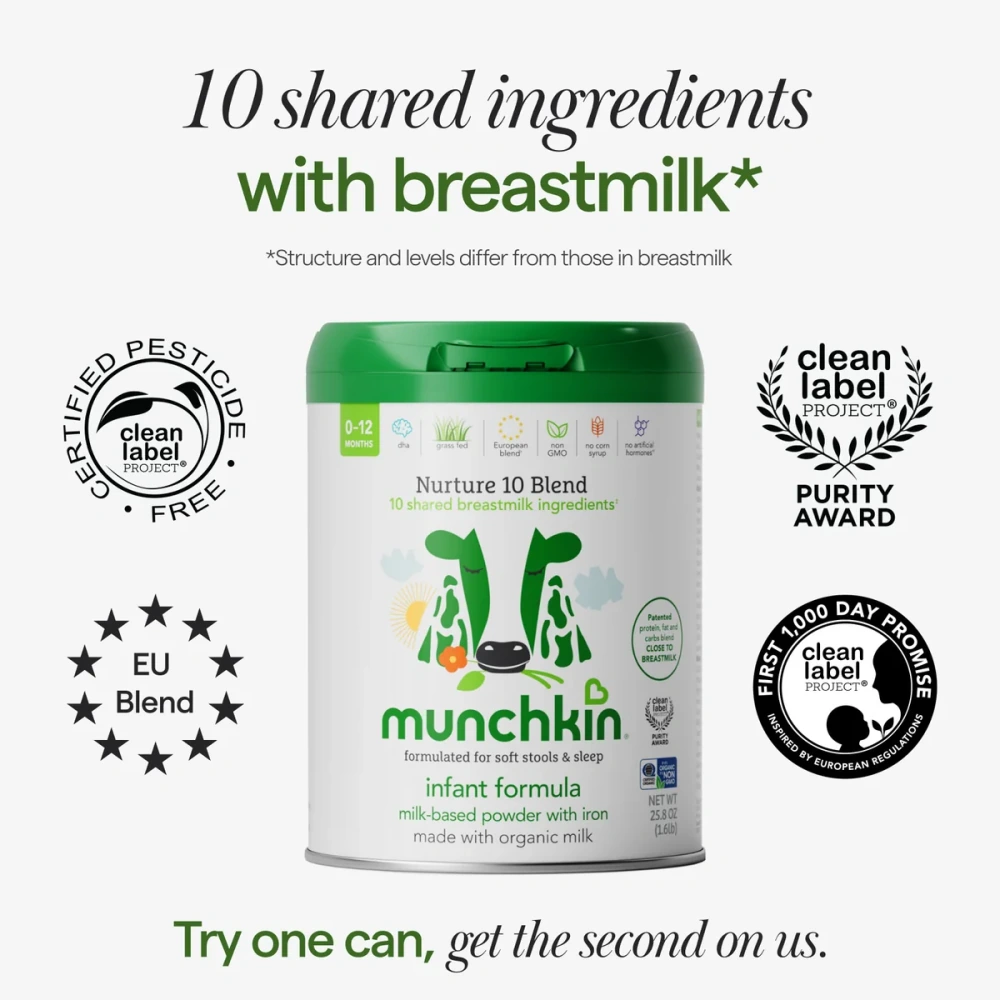
Munchkin Infant Formula Made with USDA Organic Milk is designed for babies from birth through 12 months. It uses organic milk from grass-fed cows in New Zealand and combines lactose, whey proteins, DHA, ARA, prebiotics, vitamins, minerals, and several additional nutrients.
Price and Value
Munchkin offers the strongest value of the three formulas reviewed here. A 25.8-ounce can is listed at about $39.99, which works out to approximately $1.55 per ounce.
The larger can can be especially practical for families who use formula regularly because it reduces how often a new container needs to be purchased. Munchkin also offers periodic promotions and subscription savings, which can make the effective cost even lower.
Trial 2 Cans Offer – Buy 1 Can, Get 1 Free – $39.99
Compared with Little Spoon and Bobbie, Munchkin provides more formula per container and the lowest regular price per ounce.
Formula and Ingredients
Munchkin uses organic nonfat cow’s milk rather than whole milk. Lactose serves as the main carbohydrate, while whey proteins contribute to the formula’s protein profile.
A notable feature is the inclusion of both GOS and FOS prebiotics. The formula also includes DHA, ARA, lactoferrin, alpha-lactalbumin, nucleotides, lutein, taurine, and beta-palmitate.
Munchkin does not use corn syrup, although the formula does contain soy and a palm-stearin-derived oil as part of its fat blend.
Benefits
Munchkin’s biggest strength is the combination of affordability and a broad ingredient profile.
DHA and ARA are included as part of the formula’s nutritional support for normal brain and eye development. GOS and FOS provide two types of added prebiotics, while the additional proteins and nutrients give the formula a more feature-rich profile than its lower price might suggest.
The large container is another practical benefit for households that depend heavily on formula.
Convenience and Availability
Munchkin is available online and through retail channels, giving parents more flexibility if they need to buy formula quickly. Its larger can also means fewer containers may be needed over time.
Subscription options can help families maintain a regular supply while reducing the ongoing cost.
Best For and Drawbacks
Munchkin is best suited to families who want good value, organic milk, DHA, ARA, and added prebiotics without paying the highest premium price.
The main drawback is that it is not whole-milk based. It also contains soy and a palm-derived fat ingredient, which may not appeal to parents specifically looking for formulas without those ingredients.
Pros
Cons

Buy 1 Infant Formula Trial Can, Get 1 Free
×Bobbie Organic Whole Milk Infant Formula
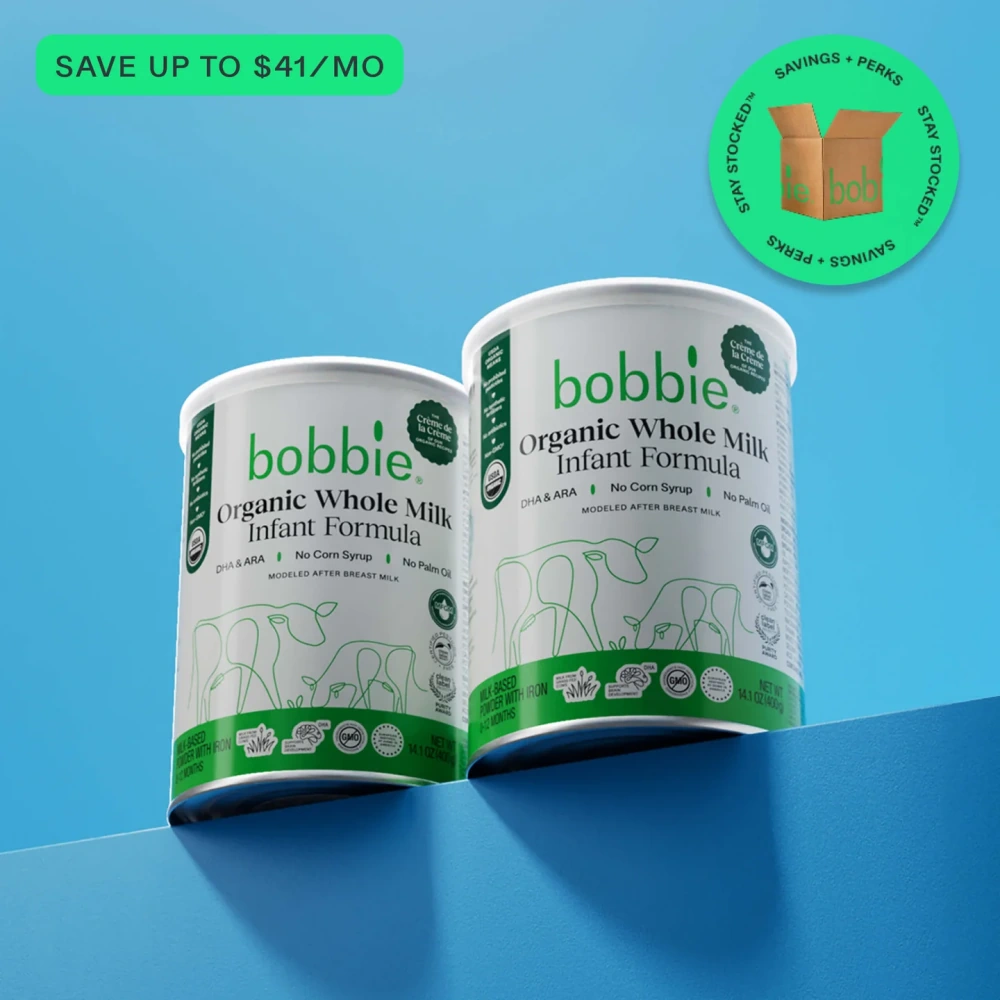
Bobbie Organic Whole Milk Infant Formula combines organic whole milk with a relatively straightforward premium formulation. It includes lactose, whey proteins, DHA, choline, iron, vitamins, minerals, and naturally occurring MFGM from whole milk.
Price and Value
Bobbie comes in a 14.1-ounce can. A regular one-time purchase works out to about $28 per can, or approximately $1.99 per ounce.
That places Bobbie between Munchkin and Little Spoon on price. It costs more than Munchkin but less than Little Spoon at standard pricing.
Bobbie’s Stay Stocked subscription saves 10% on recurring formula orders and includes free shipping. For example, a four-can order of Organic Whole Milk Formula is about $100.80 with the subscription compared with $112 for a one-time purchase, bringing the cost to roughly $25.20 per can instead of $28. The subscription can therefore provide meaningful savings for families who expect to purchase formula regularly.
Formula and Ingredients
Bobbie uses organic whole cow’s milk as its dairy base, along with organic lactose and whey protein.
The formula contains DHA, choline, iron, vitamins, minerals, and naturally occurring MFGM. It does not use palm oil or alternative sugars.
Unlike Munchkin and Little Spoon, Bobbie’s current Whole Milk formula does not emphasize an added GOS or FOS prebiotic.
Benefits
Bobbie’s main strength is its balance of whole-milk ingredients, premium formulation, and convenience.
Whole milk naturally provides dairy fat and MFGM components, while DHA and choline contribute to the overall nutritional profile.
Bobbie also appeals to families who prefer to avoid palm oil and alternative carbohydrate sources. Its formula is positioned as a simple, whole-milk-focused option without pushing the price as high as Little Spoon.
Convenience and Availability
Bobbie performs particularly well in convenience. The company offers subscription ordering with discounted pricing, free shipping, and flexible delivery scheduling.
It is also available through a variety of retail channels, which can be helpful if a family unexpectedly runs low and does not want to wait for an online shipment.
Best For and Drawbacks
Bobbie is best suited to families looking for organic whole milk, strong availability, and a balanced premium formula.
Its main drawback is that it costs more per ounce than Munchkin. Parents specifically looking for added GOS or FOS prebiotics may also prefer Munchkin or Little Spoon.
Pros
Cons

Buy A Can, Get One Free
×Little Spoon Organic Whole Milk Infant Formula
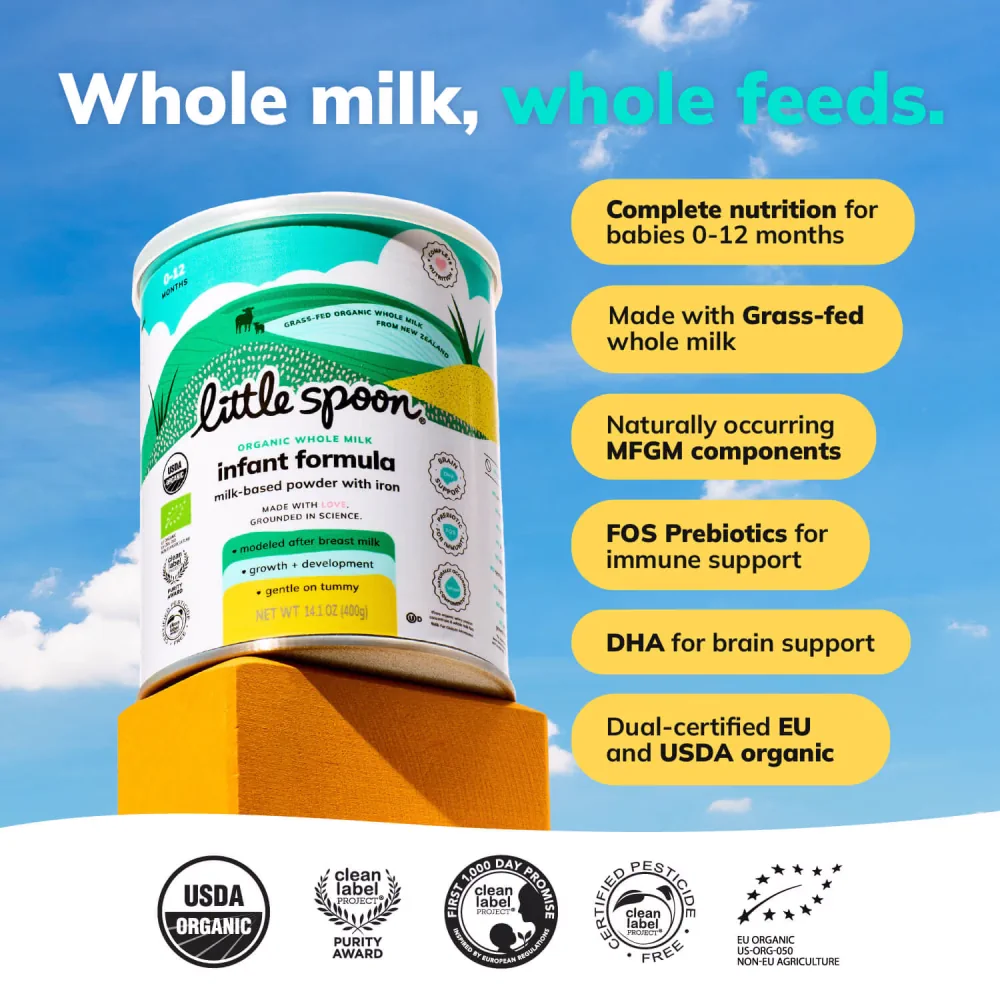
Little Spoon Organic Whole Milk Infant Formula is designed for families interested in organic whole milk, added prebiotics, and detailed product testing. It uses grass-fed organic whole milk from New Zealand along with lactose, whey protein, DHA, ARA, FOS, vitamins, and minerals.
Price and Value
Little Spoon comes in a 14.1-ounce can and is regularly priced at about $30 per can, or approximately $2.13 per ounce.
That makes it the most expensive formula in this comparison at standard pricing. Subscription customers can receive ongoing savings, which brings the effective cost down.
Little Spoon is clearly positioned as a premium option. Its higher price reflects not only its whole-milk formulation but also its focus on organic sourcing, testing, and ingredient transparency.
Formula and Ingredients
Little Spoon uses organic whole cow’s milk as its main dairy base. Whole milk naturally supplies milk fat and naturally occurring MFGM components.
The formula also includes DHA, ARA, and an added FOS prebiotic. Organic lactose serves as the main carbohydrate.
Little Spoon avoids several ingredients that some parents prefer to leave out of formula, including palm oil, soy, corn syrup, and GMOs.
Benefits
The main benefit of Little Spoon is its combination of whole milk, added FOS, and strong testing transparency.
Whole milk provides naturally occurring dairy fat and MFGM components, while FOS adds prebiotic support. DHA and ARA are also included as part of the formula’s nutritional profile.
Little Spoon also stands out for its emphasis on extensive finished-product testing and published batch-level results. This may appeal to families who place a high value on ingredient sourcing and transparency.
Convenience and Availability
Little Spoon is primarily focused on online ordering and subscription delivery. Its subscription service provides ongoing savings, free shipping, and flexible delivery management.
NEW SUBSCRIBE & SAVE DETAILS: Families using Subscribe + Save can pause, skip, adjust, or cancel upcoming deliveries, making it easier to change the schedule as a baby’s feeding needs change. Little Spoon also promotes a formula supply guarantee for subscribers, adding another layer of convenience for households that rely on recurring deliveries.
This approach can be convenient for families who plan ahead, although it may be less practical for parents who prefer to buy formula immediately from a nearby store.
Best For and Drawbacks
Little Spoon is best for families who prioritize organic whole milk, added FOS, ingredient transparency, and extensive testing.
Its biggest drawback is price. At about $2.13 per ounce before subscription discounts, it is the most expensive option in this comparison. The smaller 14.1-ounce can may also mean more frequent purchasing.
Pros
Cons

Final Thoughts
Each formula has a different strength, and the best choice depends on what matters most to the family.
Munchkin stands out for value. It has the lowest approximate price per ounce and the largest can while still providing DHA, ARA, GOS, FOS, and several additional nutrients. It is a strong option for families who want a feature-rich organic-milk formula without paying the highest premium price.
Little Spoon stands out for whole milk and transparency. It combines organic whole milk with FOS, DHA, ARA, and extensive product testing. Its higher price is the main tradeoff, but families who place greater importance on organic sourcing and testing may find the premium worthwhile.
Bobbie offers the strongest overall balance. It provides organic whole milk, DHA, choline, naturally occurring MFGM, subscription convenience, and good availability. It costs more than Munchkin but less than Little Spoon, making it a practical middle-ground option for families looking for a premium whole-milk formula.
There is no single formula that is right for every baby. Parents and caregivers should consider cost, ingredients, availability, feeding habits, and individual tolerance when making a decision.
A pediatrician or qualified healthcare professional should be consulted before choosing or changing formula when an infant has allergies, digestive concerns, premature birth, poor growth, or other special nutritional needs.