
GIBBON Review: A Playful Approach to Balance Training, Indoors and Out

A slackline has a funny way of making a simple task feel surprisingly complicated. Step onto a strip of webbing, try to stand still, and suddenly your feet have questions. GIBBON builds its product range around that challenge, offering ways to practice balance in the backyard, at home, or in a dedicated workout space.
The Germany-born brand started in 2007 with an emphasis on making slacklining easier to set up and try. Today, its lineup includes traditional slackline kits, compact SlackBoards, and freestanding training systems. gibbon.com
This GIBBON review looks at the differences between those options, two products worth considering, and the practical details that can help shoppers choose equipment they’ll actually use.
A Product Range Built Around Where You’ll Practice
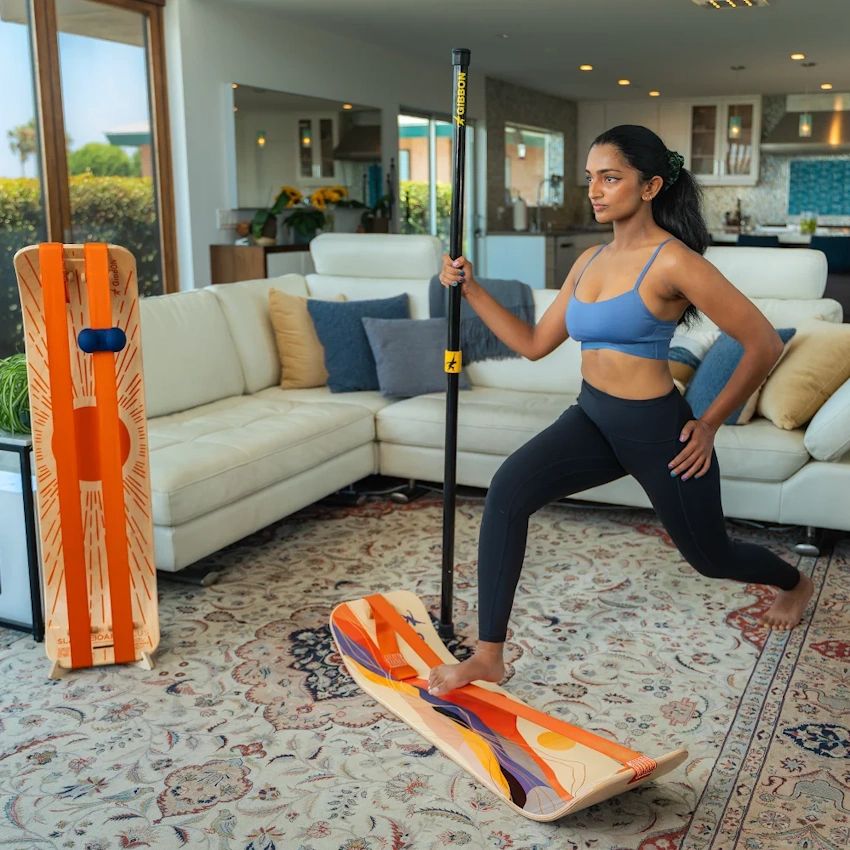
The most useful way to understand GIBBON’s lineup is by location. A traditional slackline suits someone with access to suitable trees and room to practice outdoors. A SlackBoard brings a short section of suspended webbing onto a wooden base, making balance practice possible without an outdoor installation. The two experiences share a basic challenge, but they serve different routines.
Within the outdoor range, GIBBON separates beginner-oriented options such as the ClassicLine and FunLine from trick-focused models, including the JibLine and SurferLine. It also offers different webbing widths, including the one-inch FlowLine and 1.5-inch BananaLama. Those distinctions give shoppers somewhere to progress without assuming every line serves the same purpose.
For a first purchase, the sensible question is where practice will happen most often. Someone who enjoys weekend park sessions has different needs from someone who wants a five-minute movement break between work calls. Choosing around that reality is more useful than buying the most ambitious setup.
SlackBoard Plus: A Flexible Starting Point for Home Use
The SlackBoard Plus is particularly worth considering for households with different experience levels. It arrives assembled with two lines installed and can be converted to a single-line configuration. That gives beginners a more stable starting arrangement while preserving another challenge for later.
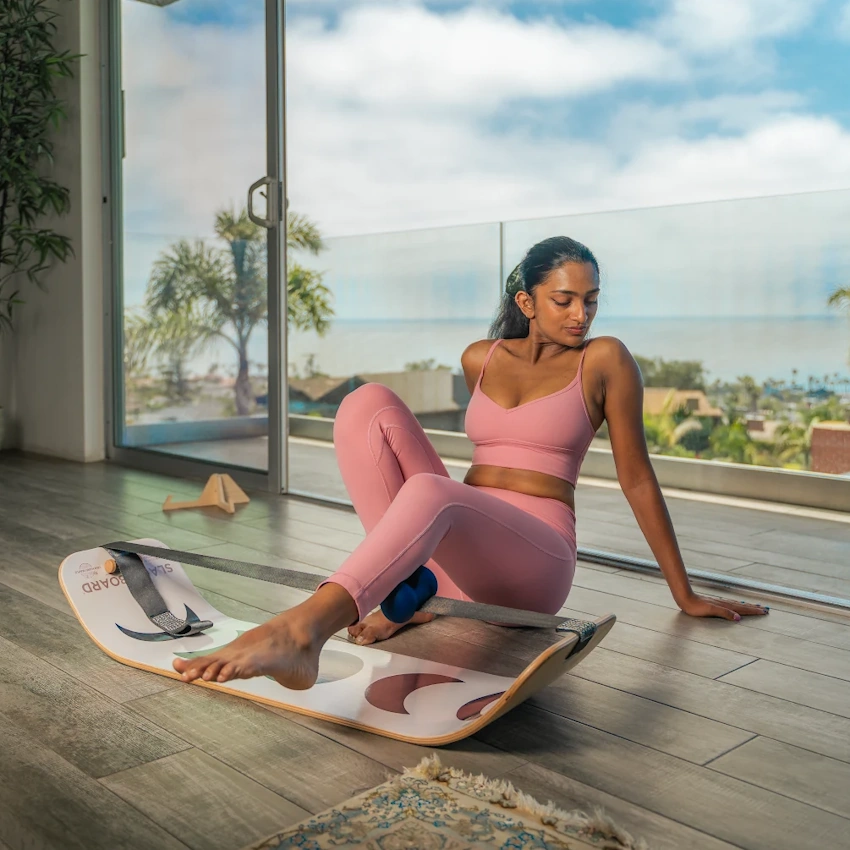
GIBBON lists the Plus at a regular U.S. price of $229.99, compared with $199.99 for the original single-line SlackBoard. Promotional prices vary. Both models are listed with a 400-pound capacity, so the main purchasing distinction is the line configuration rather than a higher advertised weight limit.
For someone specifically interested in practicing on one line, the original may be sufficient. The Plus makes a stronger case when several people will share the board or when the buyer wants to experiment before settling into a preferred setup.
Its appeal is straightforward: there’s no need to find trees, install anchors, or build a workout around a trip outdoors. Keep it somewhere accessible, and short practice sessions become easier to fit into an ordinary day.
ClassicLine: A More Traditional Outdoor Experience
The ClassicLine 2″ Set is the more natural choice for shoppers who want to walk a line outdoors. Its polyester webbing measures two inches wide, with a 41-foot main line and a separate eight-foot ratchet strap. The package includes a ratchet with a safety lock, a protective RatPad cover, two TreeWear pads, and setup instructions.
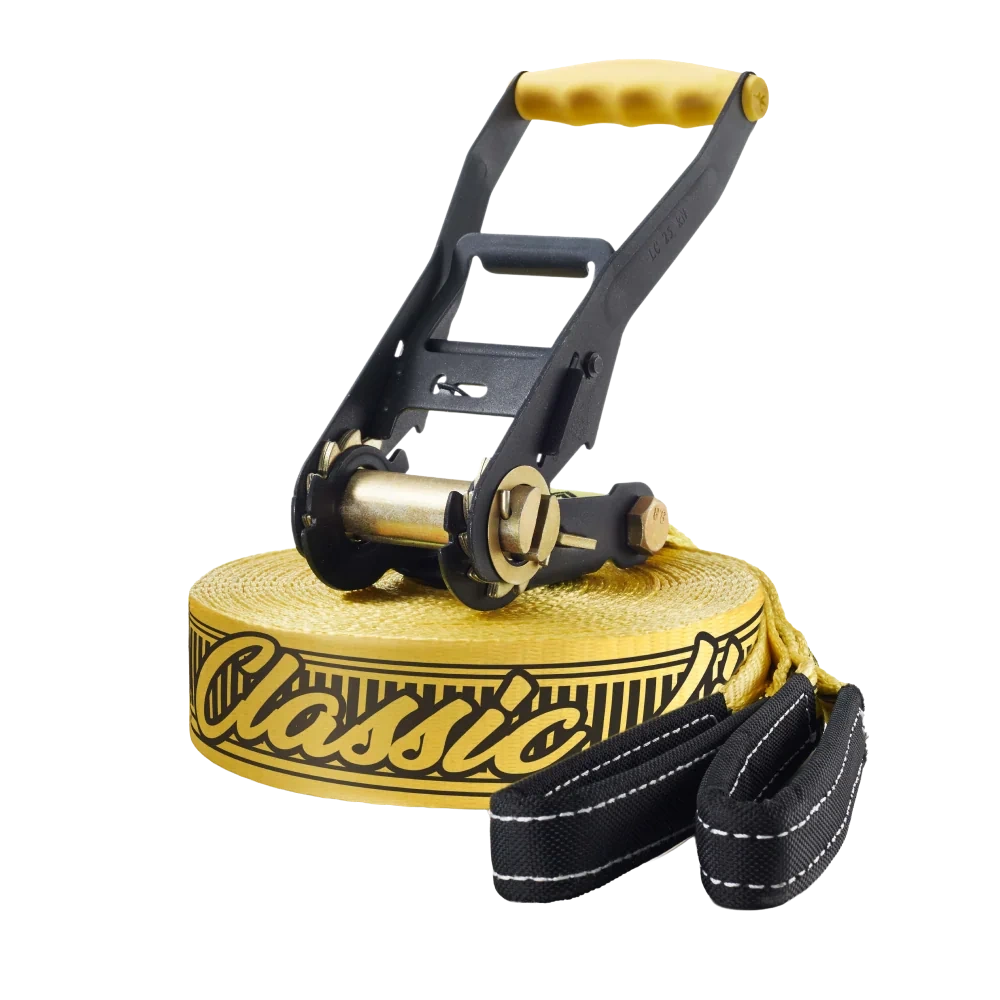
That equipment list makes it a useful starting package. Buyers receive the tensioning hardware and tree protection together, rather than having to identify several separate accessories before their first session.
The longer format also offers a different activity from a compact board. There’s room to work on taking steps, pausing, and moving along the webbing. It makes sense for people who want slacklining itself to become a hobby.
Installation deserves attention, though. The available span depends on the anchor arrangement and how much webbing wraps around the trees. Check the instructions and location rules before setting up, and allow time to learn the ratchet properly. The first session should include understanding the equipment, not simply climbing aboard.
Size, Care, and the Reality of Keeping Equipment at Home
Compact is relative. GIBBON lists the SlackBoard at approximately 42 inches long, 11 inches wide, and 5.5 inches high, with a weight of 7.5 pounds. That’s manageable to move around a home, but it still needs a clear practice area. Think beyond whether it fits under a desk or beside a couch; consider where you’ll comfortably step off.
The wooden construction also affects storage. Outdoor sessions are possible, but GIBBON advises avoiding moisture and prolonged exposure to direct sunlight. It belongs indoors between uses rather than becoming a permanent backyard fixture.
These details help set reasonable expectations about ownership. A portable training tool can still require rearranging a small room, and a low line still demands attention while learning.
For shared households, placement may be as important as the graphic on the board. Equipment tucked behind three storage bins tends to stay there. A convenient, uncluttered spot gives this kind of purchase a better chance of becoming part of a routine.
Training Guidance Gives Beginners Somewhere to Start
Balance equipment can lose its appeal when the owner runs out of ideas after the first few attempts. GIBBON addresses that problem with its free Balance App, which offers guided programs, short routines, tricks, and challenges without a required subscription. The website advertises more than 100 training videos.
That’s a useful companion for someone who prefers direction over improvisation. A structured exercise gives a session a purpose beyond seeing how long it takes to wobble off. It also provides ways to explore the equipment before buying more accessories.
For people who prefer to leave their phone elsewhere, GIBBON sells exercise cards as a separate option. A storage stand and support pole are also available, allowing buyers to choose additions around their own setup.
The practical approach is to begin with the included equipment and free guidance. After a few sessions, it should be clearer whether the missing piece is exercise variety, support, or simply a better place to store the board. There’s little reason to purchase every extra on day one.
Pricing and When a Larger Setup Makes Sense
GIBBON’s pricing reflects several different levels of commitment. The ClassicLine carries a listed regular price of $99.99, putting it below the compact wooden boards. Its value depends partly on already having access to an appropriate outdoor location.
At the other end, the SlackRack Fitness has a listed regular price of $529.99. This freestanding system can be configured at approximately seven or ten feet long and doesn’t require trees or anchors. It includes handgrips, a stretch band, and a workout poster, while rubber feet help protect the floor. Sale pricing may reduce the initial cost.
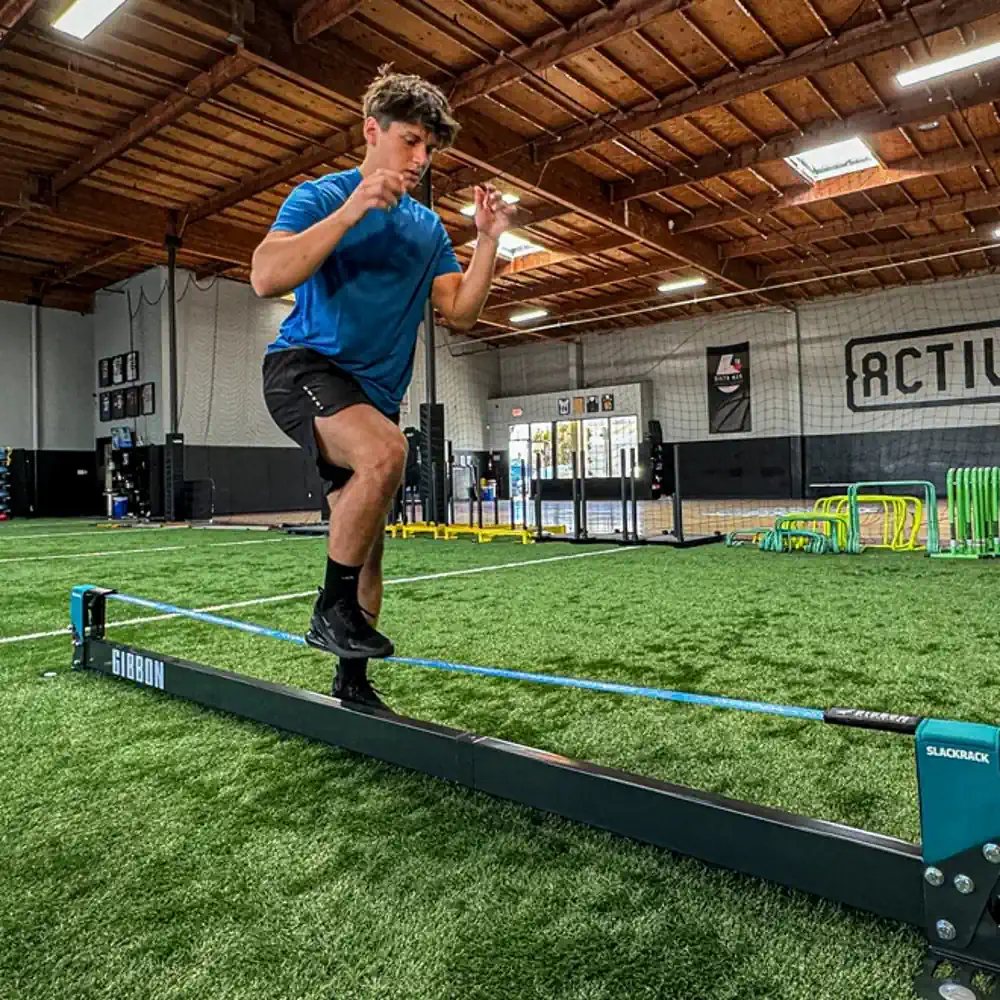
That makes the rack a more plausible purchase for a dedicated exercise room or training space than a small apartment. Measure the usable area before comparing discounts.
Across the range, the best value comes from matching the format to a realistic habit. A lower-priced outdoor kit won’t be especially economical if finding a suitable location becomes a chore. Equally, a larger indoor system needs enough space to justify its footprint.
Pros and Cons
Pros
Cons
Final Thoughts
GIBBON is worth considering for shoppers who find skill-based movement more appealing than another conventional workout accessory. Its range accommodates both casual home practice and a more involved interest in outdoor slacklining.
The SlackBoard Plus is the most flexible starting point for a shared household, while the ClassicLine better suits someone eager to practice walking outdoors. The larger SlackRack deserves attention when dedicated indoor space is available.
The deciding factor is how comfortably the equipment fits into everyday life. Choose a format that’s easy to access and enjoyable to practice, and the purchase has a much clearer purpose than simply adding another object to the exercise corner.