
Horizon Fitness Review: Connected Cardio Equipment for Serious Home Training

Horizon Fitness serves home exercisers who want substantial cardio equipment without turning every workout into a recurring software expense. The brand’s current lineup centers on treadmills, indoor cycles, upright and recumbent bikes, an elliptical, and supporting accessories. Its strongest identity comes from combining durable mechanical design with flexible digital connectivity. Rather than forcing buyers into a single content platform, many Horizon machines allow users to bring their own phone, tablet, watch, training app, or entertainment service.
That approach gives the brand a clear place in the home fitness market. Horizon is not trying to recreate a luxury health club through oversized touchscreens, elaborate membership ecosystems, and heavily managed content libraries. It focuses on the machine itself. Motors, frames, decks, resistance systems, controls, speakers, device holders, folding mechanisms, and workout programs receive more attention than flashy software. This makes the equipment particularly attractive to buyers who already use services such as Peloton, Zwift, Apple Fitness+, or other training platforms and do not want to pay for another closed system.
The overall experience feels practical, performance-minded, and adaptable. Horizon offers accessible models for walking, casual riding, and moderate conditioning, while its higher-level Studio Series treadmills are built for faster running and interval work. There are limitations, especially for shoppers seeking integrated strength machines or enormous touchscreen consoles. Still, the brand succeeds by giving home athletes reliable cardio tools that work with changing fitness habits rather than locking them into one digital environment.
Brand Background and Training Philosophy
Horizon Fitness is part of Johnson Health Tech, a long-established manufacturer of home and commercial exercise equipment. That connection matters because cardio machines are complex products. A treadmill is not simply a belt and a display. It depends on motor performance, deck stability, electronics, rollers, cushioning, frame geometry, heat management, assembly quality, and long-term access to parts. Horizon benefits from the engineering and manufacturing experience of a larger fitness equipment organization while maintaining a consumer-friendly identity focused on home use.
The brand’s philosophy is built around an open fitness experience. In practical terms, the buyer owns the machine and remains free to choose how digital content fits into each workout. A user can follow an instructor on a tablet, watch entertainment, run with a compatible virtual training app, use a wearable for tracking, or ignore connected features and rely on the built-in programs. This flexibility protects the equipment from becoming obsolete simply because a specific app loses popularity.
Horizon also separates its product families according to training intensity. The GO Series emphasizes straightforward operation, compact storage, comfort, and accessibility. The Studio Series adds quicker controls, stronger performance characteristics, larger running surfaces, and features suited to structured classes or interval sessions. This division helps buyers avoid paying for capabilities they will never use.
The brand is best understood as a cardio specialist rather than a complete home gym supplier. Strength training may be added through dumbbells, benches, resistance bands, or bodyweight exercises, but the current direct catalog is dominated by machines for running, walking, cycling, and low-impact conditioning. That specialization allows Horizon to concentrate on categories where mechanical quality has an immediate effect on workout safety and satisfaction.
Treadmill Range: The Center of the Horizon Catalog
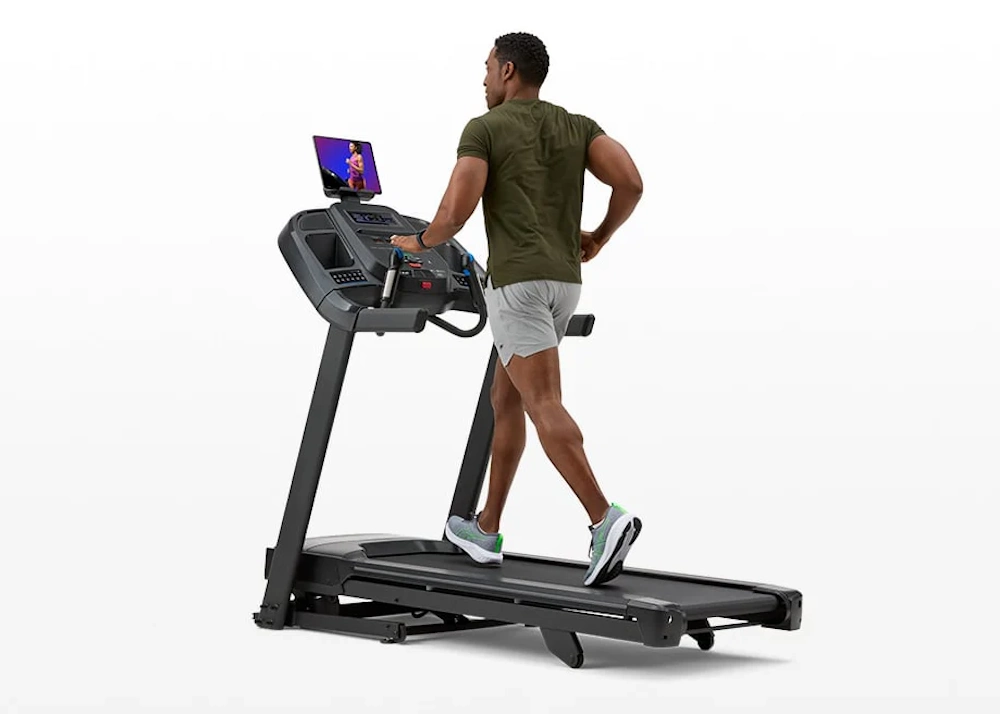
Treadmills form the heart of Horizon Fitness. The lineup covers casual walking, daily jogging, serious running, and high-intensity interval training. Entry and midrange GO Series models emphasize uncomplicated use, foldable frames, cushioned decks, built-in programs, and controls that are easy to understand. These treadmills suit people who want dependable indoor walking or running without paying for advanced performance features that may go unused.
The Studio Series is more ambitious. Models such as the 7.0 AT, 7.4 AT, and 7.8 AT are built around stronger frames, larger running areas, responsive motors, and controls designed for rapid changes in pace and incline. QuickDial controls are especially useful during interval workouts because the runner can make adjustments with less fumbling. This matters when following a class that alternates frequently between recovery, sprinting, climbing, and steady-state work.
Horizon’s cushioning system is another important part of the treadmill experience. The deck is engineered to provide different levels of support through the stride, helping soften landing while maintaining a stable push-off. It does not eliminate impact, and no treadmill can make running completely stress-free, but a well-cushioned deck can feel more forgiving than hard outdoor pavement.
Storage is handled through hydraulic folding on several models. The mechanism reduces the effort required to raise or lower the deck, which is valuable in multipurpose rooms. These are still heavy machines, so folding does not make them truly portable. It simply makes the footprint more manageable between workouts.
The range works because it respects different levels of ambition. A walker can choose a simpler machine, while a committed runner can select a heavier model with a wider deck and faster response. That progression gives Horizon more depth than brands that offer one generic treadmill with a screen attached.
Indoor Cycles, Upright Bikes, and Recumbent Options
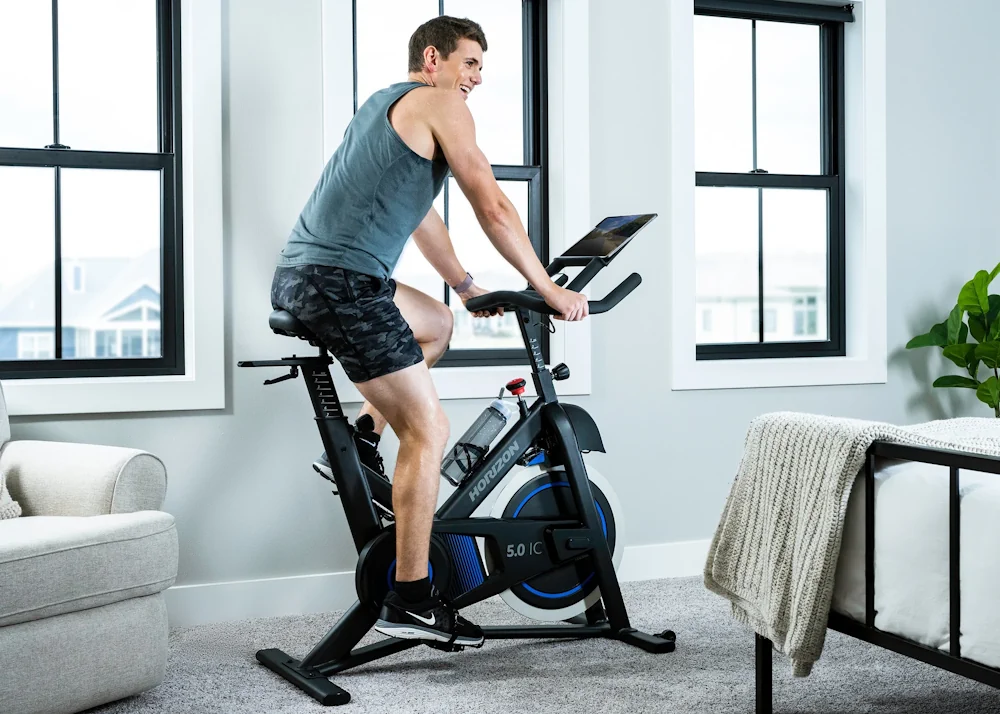
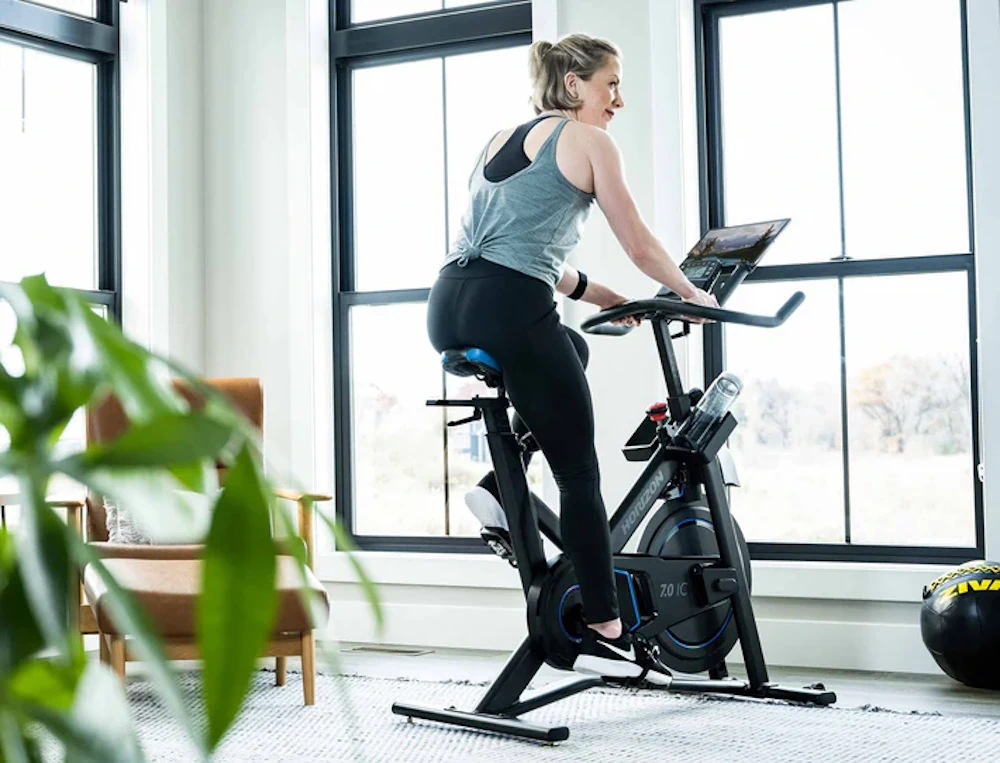
Horizon’s bike collection expands the brand beyond running and gives users several ways to train with lower joint impact. The indoor cycles are designed for energetic, class-style sessions. Their geometry supports a forward, athletic riding posture, while adjustable resistance lets the rider move between recovery efforts, climbs, and high-cadence intervals. These models suit people who enjoy instructor-led cycling, music-driven workouts, and structured intensity.
The upright bike category provides a more traditional stationary cycling experience. It keeps the body relatively elevated and can work well for steady cardio, warmups, moderate intervals, and general conditioning. An upright bike usually occupies less floor space than a treadmill, making it useful in apartments, bedrooms, or smaller training areas. It can also feel more approachable for users who do not want the aggressive posture of an indoor cycle.
The recumbent model serves a different audience. Its supportive seat and step-through design can make mounting easier, while the reclined position reduces the need to support the upper body throughout the workout. This format may appeal to older adults, beginners, people returning to exercise, or users who simply prefer a more comfortable cycling position. Resistance can still create a demanding cardiovascular session, but the experience is less intimidating than standing climbs on an indoor cycle.
Horizon’s connected approach carries into parts of the bike range. Compatible apps can add virtual routes, classes, data tracking, or training structure, while manual resistance remains available when an app does not control the machine directly. That distinction is important. Connectivity does not always mean complete automation. Riders may still need to adjust resistance themselves.
Together, the bike options show sensible product planning. Horizon does not treat every cyclist as the same customer. It offers choices based on posture, intensity, accessibility, space, and workout style.
Elliptical Training and Low-Impact Conditioning
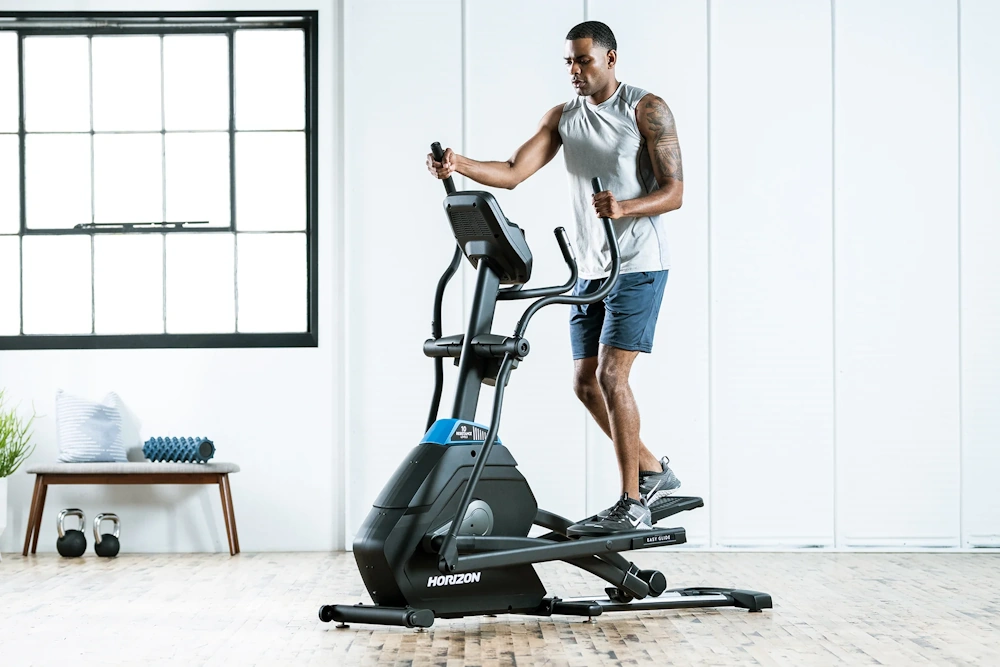
The elliptical category is smaller than Horizon’s treadmill and bike collections, but it fills an important role. Elliptical training allows the feet to remain in contact with the pedals, reducing the repeated impact associated with running. This can make the movement more comfortable for users who want cardiovascular training without constant foot strikes. It also provides an alternative on recovery days or during periods when outdoor running feels too demanding.
Horizon’s elliptical design emphasizes a natural body position and consistent motion. Frame geometry matters greatly in this category. A poorly designed elliptical can create an awkward stride, excessive forward lean, or uncomfortable spacing between the pedals. A better design allows the hips, knees, and ankles to move in a smoother path while the upper body remains balanced. Horizon’s ergonomic frame approach aims to create this more coordinated movement.
The resistance system supports both gentle sessions and harder efforts. Beginners can start with manageable intensity, while experienced users can increase resistance to create a stronger cardiovascular and muscular challenge. Moving handlebars also bring the upper body into the exercise, although the legs continue to perform most of the work. Elliptical training should not be mistaken for full strength training, but it can improve work capacity and provide useful muscular endurance.
Built-in programs help users vary the session without relying on an external subscription. A device holder and integrated audio features make it easy to add entertainment or guided instruction. This combination keeps the console simple while preserving flexibility.
The limited model selection may disappoint shoppers who want several stride lengths, premium consoles, or highly specialized elliptical formats. However, the available option suits the brand’s broader strategy: provide a practical, comfortable cardio machine with the essential features needed for consistent home use.
Connected Fitness Without a Mandatory Subscription
One of Horizon Fitness’s strongest advantages is its open approach to connected training. Many modern exercise brands use a large integrated screen as the center of the product, then require an ongoing membership for classes, tracking, scenic workouts, or even basic functionality. Horizon takes a different route. The user brings a phone or tablet, selects preferred apps, and connects when useful. The machine remains functional without a paid content subscription.
This design has several benefits. First, it lowers long-term ownership costs. A buyer can pay for one training service, switch platforms later, use free content, or train without digital guidance. Second, it reduces the risk of software aging faster than the mechanical equipment. A tablet can be replaced independently, while the treadmill or bike remains usable. Third, it lets multiple household members choose different platforms rather than sharing one restricted account or interface.
Bluetooth support can transmit workout data to compatible apps on selected machines. Depending on the model and service, users may be able to track metrics, follow virtual routes, connect heart-rate devices, use speakers, or control media from the console. Compatibility varies, so buyers should examine the exact machine and app combination before purchasing. Some apps exchange detailed workout data, while others simply provide video instruction with no direct machine control.
The absence of a giant built-in touchscreen may look less impressive in a showroom, but it is often more practical over time. Screens add cost, increase repair complexity, and encourage subscription dependence. Horizon’s simpler consoles preserve essential workout information while leaving entertainment and coaching to the device the user already owns.
For buyers who value freedom, this is not a compromise. It is a deliberate and financially sensible design choice.
Performance, Build Quality, and Workout Feel
Cardio equipment succeeds or fails through physical performance. A beautiful console cannot compensate for a shaky frame, delayed speed changes, rough resistance, uncomfortable stride geometry, or a running deck that feels cramped. Horizon generally directs its engineering effort toward these mechanical fundamentals.
The higher-level treadmills are particularly well suited to interval training. Faster transitions between speed and incline help the machine keep pace with instructor cues. Slow response can disrupt a workout because the user reaches the new interval only when the instructor is already moving on. Responsive controls and motors create a more natural rhythm, especially during repeated sprints or hill changes.
Deck size also affects confidence. Taller runners and people with longer strides need enough room to move without constantly monitoring foot placement. Wider, longer decks feel more secure at speed, although they also increase the machine’s footprint and weight. Horizon offers larger running surfaces in its more performance-oriented models, while entry options remain more compact.
Bike quality depends on stability, resistance consistency, adjustability, and contact points. A stable frame prevents side-to-side movement during hard efforts. Adjustable seats and handlebars help accommodate different body proportions. Resistance should change predictably, allowing the rider to repeat workouts and measure progress. Recumbent comfort depends heavily on seat support and easy access.
Noise levels vary with workout intensity, flooring, assembly, and maintenance. No treadmill is silent when someone is running on it, but a well-built motor and properly aligned belt can reduce unnecessary mechanical sound. Mats may help protect flooring and limit vibration.
Horizon does not fully replicate commercial gym equipment at every price level. Still, its best machines deliver the stability, responsiveness, and training space that serious home workouts require.
Ease of Use, Assembly, Storage, and Maintenance
Home fitness equipment must fit ordinary life. Even an excellent machine becomes frustrating if it is difficult to assemble, awkward to operate, impossible to move, or demanding to maintain. Horizon handles these concerns reasonably well, although buyers should still prepare for the realities of owning large cardio equipment.
Treadmills are heavy and usually arrive in substantial packaging. Assembly may involve attaching uprights, connecting console wiring, installing the display, tightening hardware, and checking belt alignment. Two adults are often safer than one, especially when moving the base into position. Professional assembly may be worth the added cost for buyers with stairs, limited tools, mobility concerns, or no experience handling heavy machinery.
Once assembled, the controls are generally straightforward. Built-in programs allow immediate exercise without creating an account. Device holders keep a phone or tablet visible, while physical buttons and dials remain accessible during movement. This is preferable to touchscreen-only control during intense sessions because tactile inputs are easier to use without breaking stride.
Folding treadmills save floor space, but they remain large. A folded deck can free part of a room, yet the frame still occupies a dedicated area. Buyers should measure doorways, ceiling height, workout clearance, and folded dimensions before ordering. Bikes and ellipticals may be easier to place, but they also require stable flooring and enough surrounding space for safe mounting.
Routine maintenance includes cleaning sweat, checking fasteners, keeping the area free of dust, inspecting moving parts, and lubricating treadmill belts when required. Proper electrical setup is also important. Following the manual protects both the equipment and the warranty.
Horizon equipment rewards owners who treat it as machinery rather than furniture. Regular care supports smoother operation and longer service life.
Pricing and Overall Value
Horizon competes on value rather than exclusivity. Its products are generally designed to deliver meaningful mechanical performance at prices below many screen-centered premium systems. The difference becomes even more significant when recurring subscriptions are considered. A lower initial price is helpful, but freedom from a required monthly membership can have a larger effect on total ownership cost over several years.
The strongest value often appears in the treadmill range. Buyers can choose a basic model for walking and light running, then move upward to larger decks, stronger motors, more responsive controls, and heavier frames. This tiered structure prevents casual users from overpaying while giving dedicated runners room to invest in performance.
The bikes follow a similar logic. Indoor cycles offer class-ready training without requiring the buyer to purchase a proprietary screen. Upright and recumbent models support users who care more about comfort, accessibility, and steady cardiovascular exercise. The elliptical provides a straightforward low-impact option without unnecessary complexity.
Value depends on matching the machine to the user. A powerful Studio Series treadmill may be wasteful for someone who only walks thirty minutes a day. Conversely, a compact entry treadmill may frustrate a tall runner who trains at high speed. The cheapest machine is not always the most economical if it must be replaced or upgraded quickly.
Horizon’s open connectivity adds another layer of value because the user can change apps without changing equipment. Accessories, maintenance supplies, warranty coverage, delivery, assembly, and available floor space should still be included in the budget.
For buyers who prioritize durable cardio hardware, practical controls, and flexible content, Horizon offers a strong balance between cost and capability.
Warranty, Customer Support, and Ownership Considerations
Warranty coverage is especially important for treadmills and other motorized cardio equipment because repairs can involve expensive components and specialized labor. Horizon provides substantial frame coverage across much of its lineup, with treadmill motor coverage also forming an important part of the ownership package. Parts and labor terms vary by machine, so buyers should review the exact warranty for the selected model rather than assuming every product receives identical protection.
Product registration should be completed promptly, and proof of purchase should be retained. Warranty protection generally applies to the original owner and normal residential use. Damage caused by poor assembly, neglected maintenance, unsuitable electrical connections, incompatible accessories, relocation problems, or commercial use may fall outside standard coverage. Reading the manual is therefore not a formality. It explains how to preserve the equipment and avoid preventable disputes.
Horizon maintains customer service, technical support, product manuals, troubleshooting information, order tracking, and replacement parts resources. The existence of an official parts channel is useful because long-term ownership often depends on access to belts, sensors, cables, lubrication supplies, hardware, and other components. Even a good machine may eventually need service.
Returns on large fitness equipment are more complicated than returns on clothing or small electronics. Shipping, pickup, restocking conditions, assembly status, and original packaging may affect the process. Buyers should understand these terms before delivery, especially when ordering a heavy treadmill that cannot be easily transported.
Customer support experiences can vary according to the issue, location, technician availability, and parts inventory. Horizon’s established support structure is reassuring, but owners should still document problems clearly, keep serial numbers available, and follow troubleshooting instructions.
A careful buyer will consider serviceability as part of value, not as an afterthought.
Pros and Cons
Pros
Users can bring their own device, select compatible training apps, watch entertainment, or exercise with built-in programs. The equipment does not depend on a mandatory paid membership for basic operation.
Walkers, casual joggers, interval trainees, and serious runners can choose different levels of deck size, motor response, stability, and control sophistication.
Quick-access buttons and dials are easier to operate at speed than menus buried inside a touchscreen.
The machines remain heavy, but the raised deck helps recover useful floor space.
This is reflected in its attention to frames, cushioning, resistance systems, ergonomics, warranties, manuals, and replacement parts.
This gives buyers options based on intensity, posture, comfort, mobility, and available space.
Cons
Buyers building a complete home gym will need other brands for racks, cable systems, free weights, or comprehensive strength stations.
Users who want an all-in-one entertainment screen may find the design visually plain.
Some connections transmit data, while others provide limited integration or require manual resistance changes.
Folding does not make them lightweight or easy to carry.
Shoppers seeking multiple stride lengths, advanced incline options, or premium console choices may need to compare other brands.
Final Verdict: Who Should Buy Horizon Fitness Equipment?
Horizon Fitness is an excellent match for buyers who care more about workout quality than digital spectacle. Its best products emphasize stable frames, usable controls, responsive performance, comfortable movement, and the freedom to choose outside apps. That combination is especially compelling for households that already own tablets, phones, smartwatches, or subscriptions and do not want to pay again for a proprietary screen ecosystem.
The treadmill range is the brand’s strongest achievement. The GO Series provides accessible equipment for walking, jogging, and everyday conditioning, while the Studio Series supports faster running, streaming classes, and interval training. Indoor cycles extend the same open-platform idea to class-style riding. Upright and recumbent bikes make the catalog more inclusive, and the elliptical offers a practical low-impact alternative.
Horizon is less suitable for buyers who want an enormous integrated touchscreen, a single luxury membership that manages every aspect of training, or a complete strength equipment catalog. It also requires realistic planning. These machines need space, proper assembly, routine maintenance, and careful model selection based on body size and training intensity.
The brand’s core appeal is long-term flexibility. Apps change. Subscription prices rise. Tablets are replaced. Fitness goals evolve. A well-built cardio machine can remain useful through all of those changes when it does not depend on one software provider.’
For runners, cyclists, walkers, and home exercisers seeking dependable hardware with modern connectivity and no mandatory membership, Horizon Fitness deserves serious consideration. It delivers a disciplined balance of performance, accessibility, and value, making it one of the more practical choices in the connected home cardio market.