
Nara Organics Review: Whole-Milk Infant Formula for Parents Who Refuse to Compromise

$20 Off Select Products
×Nara Organics doesn’t feel like a faceless corporation. The brand grew out of one mom’s experience navigating postpartum recovery, low supply, and the emotional roller coaster that often comes with feeding decisions. Instead of accepting what she saw on the formula shelf, the founder spent years working with pediatricians, nutrition experts, and scientists to build something she felt comfortable feeding her own baby. The brand name itself comes from her daughter’s name, which instantly gives it a more personal, “this really matters to us” energy.
At the heart of Nara is a simple idea: babies deserve real milk fat. Most formulas in the United States still rely heavily on skim milk and make up the missing fat with blends of vegetable oils. Nara flips that approach. It uses organic whole milk as the base so babies get naturally occurring milk fat and a component called MFGM (milk fat globule membrane). MFGM occurs naturally in breast milk and whole cow’s milk, and research links it with brain development, immune support, and gut health. Instead of building the formula around ultra-processed fillers, Nara centers it around those naturally rich milk fats.
The brand also leans into a “no weird stuff” ingredient philosophy. It avoids palm oil, corn syrup, maltodextrin, soy, artificial sweeteners, gluten, and genetically modified ingredients. Lactose serves as the primary carbohydrate, much like in breast milk. Parents who habitually flip to the ingredient label will instantly notice fewer red flags and fewer things they feel the need to Google at 2 a.m.
Nara doesn’t stop at ingredients, though. The formula is USDA organic and manufactured in Europe under strict standards, then registered in the United States and designed to meet both European and U.S. regulations. The brand highlights that its formula participated in a large, double-blind clinical trial in infants and that each batch goes through extensive quality checks. That combination of personal story, clinical rigor, and ingredient integrity makes Nara feel like a brand that genuinely respects how high-stakes infant feeding feels for parents.

Why Parents Are Paying Attention to Nara Right Now
Parents (and especially first-time parents) face an overwhelming list of choices. Shelves are packed with formula options, each promising to be “closest to breast milk,” “gentle,” “sensitive,” or “premium.” Nara cuts through that noise with a tighter, more specific pitch: whole-milk, organic infant formula that prioritizes good fats, clean ingredients, and serious safety standards.
One of the biggest reasons parents gravitate toward Nara is the whole-milk story. Many premium formulas now mention whole milk somewhere in the marketing, but they still rely mostly on skim. Nara proudly centers whole milk fat, so babies take in more of the natural fat structures that appear in breast milk and whole dairy. That matters to parents who want a formula that looks and feels closer to something recognizable from real food, not just a lab-built fat blend.
Another reason Nara stands out is the way it handles transparency. Instead of burying details, the brand talks openly about its clinical trial, its production in Germany, and its third-party testing for contaminants. Parents can read about how many checks each batch goes through and how thoroughly the company screens for things like heavy metals and unwanted chemicals. In a category where recalls and contamination concerns occasionally hit the news, that kind of transparency can offer very real peace of mind.
Nara also speaks directly to the emotional side of feeding. The brand doesn’t shame parents for using formula; it treats formula feeding as a valid, loving choice. That tone matters a lot. Parents feel seen instead of judged. The language on packaging and product pages emphasizes support, confidence, and flexibility—whether someone is exclusively formula-feeding, combo-feeding with breast milk, or transitioning from one approach to another.
Finally, practicality matters. Nara offers structured feeding guides, clear mixing instructions, and easy-to-understand bundle suggestions by age. Paired with app support and subscription options, the brand turns formula from something that feels chaotic and stressful into something that feels more predictable and manageable. That blend of heart, science, and logistics explains why so many parents are now talking about Nara when they started out just “researching formula options.”
The Everyday Workhorse: Nara’s Organic Whole Milk Infant Formula
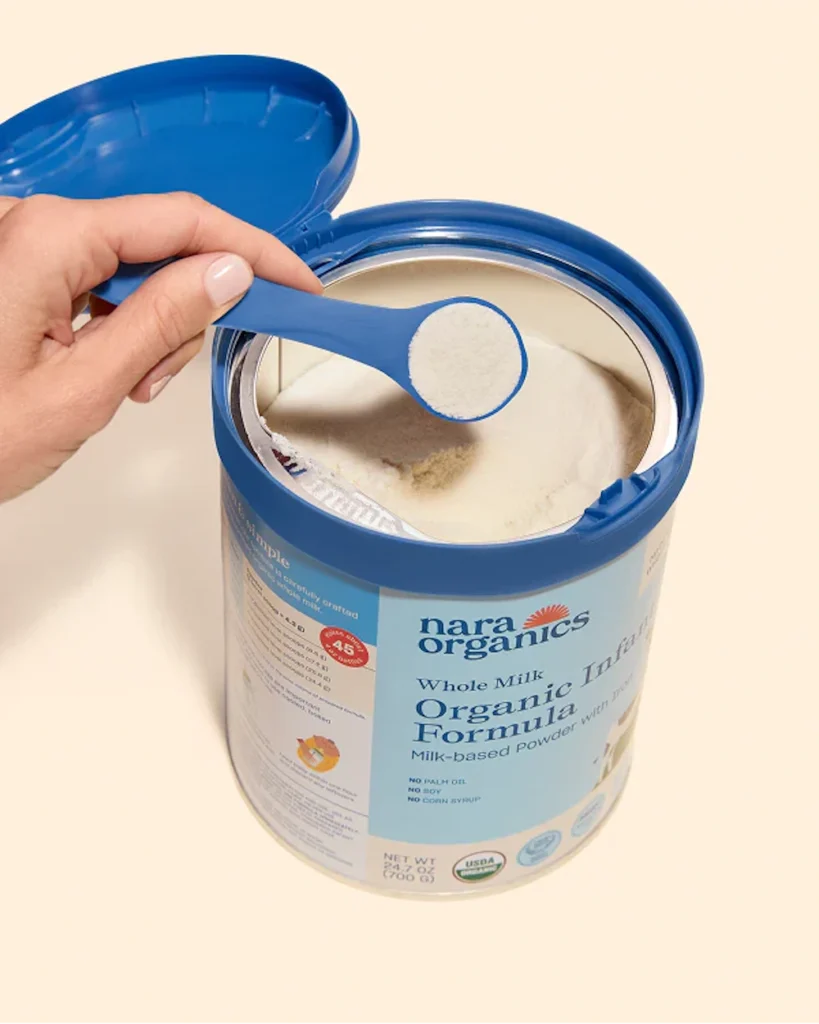
Nara doesn’t overwhelm parents with dozens of products. Instead, it focuses on doing one thing very well: an organic whole milk infant formula for babies from birth to 12 months. This single formula becomes the everyday workhorse in households that choose Nara. Rather than jumping between stages every few months, parents can stick with one formula through their baby’s first year, unless a pediatrician suggests otherwise.
The formula uses organic whole milk and organic lactose as its foundation. Whole milk brings in the naturally rich milk fats and MFGM; lactose provides a carbohydrate profile more similar to breast milk. To round out the formula, Nara adds carefully selected plant-based oils for essential fatty acids, whey protein to support a more breast-milk-like protein balance, and prebiotic fibers that feed beneficial gut bacteria. The result is a formula that aims to support brain development, immune function, digestion, and steady growth.
In day-to-day life, the formula needs to feel workable, not just theoretically perfect. Nara uses a straightforward mixing ratio (one level scoop per ounce of water), which helps avoid guesswork. Parents who switch from another formula need to pay attention here, because not every brand uses the same scoop-to-water ratio. Once that new habit settles in, feeding becomes automatic again. Nara also provides guidance on how many ounces and feeds per day babies typically take at different ages, plus how many cans a mostly formula-fed baby might go through in a month. That structure helps families predict how much to order and when to reorder.
Nara also offers a smaller “starter-style” format so parents can test the formula without investing in multiple large cans right away. That size works well for families who are:
- Testing tolerance before fully committing
- Combo-feeding and not sure how quickly they will go through a can
- Transitioning from another formula and wanting to ease into the switch
The main full-size cans then make the most sense for ongoing use. They give better value per ounce, especially when bundled or paired with subscription savings, and they cut down how often families need to reorder.
Overall, Nara’s core formula feels designed for real life. It respects baby’s nutritional needs, respects parents’ mental load, and avoids turning daily feeds into a math problem.

What’s Actually Inside the Can: Ingredients, Safety, and Testing
When parents talk about Nara Organics, they usually start with the ingredient list. This formula exists for people who care deeply about what sits behind the label. The ingredients read fairly clean and familiar once someone knows a bit about infant nutrition.
The base comes from organic whole cow’s milk. That alone immediately sets the tone. Instead of skim milk fortified with a long list of industrial oils and starches, Nara chooses whole milk and then builds around that. Organic lactose appears as the main carbohydrate, which matches the carb source in human breast milk and avoids fillers like corn syrup solids or maltodextrin.
For fats, Nara uses a blend of specific organic plant oils, including variations of sunflower and rapeseed oils along with coconut oil. These balance the fatty acid profile and support growth, while the whole milk fat picks up the slack on structure and richness. Together, they deliver essential fatty acids along with the milk fat components that many parents want. DHA and ARA, two long-chain fatty acids associated with brain and eye development, also show up in the formula from well-known, infant-safe lipid sources.
On the protein side, Nara relies on the protein from whole milk combined with added whey protein concentrate to bring the whey-to-casein ratio closer to what a breastfed baby typically receives. Prebiotic galactooligosaccharides support gut health by feeding beneficial bacteria, which may help soften stools and support overall digestion for many babies. The formula also includes the full suite of vitamins and minerals expected in a modern infant formula: iron, calcium, vitamin D, vitamin A, B vitamins, and more, in levels that align with regulatory standards.
Beyond the ingredient list, Nara puts a lot of emphasis on safety. The formula is made in Germany under strict European requirements for infant nutrition and manufacturing. Each batch goes through extensive quality checks—far more than a quick glance at the production line. The brand talks about testing for contaminants like heavy metals, pesticides, and other chemicals that parents worry about but rarely see mentioned. Nara also carries respected purity and quality certifications that require independent testing from third-party organizations.
Add the clinical trial data on top of that, and the safety picture becomes even stronger. Nara doesn’t just say, “trust us.” It backs up that trust with studies, certifications, and a production process designed around thorough testing. For parents who want more than a basic “meets regulations” formula, that level of detail can make a major difference in comfort and confidence.
Is Nara a Match for Your Family? Real-Life Use Cases
A formula can look impressive on paper, but families still have to answer one question: does this fit real life? Nara won’t work for every household, and that’s okay. Understanding who it suits best makes the decision easier.
Nara fits especially well for parents who care deeply about whole, recognizable ingredients and feel uneasy about corn syrup, palm oil, or heavy reliance on skim milk. If a parent has spent late nights researching contaminants, wondering about heavy metals in baby food, or reading about MFGM and milk fat structure, Nara lands in that sweet spot between science-backed and ingredient-conscious. It offers a formula that feels modern and evidence-based without feeling overly synthetic.
It also works well for families who want to simplify their formula setup. With one core formula that covers 0–12 months, parents don’t have to manage multiple stages or flavors. They can stick to one product, learn how their baby responds, and build a predictable routine. The brand’s feeding guide helps map out how many bottles per day and approximate formula usage by age, which saves time and reduces uncertainty.
Nara makes sense for parents who like structure and tools, too. The brand taps into an ecosystem that includes feeding guidance, app tracking, and subscription deliveries, helping families avoid last-minute formula scrambles. For sleep-deprived caregivers, predictable deliveries and clear planning can feel like a gift.
However, Nara is not the right fit for every situation. Babies with a diagnosed cow’s milk protein allergy, or those who need extensively hydrolyzed or amino acid–based formulas, will need a different type of product entirely. Parents dealing with severe reflux, very specific medical conditions, or highly sensitive digestion should always follow pediatric guidance first. Nara offers a thoughtfully crafted “standard” formula, not a specialized medical formula.
Budget also plays a role. Nara sits in the premium pricing tier. Families who need to stretch every dollar may find the cost hard to justify, especially if local store-brand formulas meet their baby’s needs and their pediatrician feels comfortable with those options. For others, the combination of whole milk, clinical backing, and strict testing feels worth the extra cost, particularly when they can layer in subscriptions and occasional promotional savings.
When parents look honestly at their priorities—ingredients, price, convenience, and peace of mind—they can usually tell fairly quickly whether Nara matches their values and reality.
Pros and Cons of Choosing Nara Organics
No formula is perfect for everyone, and Nara is no exception. Looking at the strengths and drawbacks side by side helps clarify whether it makes sense for a particular family.
Pros
Nara uses organic whole milk rather than skim as its base. That choice increases the naturally occurring milk fat and MFGM content. Many parents love this because it feels closer to the structure of both breast milk and “real” dairy, not just a blend of added plant oils. The formula aims to support brain development, immune health, and gut function with this richer fat profile.
The ingredients avoid palm oil, corn syrup, maltodextrin, soy, artificial sweeteners, and GMO components. Lactose serves as the main carbohydrate, while carefully chosen plant oils and milk fat provide the rest of the energy. That simplicity reduces the number of things parents feel the need to research or worry about and makes the formula an appealing option for ingredient-conscious families.
Nara leans hard into safety, from European manufacturing standards to extensive batch testing and respected purity certifications. The formula also has data from a substantial clinical trial in infants, which not every formula brand can claim. For parents who value third-party validation and rigorous testing, this forms a powerful reason to choose Nara over more generic options.
The brand consistently respects all feeding journeys. Instead of framing formula as a second choice, Nara treats it as a valid, loving way to nourish a baby. That attitude, along with education, feeding guides, and app support, helps parents feel confident instead of guilty.
Nara partners with charitable organizations to donate formula to families in under-resourced communities. This long-term partnership approach, not just a one-time donation, resonates with parents who want their purchases to support something bigger than their own household.
Cons
Nara costs more than typical grocery-store formulas. The high ingredient quality, European manufacturing, and testing all contribute to that price. For some families, this is a worthwhile trade-off. For others, it strains the budget. Parents need to weigh whether the extra cost fits comfortably into their monthly expenses, even with subscription savings.
A streamlined lineup keeps decisions simple, but it also limits flexibility. Nara does not currently offer specialty formulas for specific digestive or allergy-related needs. Families whose babies require hypoallergenic, soy-based, or extensively hydrolyzed formulas will need alternatives.
Nara currently focuses on serving families within the United States and associated territories. Parents outside that region may struggle to access the formula, even if they love the philosophy and ingredient list.
Subscriptions offer convenience and savings, but some new parents feel nervous about committing to large multi-can bundles until they see how their baby responds to the formula. Nara does help ease that concern with smaller starter-sized options, but the mental hurdle can still feel significant for first-time users.
When stacked together, the pros center around quality, safety, and brand values. The cons sit mainly around price, range, and access. For parents who prioritize ingredients and testing and feel comfortable with a premium budget, the pros tend to outweigh the cons.
Price Tag, Value, and How to Save on Nara Formula
It’s no secret that premium formula comes with a noticeable price tag. Nara sits in that premium lane, and it does so intentionally. The brand invests in organic whole milk, clinical research, strict oversight, and elevated testing standards. Those choices cost more to produce, so the final product inevitably lands above standard supermarket formulas.
That said, there are smart ways to make Nara more affordable over time and to squeeze more value from each purchase. The smaller starter-style cans provide a gentle entry point. They cost less upfront and cover roughly a week or two of feeding, depending on age and feeding style. Parents can use this size to test tolerance, confirm that baby likes the formula, and get a feel for how many bottles they go through each day.
Once a family decides Nara works for them, full-size multi-can bundles make more sense. They unlock better pricing per ounce, especially when combined with subscription discounts. Subscriptions also remove the mental burden of remembering to reorder. They typically come with free shipping and a percentage-off discount that reduces the cost of every can long term. For something as constant as infant formula, even a modest discount adds up over months of use.
Parents can also watch for deals around sign-up. Many brands share special offers through email and text lists—think first-order discounts, seasonal promotional codes, or bundled freebies. Signing up before placing a large order often pays off. In addition, parenting blogs, newsletters, and trusted deal platforms sometimes highlight limited-time coupon codes or promotional offers for premium formula brands like Nara, especially around holidays or awareness campaigns.
Value goes beyond price, though. Some families see value in knowing that the formula uses whole milk, carries organic certification, and goes through detailed contamination screening. Others feel the value in the emotional space: being able to relax about ingredients, rely on structured guidance, and feel supported rather than judged when using formula. When those intangible benefits matter, Nara’s higher price can feel more like an investment in peace of mind than a simple product markup.
Final Thoughts: A Calm, Confident Choice in a Noisy Formula Aisle
Nara Organics stands out in a crowded formula landscape because it combines a personal origin story, modern nutritional science, clean ingredients, and serious safety standards into one focused product line. It doesn’t try to serve every niche or every budget. Instead, it commits to doing one thing, organic whole milk infant formula, at a very high level.
For parents who want a formula built around real milk fat, lactose, and careful testing, Nara offers a compelling option. It respects babies’ nutritional needs and respects parents’ time and mental energy by keeping the lineup simple and supporting them with clear guidance and tools. It also acknowledges the emotional side of feeding and refuses to pile on guilt. That alone can feel like a breath of fresh air.
Nara will not be the perfect fit for every family. The premium price, limited product range, and regional availability create boundaries. However, for those who can comfortably invest in a higher-priced formula and want a product that aligns with their values around ingredient quality, safety, and social responsibility, Nara makes an incredibly strong case.
In short, Nara Organics feels like a calm, confident choice in a category that often feels stressful and confusing. For many families, that combination of trust, transparency, and thoughtful design is exactly what they want when they reach for a can of formula at 3 a.m.—and for months afterward.