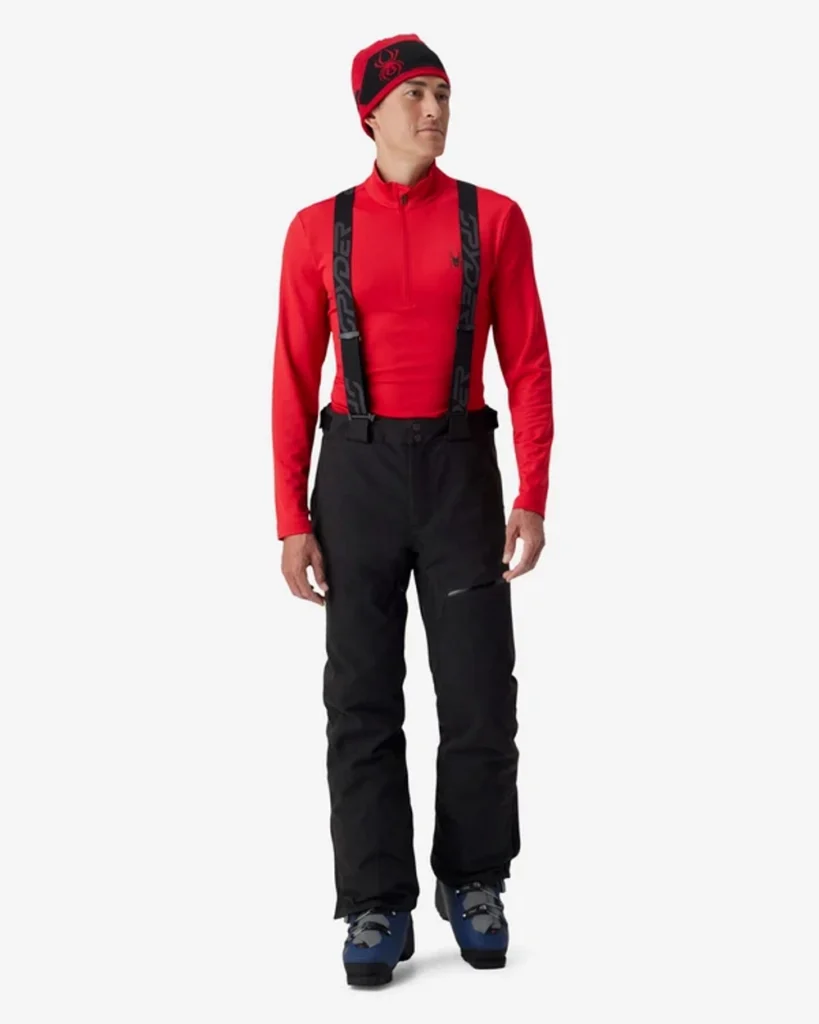
A ski jacket has a surprisingly demanding job. It needs to handle snow, make room for movement, hold the small essentials, and stay comfortable through chilly chairlift rides and warmer afternoon runs. Spyder approaches that assignment with a collection built around technical ski clothing, alongside layers and everyday apparel.
For shoppers researching the brand, the appeal goes beyond its recognizable spider logo. There are meaningful differences between its fabrics, insulation levels, and fit options, giving buyers reasons to examine individual pieces carefully. This Spyder review looks at the brand’s mountain background, two noteworthy products, and the purchasing details that deserve attention before committing to a winter wardrobe.
Spyder’s history begins with founder David Jacobs and a padded race sweater developed in 1978. Its official timeline also records a U.S. Ski Team supplier relationship beginning in 1989. Those roots help explain why racing remains part of the brand’s identity rather than simply a reference in its advertising.
Today, the website separates ski collections for men, women, boys, and girls, with dedicated adult and youth race categories. Jackets, pants, bibs, layers, and accessories sit alongside a broader apparel selection. That organization gives families and regular skiers a practical starting point: shop for the activity first, then narrow down the garment.
The strongest reason to consider Spyder is its focus on the details of dressing for skiing. A casual winter coat can look perfectly at home in a mountain village while offering little help with snow entering at the waist or a hood fitting over a helmet. Buyers should judge the collection through those practical requirements. The racing history is interesting; the usefulness of each garment is what earns its place in the suitcase.
Understanding EXO Shield Without Getting Lost in Numbers
EXO Shield is Spyder’s umbrella for a range of technical fabrics and treatments. Its technology page describes membrane options from 10K to 30K, along with two-way and four-way stretch constructions. There isn’t one universal EXO Shield specification across the collection, so seeing the name on two jackets doesn’t establish that they offer identical protection.
The useful shopping move is to read waterproofing, breathability, seam construction, and insulation as separate pieces of information. Spyder positions its 10K offerings toward casual to regular resort use, its 20K options toward frequent skiing and wetter climates, and its 30K range toward more demanding wet-weather conditions. These are manufacturer ratings and positioning, rather than independent guarantees of comfort in every forecast.
Stretch deserves attention, too. Bending to adjust boots and moving through turns require freedom through the shoulders, hips, and knees. Still, flexible fabric can’t rescue the wrong size. Buyers should use the technical specifications to shortlist garments, then check whether the cut leaves appropriate room for their intended layers.
The Men’s Leader Jacket Packs in Resort Features
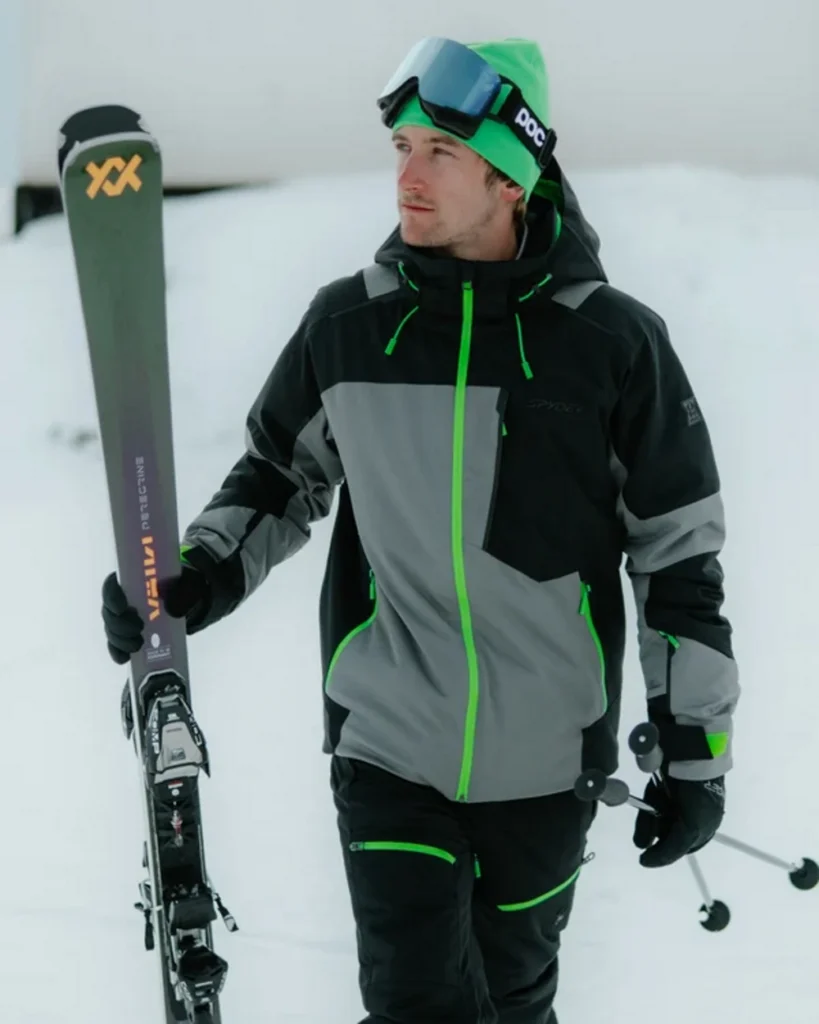
The Men’s Leader Jacket illustrates the more fully equipped side of the collection. The Storm version reviewed here lists four-way stretch recycled polyester, a 30K/30K EXO Shield laminate, fully sealed seams, and 100 grams of PrimaLoft Black ECO insulation. Its listed U.S. price was $575 when researched, placing it firmly in considered-purchase territory.
Its feature selection suggests a good match for resort skiers who prefer insulation built into their outerwear. Underarm vents offer a way to release heat, while the removable helmet-compatible hood lets wearers adjust coverage. AquaGuard zippers at the front and hand pockets address potential moisture entry points.
The combination is appealing for someone assembling a dependable resort outfit without managing a separate insulation piece every morning. However, a skier who runs warm or spends substantial time climbing should consider whether that insulated format suits their routine.
Check the exact listing before purchasing. Older Leader pages show a 30K/20K specification, while this Storm listing shows 30K/30K. A familiar product name doesn’t mean every season’s version is identical. Black – Spyder
The Women’s Winner Pants Put Fit on the Agenda
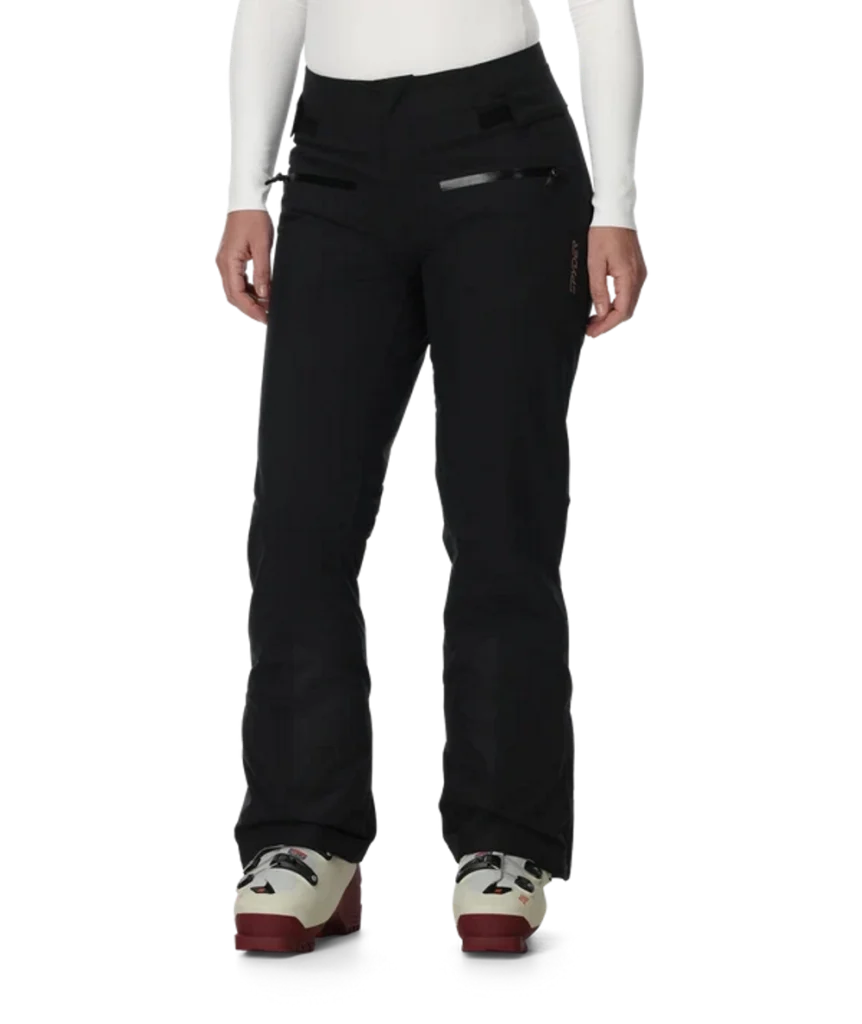
The Women’s Winner Pants offer an equally useful example of how small design choices affect a ski outfit. The researched black version combines a 20K/20K EXO Shield laminate with four-way stretch fabric, fully sealed seams, and 40 grams of PrimaLoft Black ECO insulation. It also includes waist adjustment, reinforced scuff guards, and inner snow gaiters with gripper elastic.
The length options are particularly welcome. For size 8, the page lists a 30-inch short inseam, 31.5-inch regular inseam, and 34-inch long inseam. That gives shoppers more control over how the hem sits around their boots, rather than asking everyone to make one length work.
These pants make sense for resort skiers seeking insulated coverage with adjustments at the waist and lower leg. Scuff guards target an area exposed to boot and ski contact, while gaiters help close the opening around boots.
Try them on with the base layer and boots intended for skiing. Waist measurements alone won’t reveal whether the pants feel restrictive when crouching or bunch awkwardly around the ankle.
Pricing and the Details Behind a Good Purchase
The Leader’s $575 listing and the Winner’s $309 regular price show why Spyder deserves deliberate comparison shopping. The researched Winner page also displayed a lower promotional price, but discounts and availability can change. Compare the final cost of the exact size, color, and version rather than assuming an advertised starting price applies to everything.
For frequent resort use, paying for a garment with the right fit and features can be reasonable. An occasional skier should also weigh renting against buying, particularly when a trip requires an entire outfit.
Returns warrant a careful check. Product pages advertise a 30-day period and a restocking fee, while a separate refund-policy page contains different timing and fee language. Confirm the applicable terms before ordering, especially for sale purchases.
Warranty coverage is more clearly defined: the U.S. page limits eligible outerwear coverage to manufacturing defects, with stated periods of 10 years for adult garments and two years for children’s garments. Normal wear and accidental damage are excluded. Keep the receipt and garment tags, and verify seller eligibility when shopping outside the official store.
These strengths and limitations favor shoppers willing to compare individual listings carefully.
Final Thoughts
Spyder is worth considering for skiers who want technical resort clothing with clearly described features and options for different family members. The Leader Jacket offers a substantial insulated package, while the Winner Pants show how fit adjustments and length choices can make shopping more practical.
The best purchase starts with the conditions and skiing style involved. Choose an appropriate insulation level, check the exact garment specifications, and leave time to assess fit before traveling. With those decisions handled, Spyder offers a compelling place to build a ski outfit. Just give the product page as much attention as the color selection.